


Retail giants are intending to shun the Government's planned youth wage that comes into force next month in favour of paying their staff industry wages.
From May 1, the Minimum Wage Amendment Bill means 16-to-19-year-olds can be paid 80 per cent of the minimum wage for six months or for as long as they are undertaking recognised industry training of at least 40 credits per year.
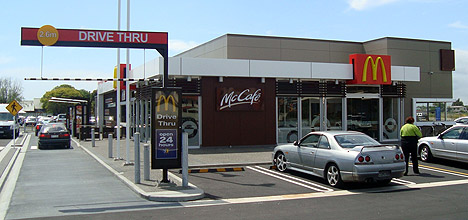
A number of retail giants including McDonalds (pictured) are rejecting government's new youth wage bill.
The starting-out wage will be $11 - 80 per cent of the minimum wage, which rose to $13.75 at the beginning of April.
Fastfood giant McDonalds is the latest to join the growing list of retail chains including The Warehouse, Farmers, Kmart and Bunnings which are all opposing youth rates in favour of their collective company agreements.
A Countdown spokesperson says they do not reject the youth wage rather the company operates under a collective agreement where a starting out wage does not apply.
'As part of our collective agreement, we have a three month new entrant rate for 15-17 year-olds joining our business for the first time and we estimate just under 4 per cent of our team nationwide starts on this.
'This is above the starting out wage and additionally our 18 and above rates start well above national minimum wage.”
They would not disclose a figure claiming their wages rates are an agreement between themselves and their employees.
When contacted by SunLive, McDonalds would not comment on their stance because a final agreement has not been reached with the unions.
FIRST Union retail secretary Maxine Gay believes companies do not need to adhere to the new wage just because government has bought in the law to cut young workers' pay.
'Young workers are expected to work just as hard as older colleagues. They don't get to work 20 per cent slower, yet the government thinks it is ok that employers can pay them less.
'Well done the companies who have made a stand against age based discrimination in wages.”
Unions have stood firm in their stance against the adoption of a youth wage, which is nearly $3 an hour below the minimum wage, but the Government argues it would increase opportunities for young people.
Minister of Labour Simon Bridges says the start out wage is voluntary and no one has a responsibility to pay their youth employees the outlined wage.
'If people want to pay their younger employees more then that's great, but the truth is whilst some big businesses that are often heavily unionised may decide to pay more there will be many small and middle sized businesses who will take up a start out wage.
He says the youth wage will ensure employers are given an incentive to take on younger workers and give them an opportunity to get on the job ladder.
'What we know is following the global recession, young people who been disproportionately affected were disproportionately finding it harder to find work than other age groups.”
The starting-out wage sits alongside other government initiatives aimed at helping more young New Zealanders into work or training, including Work and Income's Job Streams.

2 comments
Meantime Ryall is ok about 73% rise for power directors?
Posted on 10-04-2013 11:25 | By Contradictus
An amazing contrast between the actions of government ministers Simon Bridges and Tony Ryall on youth pay rates compared to pay rises for company directors. It seems almost mean to give Mighty River Power directors a measly 73% increase. No wonder electricity costs are so high in NZ.
Joke on both
Posted on 10-04-2013 15:17 | By YOGI
Neither are justified and should not be mandatory at all, the market should decide teh price, to do otherwise means the costs are passed on to the public and all that happenbs is a spiral of wage increases and prices occurs until someone gives up or moves on.
Leave a Comment
You must be logged in to make a comment.