


People building granny flats in the Western Bay could still face infrastructure fees despite the Government removing resource consent requirements for many small standalone dwellings.
The Western Bay of Plenty District Council is seeking public feedback on a development contributions policy for granny flats.
It says this would allow it to keep recovering growth-related infrastructure costs from these builds, which were previously collected through the resource consent process.
The policy responds to the coalition Government’s January law change exempting small standalone dwellings from requiring resource consent.
Council regulatory services general manager Alison Curtis said the council had approved 37 qualifying granny flats since the legislation change.
About 70% were in rural areas and the rest urban.
The council estimated $667,000 in infrastructure financial contributions had been forgone without being able to collect financial contributions to infrastructure through resource consenting, as it had done for the past 15 years.
She said under the new proposal, the typical development contribution for a rural granny flat was about $12,000 excluding GST, rising to between $25,000 and $45,000 in major growth areas.
The range reflected different roading, water and planned project costs between areas.
She said the new law allowed development contributions to be collected.
The Western Bay was one of few New Zealand councils that did not already have these.
The new policy was “more about a change in the collection tool than a new fee or charge being introduced”, Curtis said.
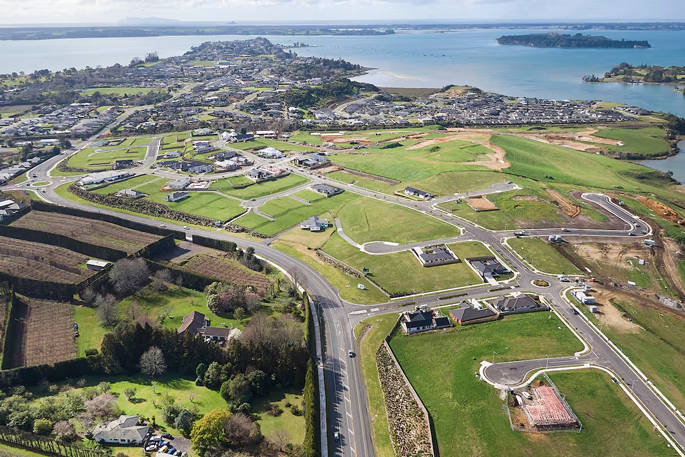
 Financial contributions to infrastructure were previously collected through resource consenting for granny flats. Photo / Ben Fraser
Tauranga City Council strategy, partnerships and growth general manager Christine Jones said the reforms had not significantly changed Tauranga’s approach.
Since the reforms took effect, the council had received 23 granny flat exemption applications.
Three developments had reached the stage where development contributions became payable, generating more than $91,400.
Nine applications were withdrawn after applicants became aware of the charges.
“[The] council’s view is that where a development creates an additional household, it is reasonable for it to contribute to the infrastructure needed to support growth, rather than those costs falling solely on existing ratepayers.”
‘Tough pill to swallow’
Rebecca McLean is the consulting service director of Tauranga-based consulting business Tiny House Mastery, and the former chairwoman of the NZ Tiny House Association.
She said she supported infrastructure funding in principle, but opposed blanket charges for small dwellings such as granny flats and tiny homes.
She said the cost of development contributions was a “tough pill to swallow when you know that they are such a small dwelling”.
“It just makes it a lot more expensive.”
She said the Government’s granny flat reforms were intended to make this style of living easier, but additional contributions could add a significant cost that may discourage some people from proceeding.
McLean suggested the charges could undermine efforts to enable intergenerational living arrangements, where older parents or adult children live on the same property.
 Founder of Tiny House Mastery and former chairwoman of the NZ Tiny House Association, Rebecca McLean.
“When you’ve got an existing rural property, adding Nana in the backyard is really not adding $18,000 worth of upgrades.“”
McLean argued there was a difference between large greenfield developments that required new roads and services and adding a small dwelling to an existing property, where infrastructure is already in place.
She suggested the contributions could depend on the number of bedrooms in the granny flat, rather than a blanket charge to make it fairer.
She said her mum and dad had been living in a transportable tiny home on her property for five years.
It cost about $25,000 in resource consent, consultant and developer contributions fees for them to legally park there.
Candidate views
Local Democracy Reporting sought election candidates’ views on the proposed policy.
National Party Mt Maunganui candidate Tom Rutherford said the Government introduced the granny flat changes to make small standalone dwellings easier and more affordable to build.
He said a re-elected National Government would expand the policy, allowing more small homes, including tiny homes on wheels, to be built faster and cheaper.
“We would also allow granny flats to be built on vacant sections by removing the requirement for a primary dwelling on the site.”
Labour Party Mt Maunganui candidate Rhieve Grey said councils should not be left with unfunded mandates.
“When central government changes the rules, it needs to work with councils on how the infrastructure is paid for.”
Opportunity Party Tauranga candidate Michael Carter supported development contributions, saying granny flats still created demand on infrastructure and “it is only fair” they contribute towards those costs.
He did not think the contributions undermined the Government’s reforms.
“Costs have been saved by making it easier and quicker to build, but they will still create demand on infrastructure.”
Act Party Mt Maunganui candidate Cameron Luxton said councils needed to be able to fund infrastructure in their communities.
“The small standalone dwelling exemptions under the Building Act and changes to planning laws don’t change that fact.”
Feedback on the council’s proposed policy is open until November 20, before councillors make a final decision.
– LDR is local body journalism co-funded by RNZ and NZ On Air.
Ayla Yeoman is a Local Democracy Reporting journalist based in Tauranga. She holds a Bachelor of Arts majoring in communications, politics and international relations from the University of Auckland, and has been a journalist since 2023.
LDR is local body journalism co-funded by RNZ and NZ On Air.


0 comments
Leave a Comment
You must be logged in to make a comment.