


Tauranga Mayor Mahé Drysdale has gone into bat for rowers opposing plans for a new pontoon on the city’s waterfront.
The former world and Olympic champion rower has suggested the Bay of Plenty Regional Council reconsider its planned Maritime Emergency Response Facility, saying he “did not see a need” for it.
The regional council plans to build the facility on The Strand Extension, behind its headquarters, Regional House, to store oil spill response equipment and facilitate faster responses to emergencies.
The plan has met opposition from the Tauranga Rowing Club, which previously told Local Democracy Reporting the club would no longer be able to use that part of the harbour for training if the pontoon was built.
Residents of the area also opposed adding the structure to the harbour.
The regional council gave a presentation on its plan to the Tauranga City Council’s city delivery committee on Tuesday, amid negotiations between the two councils for a licence to occupy for the facility.
The presentation by regional council regulatory services general manager Reuben Fraser, special projects manager Annabel Taylor, deputy harbourmaster Daniel Rapson and maritime operations team leader Scott Robinson said the current response time to maritime emergencies such as oil spills was two to three hours.
The response time was crucial given how quickly oil could spread when propelled by wind and currents.
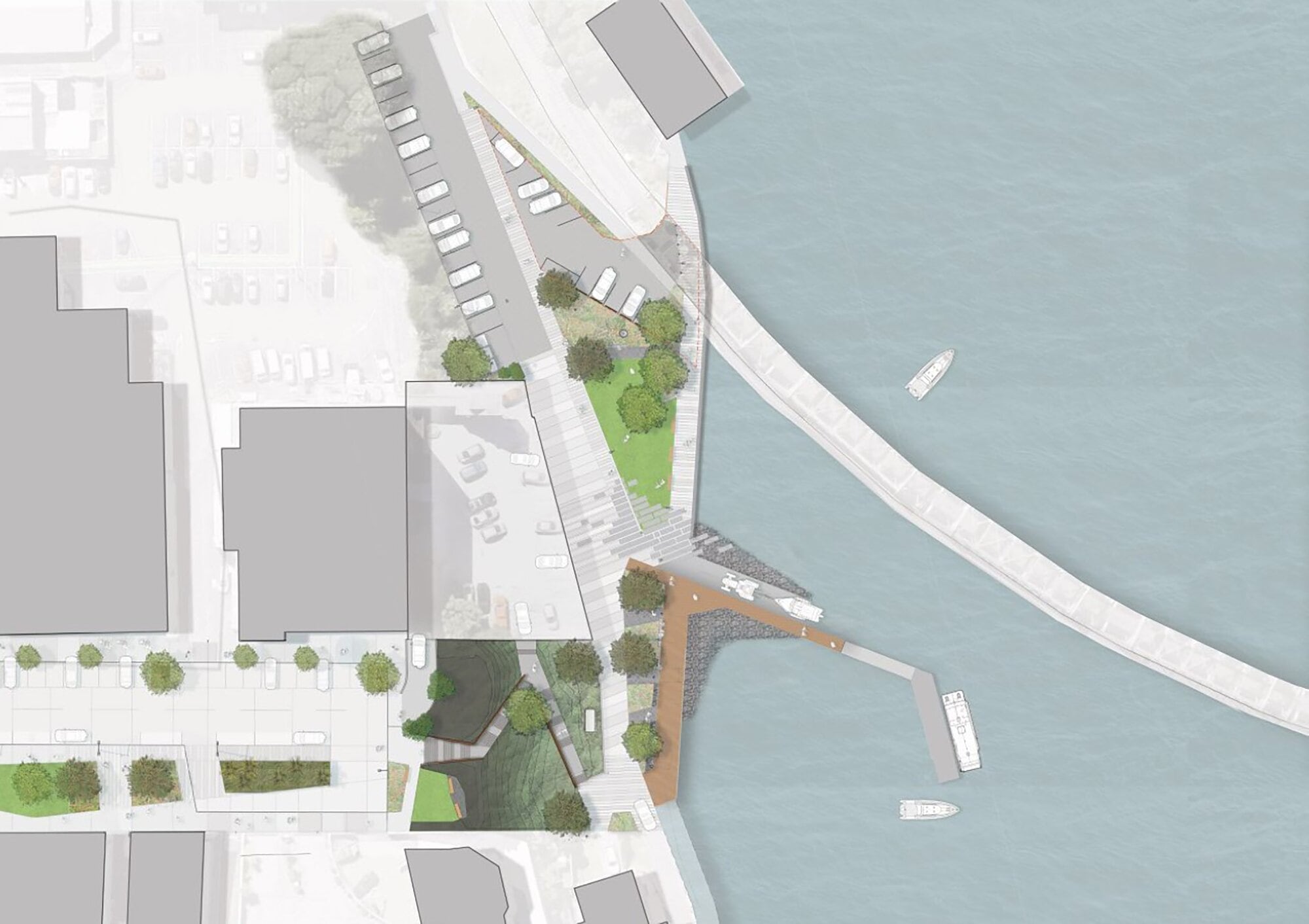
An aerial impression of the Bay of Plenty Regional Council's planned Maritime Emergency Response Facility on The Strand Extension in Tauranga. Image / Bay of Plenty Regional Council
This plan, which would put vessels and equipment in one place, would improve the response time to an estimated 15 minutes and make other day-to-day activities more efficient.
The regional council is proposing to develop an upgraded boat ramp, a boat wash-down bay, upgraded rock revetment to protect the area and mitigate erosion, a floating walkway and a mooring pontoon.
The two main maritime response vessels would be permanently berthed at the pontoon, with an oil skimmer also stored there. It would be fenced off for security.
The council said the boat ramp would still be accessible to the public.
‘There isn’t a problem’
Drysdale suggested the regional council look for other options and said he believed the plan was not the safest option for rowers.
“I just don’t see a need for this,” he said.
“You’re basically building something where there isn’t a problem … there are other ways to solve this.”
Tauranga Mayor Mahé Drysdale. Photo / Alex Cairns
“I’m very convinced that if you went and had the right conversation with Bridge Marina, you’d solve your problems pretty quickly around storing your skimmer there and maybe adding five or 10 minutes to your response time.”
Fraser said there was no space at Bridge Marina to store the skimmer.
Drysdale clarified after the meeting that it was his personal view and not a position taken by the council.
He suggested a facility at the marine precinct, set for future development, could be another “more cost-effective” option for achieving the regional council’s “important” outcome of maritime protection.
Oil spill response
The regional council responded to 74 oil spill calls from July 1, 2020, to August 1, 2025; 15 of which were “major call outs”, the presentation said.
In a spill, booms were used to contain the spread of oil on the water surface.
The skimmer – a 3.8m long, 400kg piece of mechanical equipment – was used to separate and remove floating oil from the water surface.
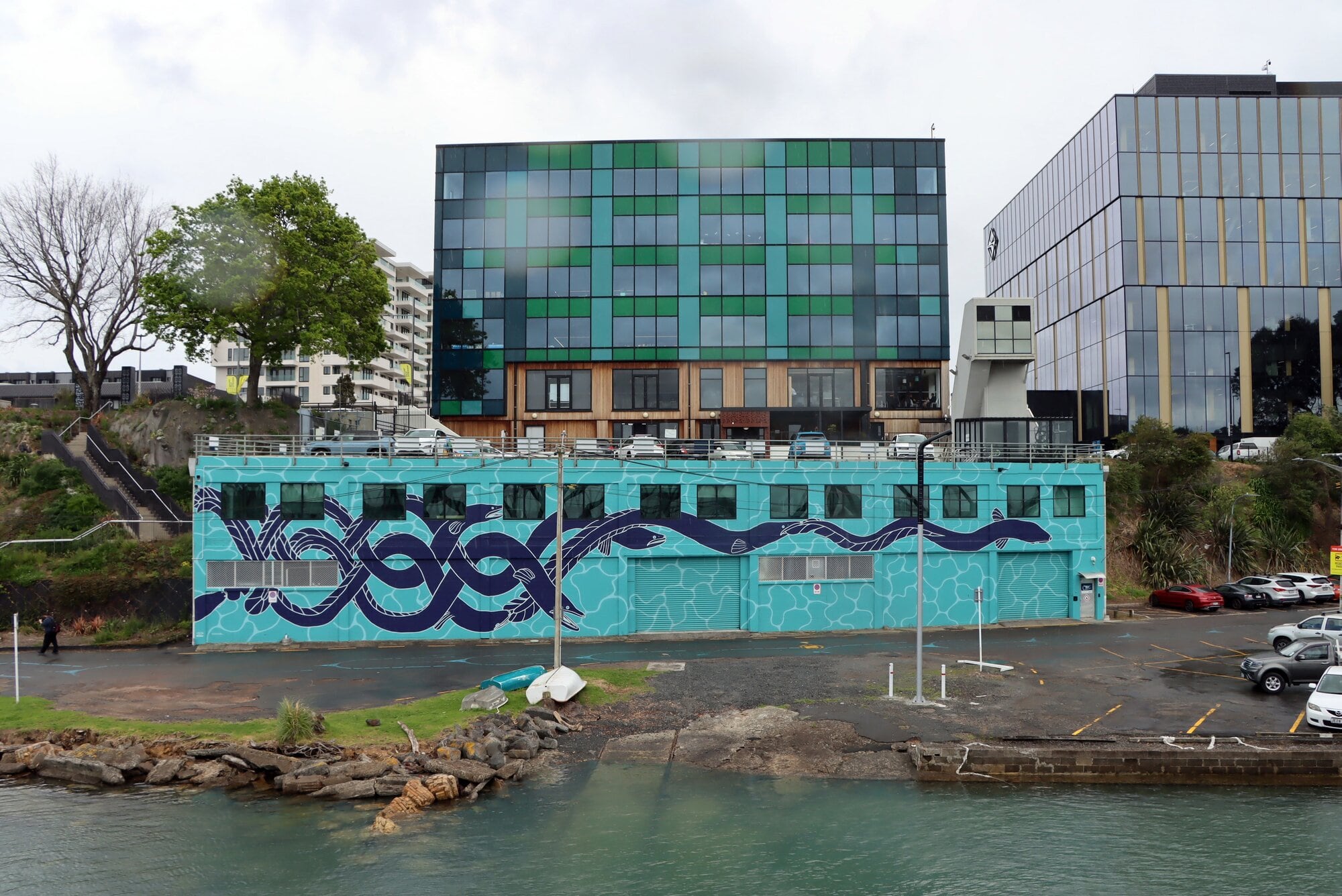
The location for the Bay of Plenty Regional Council's planned Maritime Emergency Response Facility was chosen because it is directly below their office, Regional House, and will reduce response times in an emergency. Photo / Alisha Evans
This equipment was stored at the Port of Tauranga, with the primary response boat, Awanui, stored at Bridge Marina.
In a spill, the equipment and vessel at present need to be collected separately and then brought together at the nearest available jetty.
The council said an increase in the number and size of ships calling at the Port of Tauranga, combined with adverse weather events, had increased oil-spill risk in the harbour.
More recreational craft using the harbour meant more possible interactions with big ships that could lead to groundings.
There had also been a switchover to “persistent” fuel instead of lighter fuels.

The Bay of Plenty Regional Council's planned Maritime Emergency Response Facility will sit off The Strand Extension. Photo / Alisha Evans
“Persistent fuels stick to everything and require manual removal and remain in the ecosystem for longer than lighter fuels.”
Persistent oils such as fuel and crude generally require a clean-up response, whereas non-persistent oils such as diesel and gasoline generally evaporate or disperse quickly.
Project timeline
The regional council said its pre-consent consultation with iwi and affected stakeholders and the developed design were complete.
The consent could be lodged once the licence to occupy had been agreed by both councils.
A tender for construction was due in mid-2026, with construction likely to start at the end of this year.
The project would be funded by the regional council and had been budgeted for in the Long-Term Plan 2024-34.
Iwi view

Ngāi Tamarāwaho spokesman Buddy Mikaere. Photo / Andrew Warner
Ngāi Tamarāwaho spokesman Buddy Mikaere told Local Democracy Reporting the pontoon plans were raised with mana whenua “some years ago”.
“It is an important site as it lies below the Mareanui pā site on the high ground above.
“However, the intended use of the site accords it a high priority from our perspective and its location – as part of the regional council facilities – seems sensible."
He said it would be a good fit with the new Wharewaka facility to be located nearby.
Ayla Yeoman is a Local Democracy Reporting journalist based in Tauranga. She holds a Bachelor of Arts majoring in communications, politics and international relations from the University of Auckland, and has been a journalist since 2022.
LDR is local body journalism co-funded by RNZ and NZ On Air.


6 comments
Priority
Posted on 11-03-2026 16:53 | By morepork
If we had even ONE major oil spill (apparently, we've had 74 smaller ones in 5 years), then there would be universal gratitude that the facility to contain and deal with it was ready to hand and available ASAP.
Our harbour is beyond price and the protection of it must be a TOP priority.
I sympathize with the Rowers, but there is plenty of other space where they can row.
Miniscule
Posted on 11-03-2026 21:55 | By Fred Bear
The works required are tiny-minimalist and essential for emergencies. It's the logical location for the team equipment. Think about it - we don't park fire engines a mile from the fire station. For the rowers, they battle adverse conditions all the time - the wind can blow from any direction, a large harbour isn't a great place for skiffs, and club houses can be built in a multitude of sheltered locations.
waterfront Upgrade
Posted on 12-03-2026 10:27 | By TOES
This section of the waterfront the worst looking area of the whole CBD. We have upgraded the waterfront from the Harbour Bridge to the Harbourside restaurant. Just approve this section, then we have a very high standard matching the rest of the waterfront. Open your eyes Mr Mayor .
I don't understand...!
Posted on 12-03-2026 13:48 | By Watchdog
Why won;t rowers be able to still use that area? I used to be a rower (bow) and we were able to go under the railway bridge when the tide was right. How would a pontoon stop that? I guess I need to see teh size of it. But the location seems ideal. It is also possible however that the Regional Council may cease to exist after the next elections given the Govt's plans to cut down on Local Body costs, with the responsibilities being shared by local bodies around the region. (Still to be figured out, though!)
The Master
Posted on 12-03-2026 17:11 | By Ian Stevenson
How many millions to be spent pointlessly here?
The "major" spill was apparent just a few hundred liters (once), it was an accidental thing where a pipe failed/burst.
This is just another example of Bura-rats building and expanding the "EMPIRE" with massive over the top monuments and eye-watering cost to establish and maintain "just in case".
This is why rates are SOOOOO high and will get a lot more, especially TCC that will have 200-300% increase on or before 2034 or so.
@Ian Stevenson
Posted on 13-03-2026 16:56 | By morepork
This is NOT why Rates are so high.
Rates are higher than they need to be as a result of poor planning, waste, redundancy, and incompetence in the Council, mostly. Combine that with the empire building you mentioned, and you are getting closer to the actual grounds for needing to borrow and live beyond our means.
On this occasion, the Mayor was AGAINST the construction proposal, so the empire building accusation doesn't stick. (He has a different personal agenda.)
Are you prepared to go on record as being against the project because it is "just in case", then have that case actually eventuate and destroy the whole harbour? Tauranga Port shipping is increasing; the risk of a truly major spill increases concomitantly.
This is NOT a "vanity project"; it is something we really need to have.
NOT having it COULD be devastating.
Leave a Comment
You must be logged in to make a comment.