


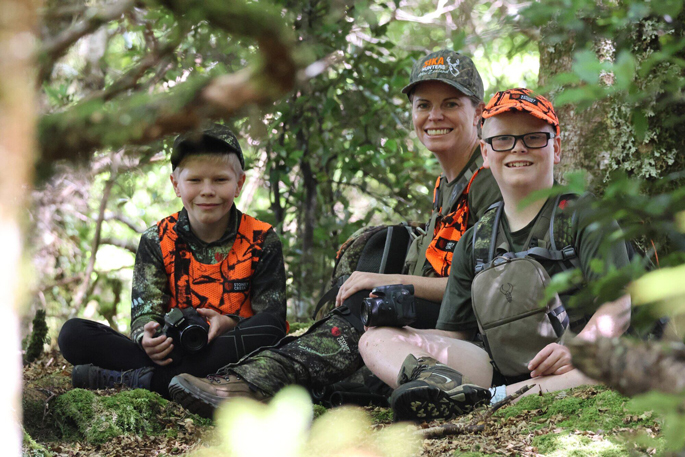
For the Fairbairn family, holiday means being helicoptered into a remote piece of private land in the Ahimanawa Range, between Taupō and Napier, to live off-grid in the bush for a few days to disconnect from the busy world and decompress in a stunning natural environment.
Jamie and Amie Fairbairn run a busy Tauranga building company, Fairbairn Builders.
“Things go nuts leading up to the Christmas close down when we do our family Christmas and then head off into the bush,” Jamie said.
A love of the wild
Jamie was introduced to hunting and living off grid nearly 30 years ago by his uncles, Bob and Gary Ramsay. Amie has joined him for the last 20 years. The couple now share the experience with their children, James (12) and Fletcher (10).
As well as shooting with a rifle, Jamie says that his uncle always encouraged him to take a camera into the bush and shoot photos of what he saw. Jamie carries a good Canon camera, and the boys are embracing photography with his older cameras.
Uncle Bob is in his late eighties and still spends a considerable amount of time in the bush in the company of family and friends.
In 1992, Bob took on a private block in a very remote area. In some parts the nearest road can be a 24-hour walk away.

Jamie Fairbairn walking into camp on a rainy day. Photo / Jamie Fairbairn
Nowadays, Jamie is a vital part of the block’s operation. He knows the area “like the back of his hand” and has taken many people in to shoot their first deer and experience their first helicopter ride.
Living off-grid
“We use a very old school structure built by Bob in 1992. It is a timber frame, tarpaulin-covered hut, but it’s dry and provides shelter. We leave supplies there from visit to visit,” Jamie said.
The family are into bushcraft and finding hacks to have basic facilities. Due to weight and space constraints in the helicopter, they have to travel with essentials only.
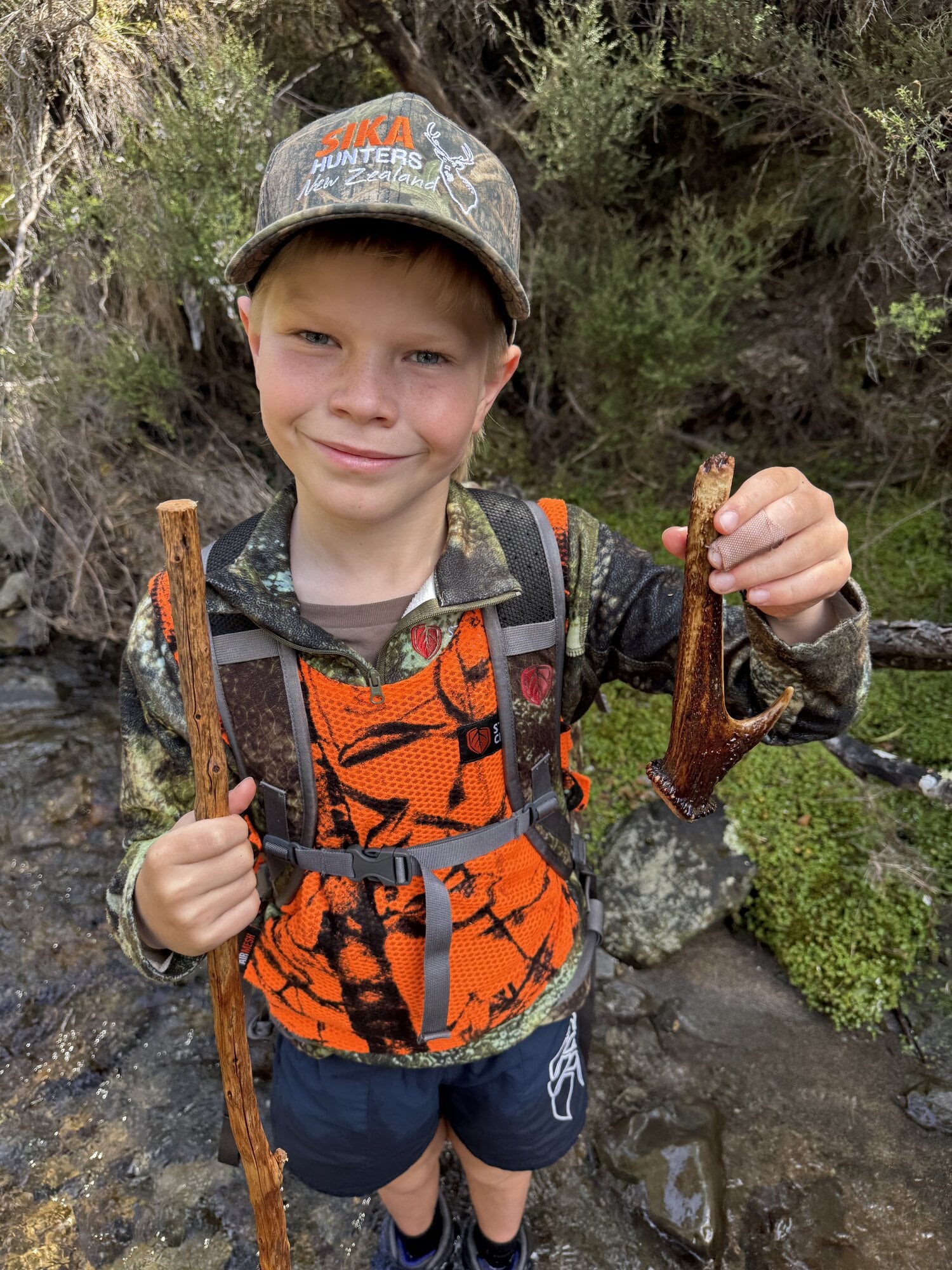
Fletcher Fairbairn finds a cast-off deer antler. Photo / Jamie Fairbairn
“There’s definitely a survival element to every day,” Jamie said. “There’s no cell phone coverage, no electricity, no emergency services, and best of all no people except us!”
Their toilet is a real toilet positioned above a long drop hole, and gravity-fed water from a stream further uphill is piped into the cistern, allowing normal flushing.
If the weather is fine, they dip in the creek with a bar of soap, or they can boil up some water and add cold water in a 20-litre container to have a traditional camp shower.
Sources of food
Amie enjoys a break from cooking, as Jamie likes the opportunity to cook using their gas cooking rings or the camp oven over the fire. His chicken and vegetable camp oven meal is legendary.
“We don’t often hunt for food in January because the hinds have fawns at their side and the stags are in velvet. Also, there’s nowhere to store the meat in the summer heat,” Jamie said.
“Our fresh food runs out quite fast, but immersing sealed bags of fresh food in a moving creek keeps things surprisingly cool. After that, we rely on canned and dried food, and we keep supplies of those topped up at the hut,” Amie said.

The Fairbairn family out for a hunt with the cameras. Photo / Jamie Fairbairn
With no electricity other than LED headlamps run off a small solar panel, and tired from a day of exploring the bush, the family tends to retire early.
“Evenings around the fire are all about the ambience, listening to the sound of the creek and hearing the morepork calling. We sometimes play cards or games,” Jamie said.
Their beds are stretchers or basic bunk beds and warm sleeping bags.
“The boys usually build a hut somewhere in the bush on each trip and will often build or mend bridges over the creeks using rocks and sticks, which was a highlight for Fletcher this trip,” Jamie said.
For James, the highlight was taking photos of a sika fawn.
Safety and survival
Jamie may be a highly experienced bushman but there is no skimping where safety is concerned.
“The bush can be a harsh environment, and we all have suitable layers of hunting clothes, light waterproofs, puffer jackets, boots, blaze vests and caps. We are also prepared with basic first aid for things like broken limbs or cuts.”
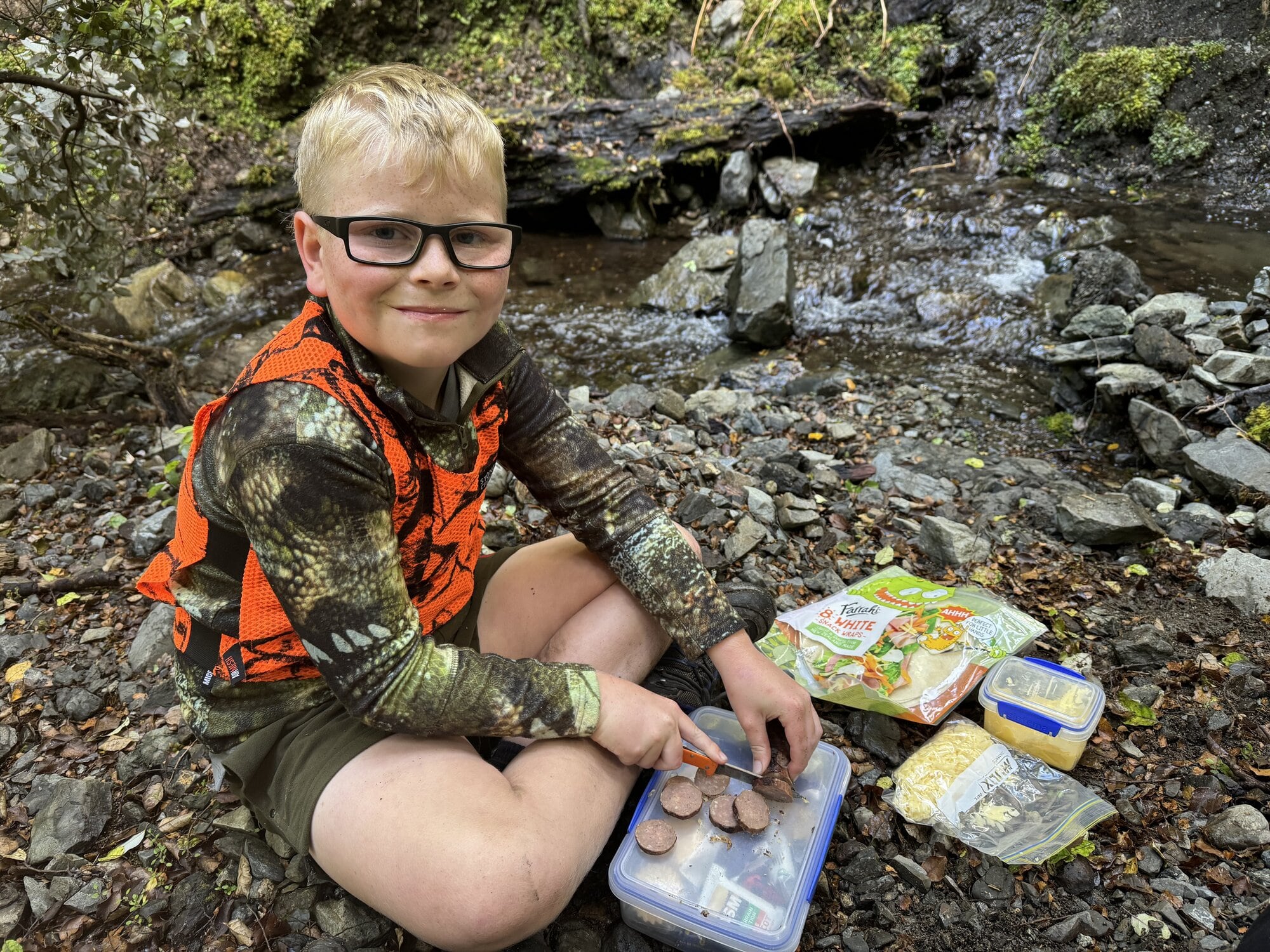
James Fairbairn preparing lunch while out on a hunt. Photo / Jamie Fairbairn
They always carry Emergency Position Indicating Radio Beacons (EPIRBs) and have a Garmin InReach device which can be used for texting and sharing your GPS position using the global Iridium satellite network.
Jamie and Amie are grateful to share their love of the bush with their boys and see them learn and embrace the slow the pace of life in the remote bush.
“It’s such a pleasure watching them observe and photograph the flora and fauna and appreciate what the bush offers.”

0 comments
Leave a Comment
You must be logged in to make a comment.