


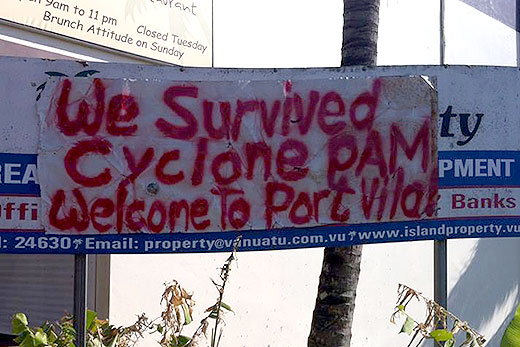
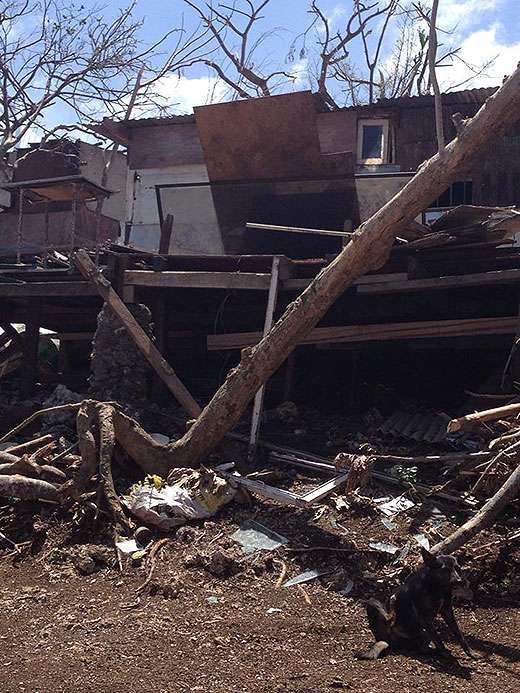
Bay of Plenty teenager Courtney Tilby has seen first-hand the destruction of Cyclone Pam after being caught in the middle of the lethal storm.
Courtney, a former Bethlehem College student, was working on the island of Pentecost when the category five cyclone tore through the region.
This sign in Vanuatu says it all. Photos: Courtney Tilby.
'Unfortunately, most kiwis think that the cyclone came, aid arrived, end of story,” says Courtney. 'But that's simply not the case.”
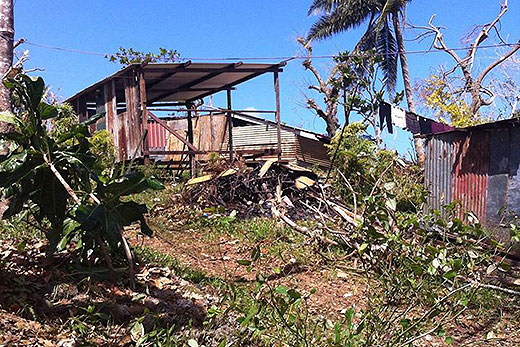
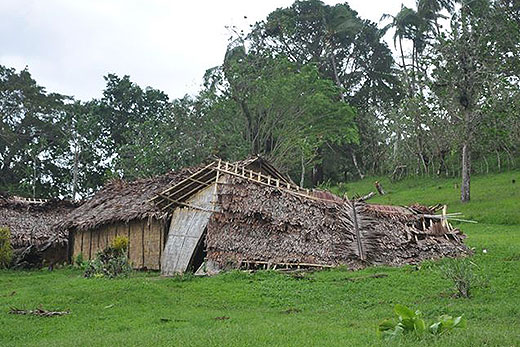
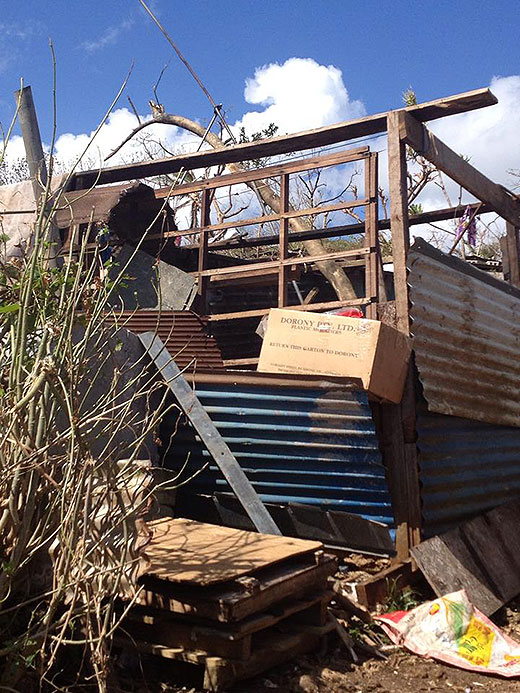
Most of the villages affected have lost crops and their water supply, and Courtney believes it will take around two years to replenish everything.
Courtney has set up a Givealittle page to help raise money for the people in Vanuatu. So far the page has managed to raise $8385 of the $20,000 goal.
Read more of her story here.
Meanwhile, the New Zealand Defence Force is continuing to provide aid to Vanuatu.
Rough conditions, shallow water and coral reefs posed a challenge for personnel over Easter, but a combined effort using small inflatable boats and HMNZS Canterbury's helicopter with Army resources on the islands meant the goals were achieved.
The amphibious sealift vessel HMNZS Canterbury has now moved south to operate around the southern part of the Shepherd Islands and the islands of Makura and Mataso.
Away from the large sheltered island of Epi, these more remote islands have had little contact with the outside world since the cyclone hit.
The combination of conditions meant the NZDF have had to improvise away from traditional landing craft operations to get much-needed food, water and medical teams ashore. Almost every available means has been used to get the job done.
The ship's helicopter has dropped teams and provisions at islands further out from the planned destinations.
The challenge of getting ashore has been overcome by the use of Rigid Hull Inflatable Boats (RHIBs) to move personnel and equipment close to the reef to be cross-loaded on to smaller Zodiac inflatable boats.
These boats are the only vessels that can navigate over the reef and through the shallow water to the beaches where locals are waiting.
'The smaller volcanic peak islands make beach access much more difficult,” says the Commanding Officer of HMNZS Canterbury, Commander Simon Rooke.
'It has been a real joint effort. We have had Navy and Army personnel working together on the islands, with the Air Force-maintained helicopter working alongside the boats moving equipment, supplies and both NZDF and NZ Government officials.
'It's very challenging with small boats. They were manned by our hydrographers, who have the most experience on inflatables in surf zones, and we also had a RHIB right there as a safety boat throughout the task.
'The successful operations were the result of careful, detailed planning and a patient and methodical approach to the task.”
The teams ashore include Ministry of Health doctors and nurses who run day clinics, USAR representatives checking water supplies and NZDF engineers assessing damage to key infrastructure in the villages.
Some 70 personnel, mainly NZDF, are still working on Epi and Tongoa Islands as they continue repair and rebuilding tasks with heavy equipment that is not suitable to be brought ashore in the southern area.

0 comments
Leave a Comment
You must be logged in to make a comment.