


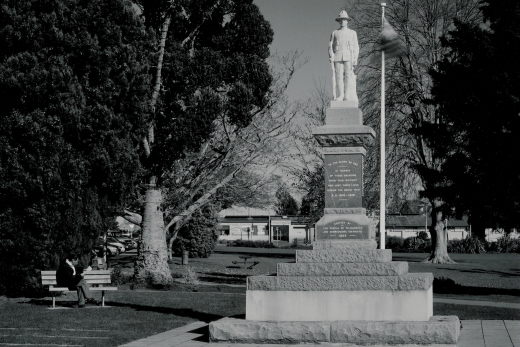
It's an iconic image: the solitary soldier with rifle in hand as he stands to attention, his face heavy with stoicism, his youth forever carved into stone as ours slowly passes with time.
For three decades this image captured the mind of New Zealand photographer Laurence Aberhart and is the theme of ANZAC, currently on display at the Tauranga Art Gallery.
The World War One memorial in Te Awamutu, photographed by Laurence Aberhart in June 2011. This is one of 60 images currently on display at the Tauranga Art Gallery. Photo: Courtesy of the artist
The exhibition brings together 60 photographs shot by Aberhart of World War I memorials in New Zealand and Australia, and includes six large artisan platinum prints.
The gallery says his work is exhibited widely in solo exhibitions throughout the world and can be found in all major New Zealand public collections as well as many overseas.
'Focusing on First World War memorials that include figures, most often lone ‘diggers', Aberhart charts a seemingly simple pathway through these two nation's landscape,” they say.
'But in the process he unearths a complex topography of gestures, imagery, ornamentation and language.”
Public memorials are often commissioned and funded by local communities and act as vestiges and tributes to the massive casualties as a result of WWI.
The gallery says Laurence's photographs imbue these civic structures with a sense of gravitas that their makers would have originally envisaged.
But he does this not by cleaning up their increasingly dilapidated appearance or editing out the encroaching forces of unruly nature, suburbia and urbanisation.
'Instead,” they add, 'there is an inherent and compelling dialectic at play between the formality and sense of stasis embodied in these sculptural forms and their appearance or registration in empty, marginal and ever-changing sites.
'ANZAC is a longitudinal study that has relied on this artist returning to these memorials over a prolonged period and maintaining a consistent conceptual and technical methodology.”
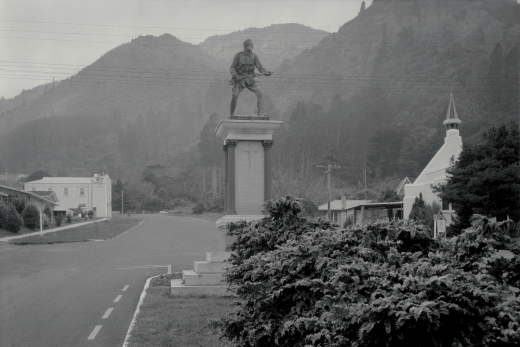
Te Aroha monument, Waikato, June 2, 1982. Photo: Courtesy of the artist
This exhibition will coincide with WWI commemorations and is laid out geographically; starting with the closest memorial and ending with the site furthest away from its current location.
The gallery says Laurence is widely regarded as one of New Zealand's greatest and most technically-proficient contemporary photographers.
'For close to forty years, he has produced an astounding body of work which is unrivalled in its intensity, richness and the layers of cultural and photographic history,” they add.
Over this time Laurence has meticulously worked on series after series of photographic albums, which capture the 'remnants of civilisation”.
The gallery says the photographer sleuths out remarkable placeholders that reflect the slow march of time or the signs of peoples need to be seen, identified and recorded.
'Because he operates in such a manner, Aberhart is able to look beyond the instantaneous or random,” they say.
'He sees the innately poetic, constant and emblematic in the seemingly most mundane and vernacular.”
ANZAC is a Dunedin Public Art Gallery touring exhibition curated by Aaron Kreisler and is supported by the WW100 Centenary fund, Creative New Zealand and the Dunedin City Council.
ANZAC: Photographs by Laurence Aberhart is on display at the Tauranga Art Gallery until May 10.
Renowned historian Jock Philips, who wrote the introduction to the book accompanying the exhibition, ANZAC, will also give a talk at the gallery on Thursday, March 19, from 5.30pm
Entry cost to the talk is $10. To book your place call the Tauranga Art gallery on: 578-7933.
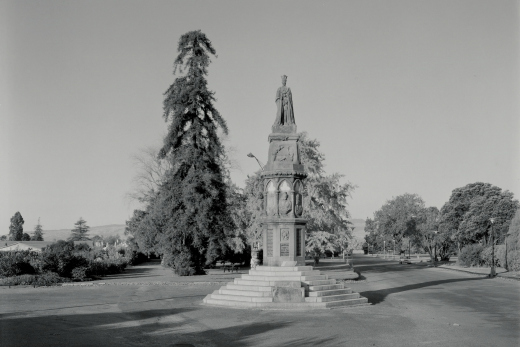
Te Arawa monument, Rotorua, April 23, 1992. Photo: Courtesy of the artist
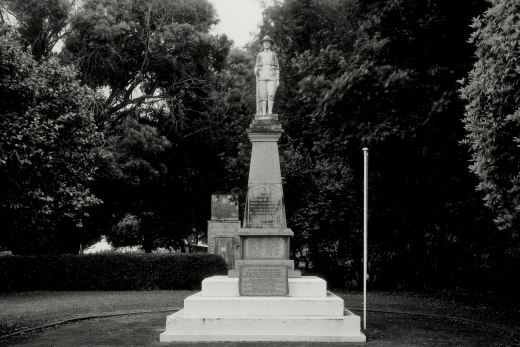
Ongaonga monument, Hawkes Bay, December 16, 2010. Photo: Courtesy of the artist

0 comments
Leave a Comment
You must be logged in to make a comment.