


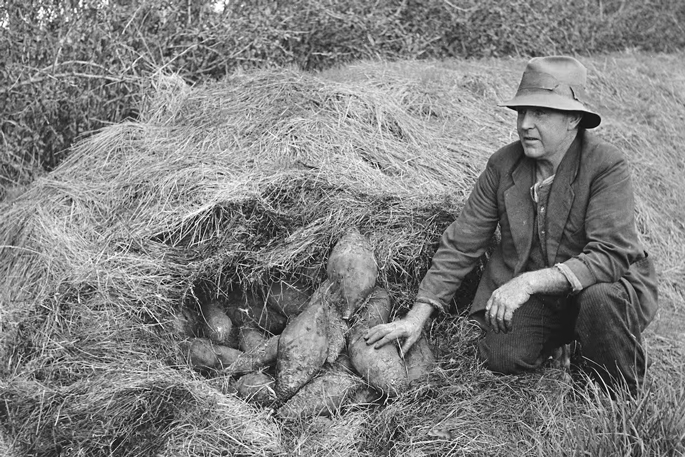
Ron Vine’s crisp, observant and sometimes intimate black and white photos capture New Zealand farming at a turning point.
Now a collection of more than 1400 images he took between 1934 and 1947 has received Unesco recognition, sitting alongside the papers of Katherine Mansfield and the photography of Marti Friedlander.
Vine travelled to remote parts of the country as the Great Depression was easing, towing his mobile darkroom behind him to record how farmers and communities were transitioning into more modern methods.
His photojournalism helped influence the take-up of new agricultural trends and developments, according to archivists.
The collection has been recognised by Aotearoa New Zealand’s Unesco Memory of the World Trust and achieved inscription on the Memory of the World Register.
It is now housed at the Walsh Memorial Library in the Museum of Transport and Technology (Motat) in Auckland.
Vine’s attention to detail is a feature of the collection, Motat pictorial librarian Malcom Duffy told RNZ’s Country Life.
“They were very beautiful, and it took a bit of research to understand the context and the place of this photography in the New Zealand context, but they were still remarkable, very, very crisp and clear photography, done in natural light, of course, because he was out in the field.”
And there was a real sense of intimacy between Vine and his subjects.
“Especially when it came to the farmers, the farm workers – there was a real sense of the pride in their work that came through.”
Vine began his agricultural journalism career riding a motorbike.
“He literally just hit the road in his motorcycle sidecar.
“He went out there, he introduced himself to farmers, was happy to talk about their problems, possible solutions, and this was a network he built up over the next four or five years.
“So we do know that he got sick of travelling on the motorcycle sidecar after roughly 12 months.”
Vine then moved on to a more sophisticated way of getting around.
 Ron Vine sitting on his motorcycle sidecar combination. Photo / Ron Vine, Walsh Memorial Library, Motat
“That’s where his story really starts to pick up as both an agricultural journalist and a man very invested in technology because he proceeded to then take a Model T Ford and break it down and made a whole caravan from packing cases – the Model T Ford chassis – and that’s how he continued his journeys for the next few years, towed by a little Austin 7, and he built his own darkroom in that caravan as well, which was made by hand, with almost no training or experience, and he created his own photographic enlarger using a headlamp from a car.”
 Ron Vine's car on road to Maungapiko. Photo / Ron Vine, Walsh Memorial Library, Motat
His No. 8 wire solutions included a developing tank designed to be placed in creeks and streams to wash film and prints when he was out and about.
Vine’s photos are significant as a record of New Zealand agriculture in transition.
In the 1930s and 40s, land was being cleared and turned into pasture.
 Mr ED McLennan and farm workers in a paspalum field. 1940. Photo / Ron Vine, Walsh Memorial Library, Motat
“The landscapes and areas he documented, a lot of them had been deforested and then had just developed naturally into scrubland, a lot of fern, a lot of mānuka, and so when he arrives in the 1930s, the Government is actually starting to release these lands.
“They still don’t have the significant visual elements we always identify with farming – there’s no full irrigation ditching, the races aren’t really visible yet, the fences, the sheds, the shelter belts, they’re not fully there.
 A group of children standing near the Kaikohe Native School bus charabanc. 1940. Photo / Ron Vine, Walsh Memorial Library, Motat
“Often they’re very wide open vistas, and to me it’s a very interesting aspect because we often see either the wilds of New Zealand or we see farms that are very well established.”
Experts say the collection is also significant for its images of Sir Āpirana Ngata’s Māori land development scheme and Māori communities.
“I think it’s really important to Ron because he was raised amongst the native school communities, and he grew up in Māori communities which were often farming not the best lands, not totally productive, and so for him to be there as the Māori land development scheme was gathering strength, I think his connection with Māori communities around the Ruatoki and Urewera area, that enabled him to get that sort of relationship where he could be very documentarian in his photography.
 Mr P Osborne and students standing outside Horohoro Native School. 1939. Photo / Ron Vine, Walsh Memorial Library, Motat
“It was very warts and all, but it’s also possibly the best record of Āpirana Ngata’s Māori land development scheme in the country.
Duffy said mutual respect comes through in the photos of Māori.
“Also his respect for the hard work that’s gone into the land.
“So much of it was done without any sort of mechanisation; it was all done by hand or with horses.
“And it’s a real testament to the hard work that was put in.”
 Two men and a dog on the porch of a house at Glinks Gully. Photo / Ron Vine, Walsh Memorial Library, Motat
Farmers, labourers, livestock breeders and heads of local agricultural associations were typically subjects for Vine’s camera, and many would become friends and subjects of future reporting for publications like The New Zealand Farmer.
“There’s a real dichotomy in those images too, because he was also photographing communities that were actually quite wealthy at times ... but then we go to those rural communities, and we see people who are often living and working within raupō huts or very primitive structures, so we’ve got that real contrast between urban and rural life of New Zealand in the 30s.”
 Miss Lampshire and her horse-drawn herd-testing wagon. Photo / Ron Vine, Walsh Memorial Library, Motat
Vine wanted people to prosper and believed in the value of institutional and generational knowledge, without being judgmental, Duffy said.
“I think his approach often was looking back at what had worked and what hadn’t.
“We know that that’s very important in the agricultural sector – if the farmers aren’t aware of the sort of problems and outputs of their land and their stock over the previous decades, it’s hard to find a way forward that’s going to be productive.”
Duffy said people can view the collection at Motat in Auckland and librarians would be happy to guide them through it.
“If there’s a particular family or geographic location that people are interested in, we can always assist them with that.”
This story was first published on rnz.co.nz

0 comments
Leave a Comment
You must be logged in to make a comment.