


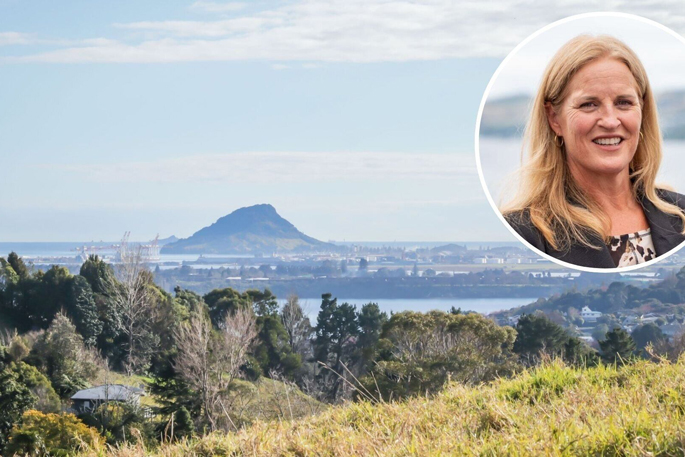
Tauranga City Council could receive about $866,000 in the first year of a proposed National Party scheme to share international visitor levy revenue with councils.
Tauranga and the Western Bay together could receive about $1m.
National says it would return $385m of international visitor levy revenue to councils over four years, starting at $86m in 2027/28 and rising to $106m by 2030/31.
Councils would receive funding according to their share of international visitor guest nights.
Tourism and hospitality spokeswoman Louise Upston said councils that hosted the most international visitors would receive the most funding, while all councils hosting international visitors would receive a share.

Tourism Minister Louise Upston. Photo / Mark Mitchell
“Councils would need to spend the money on tourism or conservation purposes, consistent with the requirements of section 399A of the Immigration Act 2009.”
Eligible uses included visitor infrastructure, tourism promotion, event attraction, public toilets, waste management, freedom-camping enforcement and traffic and parking management.
“Our policy aims to address the same challenge that prompted calls for a bed tax: ensuring communities have sufficient funding to manage tourism-related infrastructure pressures.”
Upston said domestic travellers generated nearly twice as many guest nights as international visitors, so a bed tax would have hit Kiwis’ pockets.
National originally agreed to consider the bed tax, proposed by Auckland Mayor Wayne Brown in the Auckland City Deal, but has since ruled it out.
“Our policy would complement existing tourism investment programmes like the Regional Tourism Boost Fund.”
She said it provided both targeted investment and a direct local funding stream.
“We want to see continued growth and are committed to it.
“This policy backs councils with the funding needed to keep pace with tourism growth.”
Upston said indicative figures based on international guest nights showed Tauranga City Council would receive $866,000 in year one and receive $3.88m over four years.
Western Bay of Plenty District Council would receive $143,000 in the first year and $641,000 over four years.
Rotorua Lakes Council would receive $4.48m in the first year and $20.03m over four years.

Tauranga Mayor Mahe Drysdale. Photo / Alyse Wright
Tauranga Mayor Mahé Drysdale said he supported any proposal that provided councils with an additional revenue stream and helped communities share in the benefits of the visitors they hosted.
“In Tauranga we invest heavily in the infrastructure, facilities and experiences that attract international visitors, so any tourism-related revenue that helps offset that investment and reduces the burden on ratepayers is a positive step.”
He said the council was still working through the details of the proposal, but for Tauranga it would be important that the way any contribution was calculated was robust and recognised the different ways visitors came to and stayed in the region.
This included cruise ships and short-term rental accommodation providers such as Airbnb, not just traditional hotel accommodation.
Western Bay of Plenty Mayor James Denyer. Photo / David Hall
Western Bay Mayor James Denyer said both National’s proposal and a general visitor accommodation levy were worth considering.
“However, the accommodation levy would capture more people as it’s not limited to overseas visitors.
“Any mechanism that creates a more equitable contribution towards local infrastructure and services would be worth considering.”
He said the district council would welcome ”any additional revenue source that helps offset the extra demand visitors place on local infrastructure, facilities and services”.
“While tourism brings many benefits, it also puts extra pressure on infrastructure and services, particularly in popular destinations like Waihī Beach where visitor numbers can significantly exceed the resident population during peak holiday periods.”
He said water, wastewater and roads needed to cope with seasonal demand and councils also faced higher costs for rubbish collection, street cleaning, public toilets, reserves and other public amenities used by visitors.
“Local ratepayers currently fund most of the infrastructure visitors use.”
Facilities such as TECT Park and Te Puna Quarry Park could benefit from additional funding, he said.
Tourism Bay of Plenty general manager Oscar Nathan.
Tourism Bay of Plenty general manager Oscar Nathan said the proposal would mark the first time since 2019 that international visitor levy revenue had been specifically allocated back to host regions.
But “while we support reinvesting visitor revenue into host communities, allocating funds based solely on commercial accommodation international guest nights is less beneficial for regions like the Bay of Plenty”.
He said the model excluded short-term rentals such as Airbnb, cruise passengers, day-trippers, and people visiting friends and relatives.
“Crucially, 82% of our commercial guest nights in the year to June 2026 came from domestic travellers.
“An international-only metric ignores our reality as a predominantly domestic destination.”
Nathan described the proposal as a “step in the right direction”.
He said destinations needed sustainable, reliable funding and investment to manage and optimise growth in international visitors.
“We have the capacity to host more visitors in Tauranga and the Western Bay. The priority is to manage and mitigate the pressures that can occur during peak times or at specific locations while highlighting the appeal of our off-peak seasons and lesser-known attractions to support visitor dispersal and spending.”
He said greater input from central Government, local government and the tourism sector would help ensure funding models reflected the needs of regions hosting both domestic and international visitors.

Local Government NZ president Rehette Stoltz. Photo / Gisborne District Council
Local Government New Zealand president Rehette Stoltz said councils had long argued that a greater share of tourism revenue should return to communities that hosted visitors.
“For many years ratepayers have carried much of the cost of providing the infrastructure visitors rely on, from local roads to public toilets, parks and community facilities.”
She said a commitment to return a share of international visitor levy revenue directly to councils recognised that tourism placed real demands on local infrastructure and services.
Ayla Yeoman is a Local Democracy Reporting journalist based in Tauranga. She holds a Bachelor of Arts majoring in communications, politics and international relations from the University of Auckland, and has been a journalist since 2023.
LDR is local body journalism co-funded by RNZ and NZ On Air.

0 comments
Leave a Comment
You must be logged in to make a comment.