


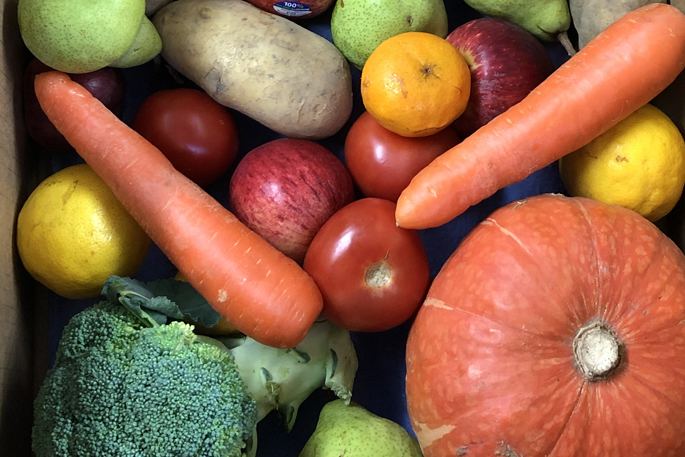
Food prices were 7.6 per cent higher in March than the year before - the biggest annual increase in more than a decade.
Fruit and vegetable prices rose rose 18 per cent, with average prices for vegetables like tomatoes, broccoli, iceberg lettuce, and cabbage "notably higher" than in March 2020 and 2021, says StatsNZ consumer prices manager Katrina Dewbery."There were also higher prices for dairy products like two-litre bottles of standard milk and one-kilo blocks of mild cheese."
Meat, poultry, and fish prices increased 8.7 per cent, grocery food prices increased 6.7 perc ent, StatsNZ figures showed.
Restaurant meals and ready-to-eat food prices went up 5.1 per cent and non-alcoholic beverage rose 2.7 per cent.
The increase in the cost of food was the largest since the year ended July 2011 when prices rose 7.9 percent, partly influenced by a GST increase from 12.5 per cent to 15 per cent in 2010.
Prices for avocados, boxed chocolates and bacon went down.
Monthly food prices rose 0.7 per cent in March 2022 compared with February 2022. After removing regular seasonal impacts, food prices rose 0.4 per cent.
"Grocery food prices were the main contributor to the rise in March, up 0.9 percent," says Dewbery.
"This was mainly influenced by higher prices for yoghurt, canned spaghetti, chilled meat pies, and tomato sauce."
Fruit and vegetable prices rose 1.2 percent in March 2022 compared with February 2022, influenced by higher prices for cabbage, tomatoes, strawberries, and kumara.
"The average price of cabbage increased 28 per cent in March, from $3.92 to $5.03 per kilogram."
Meat, poultry, and fish (up 0.9 per cent), non-alcoholic beverages (up 0.9 per cent), and restaurant meals and ready-to-eat food (up 0.3 per cent) also contributed to the rise in March.
Annual food price rise confirms need to rein in supermarkets' super profits
Latest annual food price figures released today confirm the need to rein in the super profits of the supermarket duopoly, says Commerce and Consumer Affairs Minister David Clark.
The latest food price index figures show an annual increase of 7.6 per cent in March 2022 compared to March 2021.
This is the largest increase since the year ended July 2011 when prices increased 7.9 per cent, partly influenced by the National Government increasing GST from 12.5 per cent to 15 per cent.
'The March increase is above general inflation figures and highlights the role the grocery sector is playing in driving up prices,” says Clark.
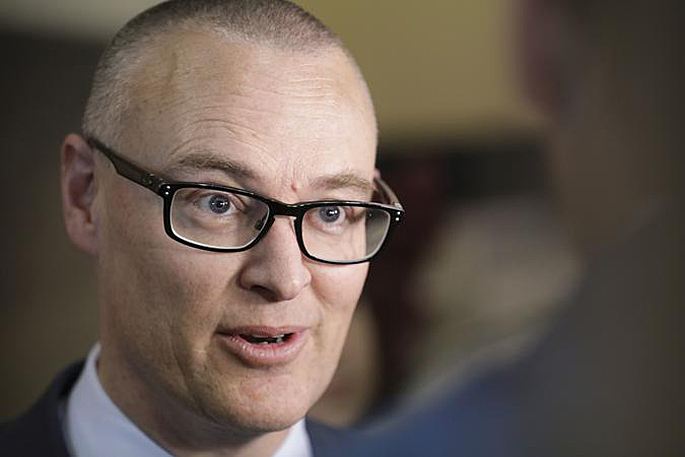 David Clark.
'Rising food prices is a global issue. Omicron, ongoing disruptions to global supply chains and Russia's invasion of Ukraine is putting pressure on prices in every country, but that is exacerbated here by the lack of competition at the checkout. And that is something we can act on.
'Wednesday's figures confirm the findings in the Commerce Commission's grocery market study that the supermarket duopoly is making profits at the expense of everyday New Zealanders.
'Even at their conservative estimate, the market study found that the major grocery retailers were earning excess profits of around $1 million a day, well above what would be expected in a workably competitive market.
'The average return of the major grocery retailers at over 12 per cent was more than double the rate of normal return for grocery retailing in New Zealand of 5.5 per cent.
'No matter how you cut it, it's clear that New Zealanders are paying too much for their food and groceries.
'The Government is committed to taking action to pave the way for additional players to enter the New Zealand grocery market in order to increase competition.
'Given the importance of healthy levels of competition in our retail grocery sector I have not ruled out going further than the options that the Commission tabled in its final report.”
The Government will announce its response to the Commerce Commission's recommendations next month.

6 comments
Tell us something we don't know
Posted on 14-04-2022 09:50 | By Kancho
Anyone who shops know already as it has been building for months and will continue according to economists in this morning paper to a prediction of eight percent. This is more on some items so not an even increase as people well know . Government spending and borrowing on top of international inflation has pushed us and already are twice that of Australia and second of a OECD countries. Still how many politicians actually do the shopping nor worry about how far their income will stretch as they wouldn't even notice.
No wonder
Posted on 14-04-2022 10:51 | By Kancho
That our young and skilled are off overseas now the flights are back on . Far better cost of grocery , of general living expt and more pay it's a no brainer. Also hard to attract skilled people as even our touted lifestyle is not so good either, still they won't know that until they get here and will probably leave again . With the twenty percent leaving school hardly literature or mathematically able it's not good for employment. Most of my family young have gone or are packing with great jobs in Australia, America and UK.
Spin
Posted on 14-04-2022 13:05 | By Slim Shady
They keep spinning the same BS about global issues. Inflation is double here compared to elsewhere. Labours fault. Borrowed and printed more than EVERY country apart from the US in the last two years. Fuelled the fire.
No Surprise
Posted on 14-04-2022 13:15 | By Bob Landy
High fuel costs. Viable farmland converted to carbon offset forestry. Thanks greenies.
Profiteering.
Posted on 14-04-2022 14:33 | By morepork
We know they're doing it, so stop it. No problem passing laws to limit our Democracy; how hard can it be to limit profits on essential produce?
@Kancho
Posted on 15-04-2022 16:44 | By morepork
As usual, you raise a point that is pertinent for most of us. There has been a lot of talk about profiteering, but very little action. It's pretty obvious that self-policing ISN'T working and despite the company's trying to calm us down, ordinary people on fixed incomes and/or with families to feed are just being crushed by the cost of food. You are absolutely right that the people making political statements about it have very little actual exposure to it, and probably mostly have their stuff delivered without even looking at what it costs.
Leave a Comment
You must be logged in to make a comment.