


Monsoon buckets are being used today to dislodge areas of rock face that appear to have been weakened by the large slip over the weekend at the Waioeka Gorge.
NZTA Bay of Plenty acting state highways manager Andrew Scott says a helicopter carrying monsoon buckets has been dumping water from the nearby river onto rock face areas that geologists have identified as likely to cause further slip movement.
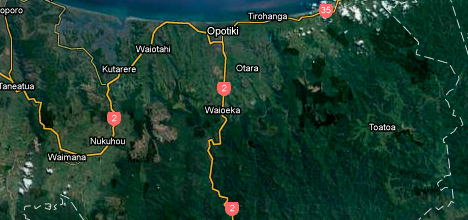
The Waioeka Gorge. Image: Google Earth.
He says before contractors can safely remove debris from the Waioeka Gorge the rock face areas need to be stabilised from any further slip events.
'There is still areas that our geologists are concerned might come down, the monsoon buckets are being used to dislodge any loose material so that it can come down gradually before we can remove all the debris.”
Andrew says crew worker safety is paramount and work to remove debris will start as soon as the geological assessments confirm that the hillside is stable.
He says the NZTA appreciates the closure will have ongoing disruption and additional costs to motorists with the alternative routes via SH35 around the East Cape and SH5 through Taupo adding extra travel time for drivers.
We share the frustrations of motorists, truckies and tourists but the safety of drivers comes first, so re-opening the road comes down to stabilising the slope, which is proving to be a challenge with the hillside still holding a lot of loose material.
He says the NZTA is grateful to the contractors who had been working constantly onsite since the first slip occurred on Friday 2 March.
'Saturday's slip is the largest we have had in the gorge in recent memory and the team from Opus and Downers have been working tirelessly in difficult conditions.”

0 comments
Leave a Comment
You must be logged in to make a comment.