


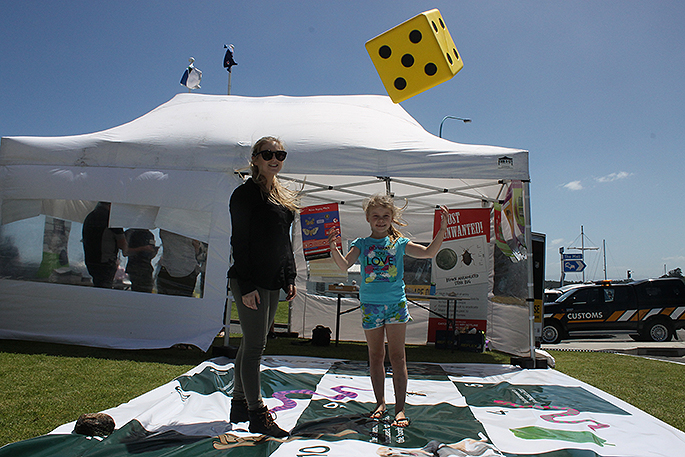
The very high tech and the very cute means of protecting our borders, plus an over-sized game of snakes and ladders, were part of the Biosecurity Week Public Day at the Port of Tauranga.
The high tech protection included the Thermo Scientific FirstDefender RM device and the cute were of course the biosecurity beagle dogs.
The snakes and ladders – well that was a game to engage children and help them understand the importance of controlling unwanted pests at yesterday's open day.
Customs staff demonstrated the FirstDefender, which shoots a laser beam into an unknown substance, usually a suspected illegal drug, to accurately identify it in a matter of seconds.
The devices were purchased with money recovered under the Proceeds of Crime (Recovery) Act.
Kiwifruit Vine Health was also on hand to show local residents the range of pests which are a current threat – including the Brown Marmorated Stink Bug which is of particular concern at this time of year.
Larger than New Zealand's stink bugs (about the size of a $1 coin), it's an agricultural pest found in Asia, notably China, Japan, and Korea. It has aggressively invaded the US and could successfully establish in New Zealand.
This insect feeds on more than 300 hosts, primarily fruit trees and woody ornamentals but also field crops. Almost any crop can be at risk, including: citrus; pipfruit; stonefruit; berries and grapes; asparagus; soybeans and maize; honeysuckle; maple; butterfly bush; cypress, hibiscus; and roses.
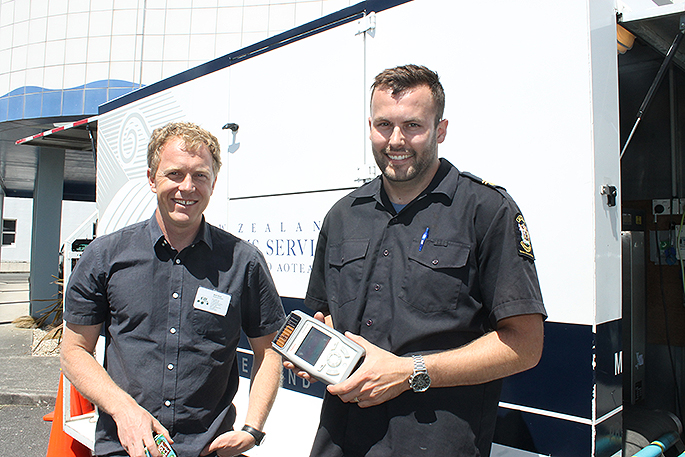 Matt Dyck, biosecurity analyst with Kiwifruit Vine Health, and Simon Coles, senior customs officer, with the Thermo Scientific FirstDefender RM device at yesterday's Biosecurity public day.
Kiwifruit Vine Health chief executive Barry O'Neil says the event and Biosecurity Week are all about getting the biosecurity message out there, and especially the important role in detecting pests that locals living close to the port have to play.
Effective biosecurity awareness is critical to the Bay of Plenty region, says Barry.
A major biosecurity incursion puts at risk New Zealanders livelihoods, lifestyles and environment, as well as having major impacts on our orchards, forests and farms and the thousands of people they employ.
Barry is urging people to call the biosecurity hotline 0800 80 99 66 at any time of the day or night to report suspected pests or diseases that should not be in New Zealand.
This includes land, freshwater and marine pests or diseases in pla

0 comments
Leave a Comment
You must be logged in to make a comment.