


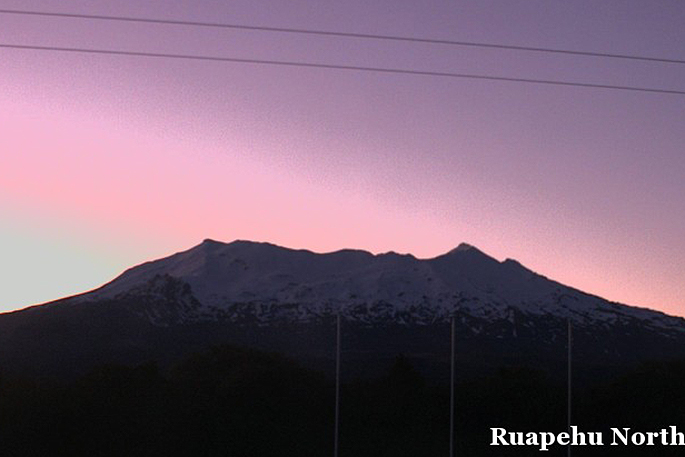
Seismic activity at Mt Ruapehu is increasing as the Crater Lake temperature peaks.
Since early September, Mt Ruapehu's Crater Lake had been heating at a rate of around 1C per day, reaching a maximum of 40C on October 4, reports GeoNet duty volcanologist Brad Scott.
'The lake temperature has cooled slightly since then and is now hovering around 37C. After October 18, the level of volcanic tremor under Mt Ruapehu increased in strength. Volcanic tremor is always present at Mt Ruapehu, however the level can vary.
'An increase in the strength of volcanic tremor began on October 18, where a sharp increase was noted before the energy declined a day later.”
Brad says subsequent tremor increases occurred again on October 25 and 28, and currently remains higher than normal.
'These tremor pulses don't appear to be related to any variation in the lake temperature. Our records show that similar periods of increased volcanic tremor were present May-June 2016, again when the lake temperature was high.
'Importantly, no eruptive activity or geysering was noted in Crater Lake during the previous periods of volcanic tremor.
'Weather conditions have not been ideal for mountain observations. Nevertheless, our scientists will be visiting the lake to collect water samples for further analysis and making a gas flight when the weather conditions improve.”
The active crater at Mt Ruapehu is occupied by Crater Lake and it displays temperatures that typically range between about 15 and 40C and the phases can last between about 9 and 20 months.
The lake cooled to a minimum of 12C in mid-August and then remained at 13-14C until early September when it started to heat again and reached a peak of 39.8C on October 4.
GNS Science volcanologists continue to closely monitor Ruapehu through the GeoNet project.
The Volcanic Alert Level for Mt Ruapehu remains at Level 1 (minor volcanic unrest) and the Aviation Colour Code also remains unchanged at Green.
News: Mt. Ruapehu: Seismic activity increases after lake temperature peaks. Volcanic Alert Level unchanged. More: https://t.co/hESjrq3goc
— GeoNet (@geonet) October 31, 2016

0 comments
Leave a Comment
You must be logged in to make a comment.