


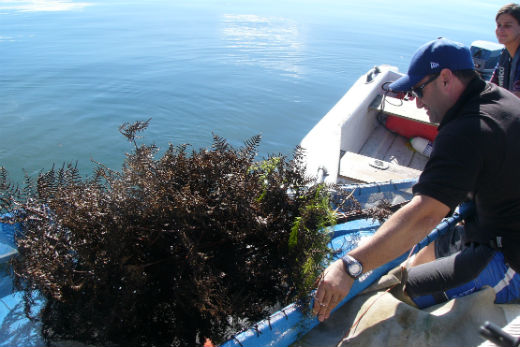
The traditional method of using bundles of pigfern to catch koura is being used by scientists studying freshwater crayfish population levels in the Rotorua Lakes.
Local kaumatua told Dr Ian Kusabs about the practice after he'd discovered problems associated with other approaches, including spot lighting scuba, underwater cameras and bait traps.
Ian Kusabs using the method to catch koura. Photo: Supplied.
'We needed to develop suitable monitoring methods,” says Ian.
And since the suggestion to use tau koura – bundles of fern which sit on the lake bed – he admits the results have been 'outstanding”.
After the koura move into fern fronds, which provide habitat for them, the process involves removing the bundles from the lake and placing a net below to ensure they don't escape.
'We got a wide size range, an unbiased sex ratio and a good catch rate,” explains Ian. 'Also, it's cheap to set up, can be retrieved whenever, is sustainable and actually enhances the fishery.”
Koura numbers are currently being determined to see if there is enough to sustain a market. They were an important food source for Te Arawa, and were used in trade.
According to Ian, they are also a keystone species crucial to the health of the ecosystem.
'There was anecdotal information that numbers have declined since the arrival of Pakeha,” he says.
In 2006 the Te Arawa Lakes Settlement Act allowed Te Arawa to manage the fishery and Dr Kusabs says they are looking at developing regulations and management plans.
With limited information available, gathering credible data was an important issue. However, to have a sustainable and regulated market, researchers still need more information about the state of the koura fishery.
'We need to know the abundance, biomass, size, sex ratio, breeding time, fecundity and size at breeding,” adds Ian.
'We found out their breeding season was April to November and at a 28mm minimum size, 50 per cent of breeding females would have the chance to breed before growing large enough to be harvested.”
The information will help develop rules for the fishery. Currently koura are restricted to 50 per person, per day, and commercial sales are banned.
Proposed regulations include tau koura being the only allowable means of deep water harvest, a continued ban on commercial sales, the retention of the 50 per day limit and a ban the taking of females with eggs.
Ian used tau koura on eight Rotorua lakes and found three – Rotorua, Rotoma and Rotoiti - have koura in large enough numbers to consider harvesting. Further work will be carried out on the other seven lakes in the region.

0 comments
Leave a Comment
You must be logged in to make a comment.