


Supplying water to the new city suburb at Wairakei that is expected to take shape in the later 2020s may be based on a different model to most New Zealand urban developments.
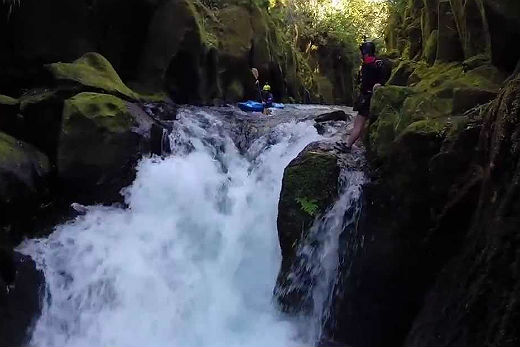
The Waiari Stream is to provide water for Papamoa and Wairakei. Photo: YouTube.
With a ten year lead time to think about it, planners are taking a long look at how thing s could be done differently, more efficiently and perhaps cheaper.
Among the issues being looked at during the Australian Study Tour this month is alternative ways of providing some of the three waters; wastewater, stormwater and drinking water for the 30,000 or so people expected to eventually inhabit the area towards the Kaituna River.
'We are looking at alternative infrastructure for the waters,” says SmartGrowth implementation manager Duncan Tindall. 'We are not seeing that on a unit by unit basis, but certainly the use of smaller scale alternative waters in particular is something we are looking at. We want to make sure it is viable both economically and environmentally.
The price of water in Australia is four times higher than the price of water in New Zealand, but even where an alternative may be half the Australian price there may be legal differences. Introducing alternatives into New Zealand may require a significant change to New Zealand legislation.
'But these are the things we want to be aware of,” says Duncan.
For that reason one of the meetings is with an authority/developer who has successfully delivered alternative water infrastructure for private developments at a couple of sites of similar residential density to that planned for the Wairakei site.
The city council is also planning a water intake on the Waiari Stream on No 1 road south of Te Puke to supply water for the Papamoa East population.
Another aspect of the Queensland visit is gathering information on the Brisbane neighbourhood plans.
'Brisbane has been recognised for the quality of tier neighbourhood plans that was a significant process they went through which was five years of community engagement before they even started,” says Duncan.
'So learning how that engagement with the community works and how that produced the positive outcomes that they did, and again it's all about learning lessons from that.”
Unlike Christchurch which had no time to consider what it would replace its earthquake smashed infrastructure with, the SmartGrowth partners have more time to plan.
'What we are doing here is the thinking and consideration to make sure we do have the best outcomes,” says Duncan.

0 comments
Leave a Comment
You must be logged in to make a comment.