


Thirty Bay of Plenty waterways will feature on a new website launched this week as a tool for people to find out what's really happening in their local streams, river and lakes.
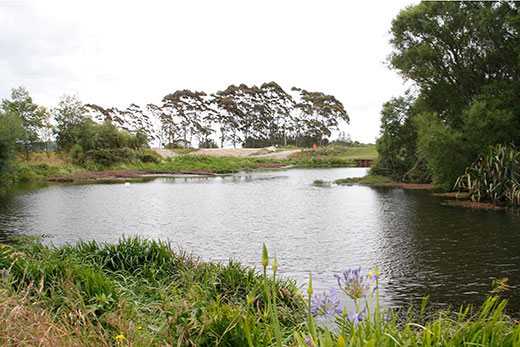
The upper Kaituna River catchment has 20 sites featuring on the new LAWA website.
The Land, Air, Water Aotearoa website – called LAWA – shares environmental information from councils throughout New Zealand in one place and in an easy to understand format.
The first stage of the long-term project focuses on rivers, with state and trend data displayed for more than 1100 freshwater monitoring sites – including information on 30 Bay of Plenty waterways.
An introduction video to LAWA can be watched here.
The website is collaboration between New Zealand's 16 regional and unitary councils, the Ministry for the Environment, Cawthron Institute and Massey University, with support from Tindall Foundation.
Freshwater scientist Roger Young of Cawthron Institute, New Zealand's largest independent science organisation, says good information is key to good decision-making.
'This new website is a great tool to help communities understand what's happening in their rivers and get more involved in caring for them.”
The website says rivers and streams in the Bay of Plenty provide a range of economic benefits and have important ecological, recreational, aesthetic, and cultural values.
'Uses of the rivers and streams include municipal and industrial water supply, waste disposal, irrigation, frost protection, and hydro-generation. These uses and values can be adversely affected by loss of water quality.
'Management of the environmental quality of rivers and streams in the Bay of Plenty is guided primarily by the Regional Water and Land Plan. Objectives, methods and policies in this plan, and in the Regional Plan for the Tarawera River Catchment, are intended to provide for the maintenance and enhancement of water quality and quantity.”
People can search a river to find out scientific data held about it – with some rivers having information on multiple sites.
People can use the site to report a river observation to their regional council and they can also read news releases form regionals councils on waterways-related projects, plans and issues. Water-related event can also be poster on the saite.
Within LAWA, Cawthron scientists have provided advice around website development and content and also provided expertise to validate the way the data is collected, processed and analysed.
'We're excited to partner with regional councils and the Ministry in what we see as a truly innovative project bringing complex science into an easily accessible and understandable format,” says Cawthron Institute chief executive Professor Charles Eason.
'Many people can so often be put off by overly complex scientific information but we believe LAWA has simplified the science and allows everyone to connect with what's going on in their river. This is a fantastic initiative for New Zealanders and we applaud all those involved.”
Regional Council Sector Group chair Fran Wilde says the website provides a wide range of information to help New Zealanders make good choices about using and enjoying our highly valued resource – fresh water.
LAWA also allows people to share information about what's happening in waterways. Users can share news, report pollution or promote clean-up or riparian planting days. They can also compare rivers and check if water quality is improving or not, says Roger.
'This is more than just a place to present data, it's for people to use, enjoy and contribute to. We'd love people to share their own stories about their local waterways on the site.
'The website will also be an excellent resource and tool for organisations and communities throughout New Zealand that are working to improve and maintain the health of our precious rivers.”
Cawthron Institute is a New Zealand leader in freshwater sciences, with expertise in river health assessment, catchment management and the requirements for in-stream flows.
Cawthron scientists provide advice and research services on everything from water quality and fish habitats through to understanding how river and lake ecosystems function and how to protect and rehabilitate them.
Work is now underway on developing LAWA's next modules, which will be water quantity and coastal water quality. Find out more about LAWA at www.lawa.org.nz

0 comments
Leave a Comment
You must be logged in to make a comment.