


With harvesting, earthworks and property maintenance underway, Bay of Plenty farmers and horticulturalists are being reminded to keep pests off their properties by checking visiting machinery is clean.
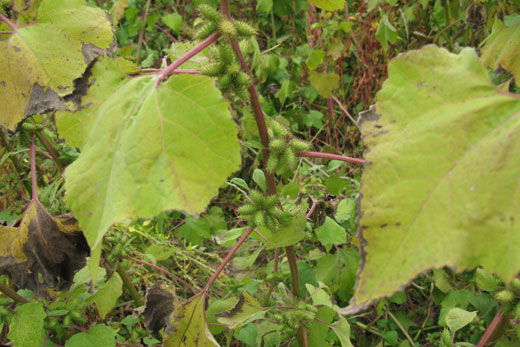
Small seed pods from Noogoora bur (pictured) can easily hitch a ride on a harvester. Photo courtesy of Darion Embling, Waikato Regional Council.
Bay of Plenty Regional Council senior biosecurity officer Shane Grayling says it's cheaper and easier for a farmer to keep pests off their property, than it is to control them once they've arrived.
'Before bringing machinery onto their land, property owners should be asking where it was last used and check that it's not carrying any soil or plant material.
'Even if the machine belongs to a neighbour or contractor they trust, it doesn't hurt to take extra care and check.”
Shane says pest plants can easily take hold in disturbed earth after ‘hitching a ride' to properties on rural machinery such as harvesters and diggers.
At least 80 pest species, such as alligator weed and noogoora bur, are known to be typically spread by machinery, says Shane, who points out that pests can also be transferred through stock movement, feed and gravel.
'The kiwifruit industry has had to adopt strict decontamination procedures and machinery movement controls since the Psa-V outbreak.
'Other farmers and growers can get ahead of the game and help protect their livelihoods by adopting good machine hygiene practices now, so that the spread of any new pests or diseases is minimised.”
New rural machine hygiene guidelines were released in late-2013 by national pest control agencies in collaboration with Federated Farmers, Rural Contractors New Zealand, Local Government New Zealand and the Ministry for Primary Industries.
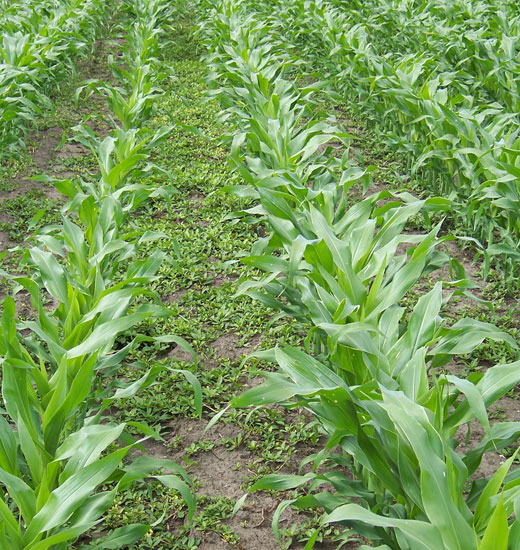 Unclean machinery could introduce alligator weed (pictured) into a crop field. Photo courtesy of Bay of Plenty Regional Council.
Shane says the eight-page booklet, called ‘Keep it Clean', contains clear, practical advice for landowners and contractors and a handy logbook for machinery operators.
'Ministry for Primary Industries is working hard to defend our international borders and regional council staff do their best to identify and eradicate any new pests to the region.
'We can't do it alone though – everyone needs to be on the look-out and stop the spread of unwanted invaders that have managed to slip through border controls or become established in other parts of the country,” says Shane.
Copies of ‘Keep it Clean' is available from www.npca.co.nz or by contacting a regional council land management officer by phoning 0800 884 880.
For information on identifying and control plant and animal pests, visit www.boprc.govt.nz/pestmanagement or contact a regional council land management officer on 0800 884 880.
If you find any unusual or suspicious insects, plants or other organisms, report them to the Ministry for Primary Industries' exotic pests and diseases hotline 0800 80 99 66.

0 comments
Leave a Comment
You must be logged in to make a comment.