


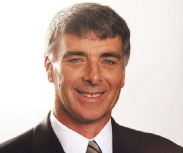
Many sheep and beef farmers are talking about industry reform – but affecting change won't be easy, warns Doug Leeder, one of those instrumental in the formation of Fonterra.
Politics and personalities nearly de-railed plans to establish the Fonterra co-operative in the late 1990s, says Doug. As chairman of Bay Milk, Doug was one of four dairy company chairmen who pushed for industry restructuring in the early 1990s.
'Looking from outside, people think the formation of Fonterra was a smooth transition. Well it wasn't. It absolutely wasn't and it took a toll on people and enthusiasm.”
Doug's advice to other industries, including sheep and beef, considering reform is that it must be driven from the top. Farmers can't effect change on their own – but they can influence who sits on their boards.
'Leadership that has a sound vision and passion for the cause will lead and effect change. The right executive will put in place a strategy and plan to fulfil that vision.”
The driver for the four chairmen was to return an additional $450 million per annum to dairy farmers, which was what a report into the industry identified as ‘the prize' to be gained from a restructured industry.
'The end game in my view, and my view is challenged by some, was to act in the best interests of farmers collectively.”
The New Zealand Dairy Board, which originated in the 1960s, was the industry's legislated marketer; and was supplied by multiple companies through into the 1980s. That board was responsible for international marketing and also dealt with trade politics.
'Back in the 1970s and 1980s, it was common for intervention stocks to build up in Europe and the USA. The board also dealt with national politics around its status as a single seller. It was also involved in product development and innovation.”
Mergers
By 1987, because of mergers, the number of dairy companies had gone from 80 to 35. And as they got bigger their emphasis shifted to growing their share of dairy industry returns.
'At this time the driver for success in the New Zealand dairy industry was the margin over and above dairy board price. Some perverse behaviour fell out of this issue.”
Companies began 'playing a game” through their preferred product mix submissions. Single product companies were at disadvantage compared with multi-product capable companies. The companies, which had a good understanding of international market demand, would tell the board they wouldn't make cheese, for example, but just produce milk powder.
Politics
In order to meet market demand the board would ask those companies to change their product mix, to say cheese and casein, and then the companies would ask how much extra margin the board would pay them to do that.
The result of this domestic politics was that dairy board lost confidence that it could maintain supply integrity to the markets, says Doug. The board was forced to build up stock in the markets in order to have the surety of enough product to supply customers.
'There was a huge internal effort to modify and cajole the companies. But the behaviour change required to satisfy the markets' product demands was a problem.”
It was in this climate that representatives of four dairy companies Alpine Dairy Products Ltd, Northland Co-Op Dairy Co, Tui Milk Products and Bay Milk met to chart a new course forward.
Vision
'We had a common vision and recognised the problems, and commissioned a consultant group to work with our CEOs; and the report showed that if we restructured the industry to take out all impediments and tensions, $450 million annually was the prize which would accrue to benefit New Zealand dairy farmers.”
Winning that prize wasn't to prove easy. Doug says he rather naively believed most in the industry would see the common sense and logic of restructuring.
'I thought wrongly it would be smooth sailing – and the industry would see the logic and buy in to the idea and we would be away. But that was not the case.”
Dryden Spring, chairman of the dairy board in the early 1990s, felt the timing for change was not right. The government of the day had the view that the legislative nature of the dairy board, as a single seller, had run its time and there was pressure from trade organisations around the world for change.
The report the four dairy companies commissioned was presented to a dairy board chairman's meeting in Wellington. 'There were 15 dairy company chairmen at the table and 13 said they owed it to farmers to continue the work begun by the study – but two said the report was ‘pie in the sky'.”
Duty
Doug says it should be remembered that the duty of a company director is to act in the best interest of the company, not necessarily the shareholders. The responsibility for directors of co-operatives, in Doug's view, is slightly different because they have supplier shareholders – and need to get the balance right between acting in the interests of the company and that of the supplying shareholders. He sees little point in compromising the interests of those suppliers if the action is just to transfer costs back to farmers.
The NZDB commissioned the McKinsey Consulting Group to come up with proposals for a future industry structure. The report suggested two options. Option one was the single co-operative Mergco (which eventually became Fonterra), and option two was for two large co-operatives to share the market.
'Option two in my view was a major snake. After all, the good progress made it looked like option two was the way it would go – and that was a real disappointment. It was based around philosophical difference among the people at the top. On one side, you had co-op people within the board, who thought they need to act in the greater good of the New Zealand dairy industry farmer. And the others, who thought they must act in the best interest of their company, and that competition, delivered the best performance.
'However, I had seen what happened in other industries such as forestry and the meat industry where in many markets product was sold on the lowest price, and not on merit, and co-operation was not evident.
'My view was option two, with two companies going head to head, would see major destruction of 40 years' of market development and value destruction for New Zealand dairy farmers.”
Finally in 2001, Fonterra was formed by the two largest co-operatives, New Zealand Dairy Group and Kiwi Co-operative Dairies, together with the New Zealand Dairy Board. The two smaller co-operatives, Tatua and Westland, did not join Fonterra, preferring to remain independent.
Government
The merger had initially been subject to New Zealand Commerce Commission approval but the New Zealand Labour government introduced subsequent legislation allowing for the export of dairy products to be undertaken by any company, so effectively by-passed the commission.
'We wouldn't have got Fonterra if a National Government had been in power. The legislation was given to us by Helen Clark's Labour government,” says Doug.
'After all these years of arguing, that's where it ended up. The costs from 1994 to 1999 were part of process and we did spend a lot of money. Where I do have a problem is from 1999 to 2001. I think it is unforgivable that $1 billion in gains to farmers were forgone, not for any commercial or common sense reason, but to accommodate politics.”

0 comments
Leave a Comment
You must be logged in to make a comment.