


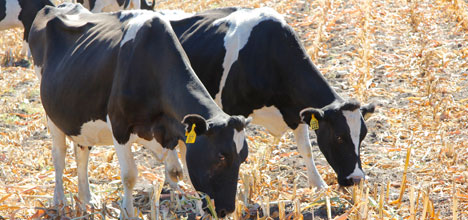
This summer's drought has cost the country's land based primary industries around $1.3billion, according to the Ministry for Primary Industries.
'It's been a season of two halves for the land-based industries, with many areas impacted by drought in the second half,” says Jarred Mair, Sector Policy director.
'The impacts of the severe drought continue and could continue for several seasons, for example many sheep and beef farms need to build breeding stock numbers back up.”
MPI has analysed what impact the drought has had on primary sector export revenues and this shows a decline for the year to June 31 of $1.3billion.
The report does not however, give a breakdown on the drought's impacts on each region of the country.
'As many commentators have said in the past few months, the challenge to the primary industries is to develop resilience – to protect their ability to continue to produce and export, as well as to add value.
'This will help meet the goal that MPI has set, which is to help the sector double the value of primary sector exports by 2025.”
However, over all primary industries performing well in the face of significant challenges this year, and the medium-term outlook is very positive, says the Ministry's report which includes production, trade and pricing statistics for the current season and for three or four years out.
According to the report, MPI expects primary sector revenues will increase 2.2 per cent to $24.1billion in the year to June 2014, and to grow at a compound annual growth rate of 7.4 per cent to $29.5billion in 2016/17.
'This outlook is based on maximising opportunities in Asian markets, recovery from the global recession and an assumption of a slightly lower New Zealand dollar against trading currencies.”
Key points from the Situation and Outlook for Primary Industries report:
- The medium-term outlook for the dairy sector is for steady growth continuing, at a rate of 8 per cent compounding.
- The meat industry faces challenging times ahead, as drought impacts have added to existing competitive pressure for land use.
- The challenge the forestry industry has identified is to extract maximum value from the large harvest volume that's coming on-stream.
- There is a sharp contraction in kiwifruit volume due to the vine disease Psa, which is expected to rebound in the medium term.
- There's a better balance over the medium term between wine supply and expected demand.
- Pipfruit prospects are dependent on uptake and management of new varieties.
- Prospects for export vegetable crops are linked to development of irrigation, which creates more reliability for investment.
- While seafood volume growth is naturally constrained, slight price increases are expected.

0 comments
Leave a Comment
You must be logged in to make a comment.