


Eating and sleeping well are important, but not always easy, during calving but planning ahead can help farmers get through one of the busiest times on the farm, says Belinda Spratt of Pukehina.
'I really enjoy calving but you can get pretty tired and run down if you don't eat and sleep well. I make up a menu at the beginning of the week and make sure I have the ingredients I need so I don't have to think too hard about what to cook,” says Belinda, who with partner Ivan Burgener milk 260 cows on the coastal Spratt family farm.
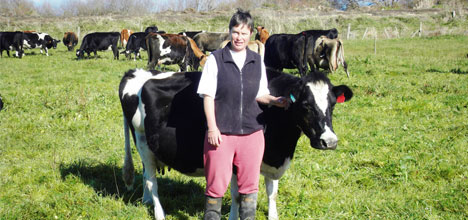
Belinda Spratt with Lily, one of triplet heifers born in 2005 and still part of the herd.
'Slow cookers are great. I often do all the vegetables and meat at lunch time, put them in the cooker and know a hot meal will be ready when we get in at the end of the day.
'That's much better than going for something quick and easy which might not be as nourishing or filling.”
Belinda has been dairy farming for 17 years, and during calving, the day begins for her and Ivan at 5am and ends around 6.30pm.
If the weather is wet and cold there's usually another trip out to check for new born calves which are taken into the warmth of the shed and fed colostrum.
'We don't usually have too many cows with problems calving and we don't induce. We select our animals on traits, one of them being that they calve easily, and another important one is temperament. We don't have a high BW herd but our cows perform well.”
The first calves in the herd are due around July 31, later than many in the district, but Belinda says calving at that time means less stress waiting for the feed demand/balance date to be met.
While animal welfare is top of mind for most farmers during calving, they shouldn't forget about their own health and ensure they eat and sleep well, Belinda says.

0 comments
Leave a Comment
You must be logged in to make a comment.