


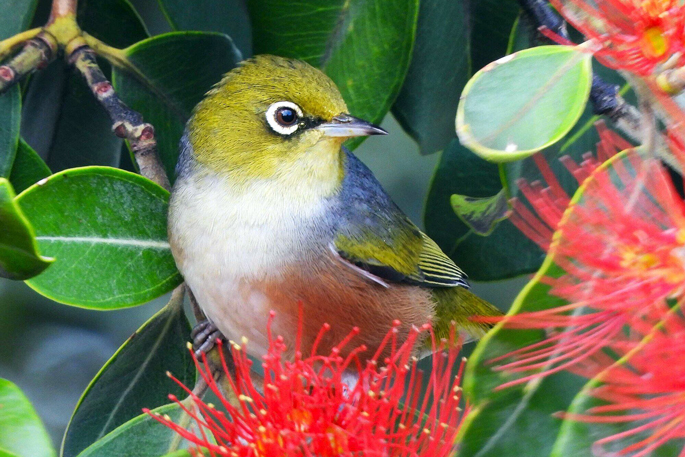
New Zealanders are being encouraged to pull on a warm coat, grab a pen and paper, and spend an hour observing birds as the 20th New Zealand Garden Bird Survey gets underway this weekend.
The annual survey, officially known as Te Tatauranga o ngā Manu Māra o Aotearoa, runs from Saturday, June 27, to Sunday, July 5, and remains New Zealand’s longest-running citizen science project.
Since it was established in 2007 by ecologist Dr Eric Spurr, more than 84,000 survey responses have been submitted by people across the country, creating a valuable record of how both native and introduced bird species are faring in urban and rural environments.
This year the survey is being led by the Bioeconomy Science Institute Maiangi Taiao in collaboration with the Department of Conservation (DOC) through its Always Be Naturing campaign.
DoC predator free manager Pim de Monchy said the survey offers New Zealanders of all ages an easy and enjoyable way to connect with nature while contributing to important conservation research.
“Predator free isn’t just about trapping,” de Monchy said. “It’s also about connecting with nature, taking note of what you see and playing an important role in helping understand how birdlife is doing. The survey will hopefully spark more conversations about Predator Free 2050 and what we can all do to help get there.”

Kererū in kōwhai. Photo / Jan Nelson
The survey data are analysed by ecologists at the Bioeconomy Science Institute and published annually in the State of NZ Garden Birds report. Senior Researcher Dr Angela Brandt said results from the 2025 survey revealed some encouraging signs for several native species.
“For the first time, silvereye (tauhou) counts show a slow increase nationally over both the past five years and the past 10 years,” Brandt said. “Bellbird (korimako) counts are also showing a slow increase over the past five years for the first time.”
The 2025 survey found silvereye numbers increased by 16 percent over the past decade and 15 percent over the past five years, while bellbird counts rose by nine percent over the short term.
Other native species also showed positive trends. Tūī counts increased by 19 percent over the past 10 years and seven percent over five years, while fantail populations continued a long-term upward trend, rising 31 percent over the past decade.
However, Brandt said not all the news was positive.
“Kererū are showing a moderate decline over the past five years, and that’s a trend we should keep an eye on,” she said.
While kererū numbers remain 16 percent higher than a decade ago, the latest survey recorded a 22 percent decline over the past five years, suggesting a recent downturn in sightings.

New Zealand bellbird – CC BY-SA 4.0 via Wikimedia Commons. Photo / Charles J Sharp
Among introduced species, goldfinches showed one of the steepest declines, with numbers down 37 percent over five years and 16 percent over 10 years. Chaffinches and starlings also continued long-term declines, while dunnock numbers stabilised nationally for the first time since 2020.
Researchers said the survey acts as a vital environmental health check, with common garden birds serving as indicators of wider ecosystem health.
Taking part is simple. Participants can choose any one day during the survey period, spend one hour observing birds in a garden or local park, record the highest number of each species seen or heard at one time, and submit their results online.
Organisers hope thousands of New Zealanders will take part in this milestone 20th survey, helping build an even clearer picture of the country’s birdlife and the health of the environments they inhabit.
As well as being a great opportunity to connect with nature and give yourself a wellbeing boost, it’s very easy to take part in the survey.
Visit the NZ Garden Bird Survey website for instructions and to print off a tally sheet. Select a garden or a local park. Choose any one day between June 27 and July 5 and look and listen for birds on that day for one hour.
For each species, record the highest number seen or heard at one time in that hour. Submit your results online via the NZ Garden Bird Survey website’s Take Part page.

0 comments
Leave a Comment
You must be logged in to make a comment.