


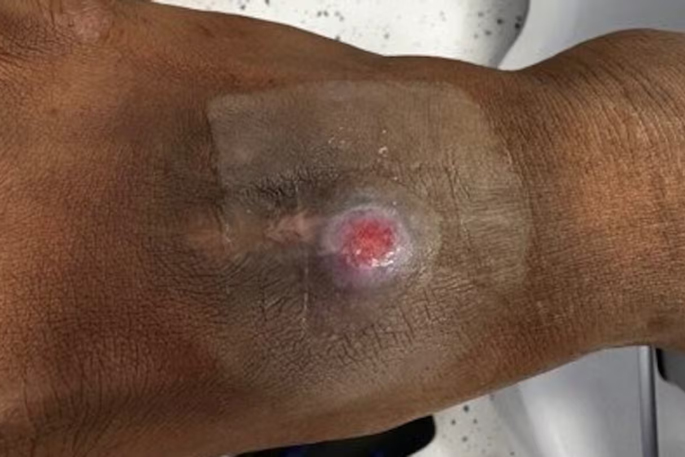
A young man from Vanuatu was mistakenly diagnosed with syphilis from a sore on his foot but actually had a rare disease that is still lingering in the Pacific Islands.
Tauranga-based sexual health medicine specialist Dr Massimo Giola said the man had yaws, a tropical skin infection that causes lesions or ulcers, but can be treated with penicillin.
Giola said there was no cause for alarm among the New Zealand public, as the disease does not spread easily, but he wanted other clinicians to be aware that they might come across yaws in their practice.
“There’s no reason to panic or for Kiwis to think this is a new epidemic, absolutely not, it’s been around for a millennia probably, and it doesn’t spread easily at all,” he said.
The case was highlighted in a report in the NZ Medical Journal published today.
The young man was first referred to Giola as a case of syphilis, presenting to him with a coin-sized ulcer on his right foot that was reddish in colour and inflamed.
Giola has worked in sexual health services in the Bay of Plenty and the Rotorua Lakes district for about 10 years and after talking with the man, immediately suspected he did not have syphilis, but yaws.
Yaws can be mistaken for syphilis as it is caused by a very close relative to the syphilis pathogen, with the difference between the two diseases only being a few nucleotides across a whole DNA genome.
“Yaws used to be very endemic in the Pacific, so it was all over the place basically, but the World Health Organisation [WHO] started an eradication campaign that was successful, however there are still a few remaining pockets,” Giola said.
“It’s still present in places like Vanuatu, Solomon Islands and Papua New Guinea.”
The disease usually presented in childhood with a sore appearing on the lower legs or feet, and typically healed without treatment but sometimes complications could emerge from infection, he said.
About 75-80% of people affected by yaws were children under 15 years of age, according to WHO.
University of Otago deputy vice-chancellor, Pacific, Professor Dianne Sika-Paotonu, said if left untreated, yaws could result in disfigurement and debilitating complications.
Permanent scarring with skin and bone deformities could occur with chronic lesions that could also lead to restricted movement in the affected joints, she said.
The young man Giola saw came to New Zealand on a seasonal visa and was likely infected later in life.
In order to contract yaws a person would need “very intimate and prolonged skin to skin contact” with an active case, Giola said.
It was not possible to get the disease from using shared public spaces such as a public toilet or an airplane.
“There’s absolutely no reason to discriminate against people from the Pacific Islands because of this,” he said.
It was important New Zealand clinicians were aware that yaws was still out there when screening patients, and to prescribe the correct treatment, which was typically a shot of penicillin, he said.
The disease was rarely seen in developed countries.
Further health research and investment needed for diseases in the Pacific
Yaws is categorised as a neglected tropical disease by WHO, forming part of a group of diseases that affect mostly tropical or subtropical communities but receive very little global health funding.
Giola said there was some patchy knowledge about the potential for complications with yaws because there had not been enough investment in research about the disease.
“Part of that is because yaws mostly only affect poor countries and these are diseases of poverty, and there’s just not much money being invested in research,” he said.
Sika-Paotonu said inequities and disparities in health and health outcomes have persisted over time for Pacific and Māori communities in Aotearoa New Zealand and in the Pacific region.
She said ongoing shortages of healthcare professionals, inadequate resourcing of providers and difficulties in accessing primary care services all remained significant challenges.
“Addressing gaps and inequities for different communities requires properly resourced and targeted approaches that are appropriate and that recognise the specific needs of different groups that may be present,” she said.
“When people cannot easily access a health professional or face delays in follow-up care, diagnoses are more likely to occur later, and treatment may therefore be less effective.
“Ensuring timely and accessible healthcare is essential so people can receive care when they need it most.”
The recent HIV crisis in Fiji highlighted the ongoing health needs in the Pacific.
In September, Fiji’s Government declared an HIV national emergency after figures showed one in 60 adults was living with the virus.
The alarming emergence of such high rates of HIV in the population was linked to a growing methamphetamine crisis in the country and the sharing of needles from drug use.
The Herald earlier spoke to Sir Collin Tukuitonga, a prominent Pasifika doctor, about a trend of “bluetoothing” that was contributing to the surge in HIV cases.
It involved drug users taking blood from themselves and injecting it into a friend to share the supply of a drug, enabling another person to get high off the drug because they couldn’t afford to purchase it.
Sika-Paotonu said without improvements in equity and accessibility to timely healthcare, the existing pressures would likely further widen existing disparities in the Pacific region, and for Pacific and Māori communities.
Giola said after the young man received treatment, his lesion had fully healed and he had recovered.

0 comments
Leave a Comment
You must be logged in to make a comment.