


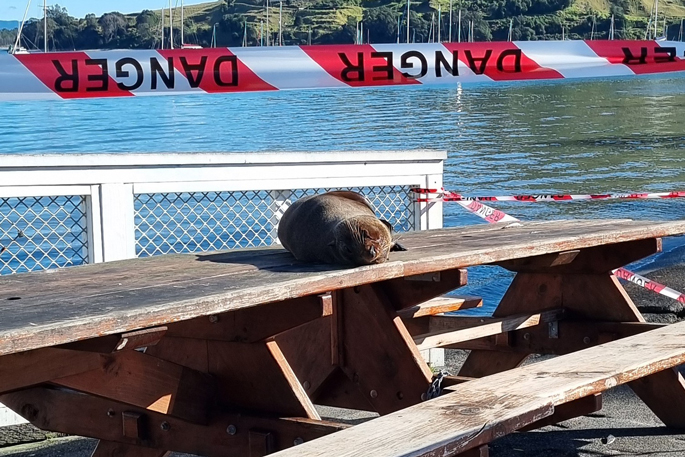
The Department of Conservation is urging the public not to panic as seal sightings increase across Tauranga and the wider Bay of Plenty region.
It says most animals spotted on beaches and roadsides are not in distress.
Each year between May and September, young seals and males leave their breeding colonies to explore, often hauling out on beaches, roadsides and other unexpected locations.
Department of Conservation (DoC) biodiversity ranger Sarah-Lyn Wilson said in a release that while the sightings can alarm the public, most seals are not in trouble.
“So long as we give them plenty of space and keep our dogs on a lead, they’ll eventually find their way back to the ocean,” she said. “But if they are in danger or severely injured, that’s when to call DoC.”
Around 15 trained volunteers are supporting the department this season, acting as first responders to reports of seals in distress across the Tauranga area.
Wearing high-visibility vests, they help assess the animal’s condition and determine whether further intervention is needed.
Long-time volunteer Leigh Pettigrew, who has spent about two decades responding to seal call-outs, said many reports turn out to be unnecessary.
“You turn up and it’s not injured at all, just floated over on its back while playing. Or it’s coughing or sneezing, completely normal behaviour,” Pettigrew said.
“But sometimes the seal will be in dire straits and if we can do something to help, that makes it worth giving up your spare time.”

Volunteers and DoC staff ready to respond to seal call-outs following the recent induction day. Photo / Sarah-Lyn Wilson, DoC
The Department of Conservation said the volunteer network plays a key role in helping staff prioritise urgent cases, such as seals found on roads, badly injured, or tangled in debris.
For non-urgent situations, volunteers also provide reassurance and education to the public about normal seal behaviour.
Authorities are reminding the public to keep a safe distance from seals, keep dogs under control and avoid getting between a seal and the water.
Anyone who sees a seal that is severely injured, being harassed, or in danger is urged to call 0800 DOC HOT.

0 comments
Leave a Comment
You must be logged in to make a comment.