


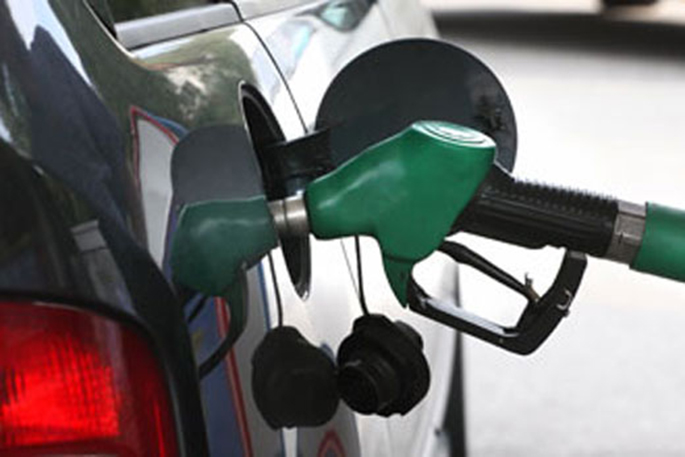
The Government is stressing there is no need to restrict fuel consumption as stocks dip below last week’s levels.
As of March 15, New Zealand’s combined petrol, diesel and jet fuel stocks equated to about 49 days of cover nationwide, including fuel being held in storage and fuel on ships bound for New Zealand.
An update as of March 8 had New Zealand with a combined 52 days of cover.
Today’s update from the Ministry of Business, Innovation and Employment described fuel supply as “currently stable” and New Zealand’s stocks as “healthy”, despite the United States-Iran conflict heaping pressure on global fuel markets and the disruption to shipping routes, namely the effective closure of the Strait of Hormuz.
“At this stage, we are not experiencing the types of sustained, direct supply impacts that would affect everyday access to fuel in New Zealand.
“There is currently no need for New Zealanders to change how they buy or use fuel.”
The ministry’s statement warned New Zealand as a fuel importer was not immune to changes in the global crude oil price.
“Higher prices are likely to flow through to fuel costs in New Zealand.”
According to the ministry, New Zealand had 51.3 days’ worth of petrol as of midnight on March 15 with 28.1 days’ worth in storage and 23.3 days’ worth on its way.
That was lower than the previous update on March 8, which said New Zealand had 57.9 days’ worth of petrol.
In diesel, there were 47.1 days of cover with 22.7 in storage and 24.3 on its way. As of March 8, diesel stocks totalled 49.9 days of cover.
In jet fuel, New Zealand had 49 days of cover with 25.6 days’ worth in the country and 23.4 days on the water. That was slightly higher than the 46.8 days’ worth held as of March 8.
The update also included data on expected fuel shipments. In the week of March 16-22, 10 vessels would arrive containing 22 days’ worth of petrol, 14 days of diesel and 13 days of jet fuel collectively.
In the following week (March 23-29), one vessel was expected with six days’ worth of petrol.
The data did not include shipments more than two weeks away.
 Finance Minister Nicola Willis said she was reassured by the update. Photo / Mark Mitchell
In a statement, Finance Minister Nicola Willis and Associate Energy Minister Shane Jones acknowledged levels had dipped but said it was not a cause for concern.
“Levels are down slightly from last week, but the changes reflect normal patterns of consumption and shipping. They are not a sign of supply disruption,” Willis said.
“It’s important to remember that fuel supply is inherently dynamic. Stock levels fluctuate week to week as fuel is consumed and new shipments arrive.”
Jones, who held ministerial responsibility for fuel security, said there was no current need to ration or restrict fuel.
“I want to be clear that at this stage, there is no need for fuel restrictions.
“Introducing rationing or restriction measures before there is clear evidence of a genuine shortage won’t create more fuel in the system.
“All indications are, so far, that New Zealand is well-placed to deal with the fallout from the closure of the Strait of Hormuz. We are working closely with other countries and our suppliers to ensure this continues.”
He added his expectation that fuel companies were “responsive” and would “work constructively with Government” as global fuel supply chains were impacted.
 NZ First minister Shane Jones held ministerial responsibility for fuel security. Photo / Mark Mitchell
The United States’ war with Iran has effectively closed the Strait of Hormuz, blocking one of the main sources of oil and fertiliser. This has led to fuel price hikes and concerns that rationing measures may need to be implemented.
Over the weekend, Energy Minister Simon Watts attended the Indo-Pacific Energy Security Ministerial and Business Forum in Japan, holding discussions with his counterparts from Japan, South Korea, Australia, Singapore as well as the United States Secretary of the Interior, Doug Burgum.
“The vibe in the room was this is a critical point,” Watts told the Herald.
“The Indo-Pacific is a major growth engine for the world and the heavy reliance on the Middle East, particularly in this region, for fuel, is critical.”
Watts said other countries were working to diversify their fuel supply chains. He said he was assured that the supply to New Zealand wasn’t at any immediate risk.
“They conveyed to me a high degree of confidence that their systems and processes are resilient and that they have plans in place to deal with whatever eventuality gets thrown at them.”
Watts acknowledged such assurances were subject to new developments relating to oil supply or the US-Iran conflict. He said his counterparts didn’t highlight any particular developments which could significantly threaten fuel supply, nor the potential for New Zealand’s supply agreements to be altered.
Adam Pearse is the Deputy Political Editor and part of the NZ Herald’s Press Gallery team based at Parliament in Wellington. He has worked for NZME since 2018, reporting for the Northern Advocate in Whangārei and the Herald in Auckland.

2 comments
Don't Stop
Posted on 19-03-2026 12:26 | By Yadick
Of course the Government don't want us to stop buying fuel. The more we pay, the more revenue they get.
Interestingly, according to Gas Spy the price of fuel around Tauranga has a massive variant between cheapest and most expensive:
Diesel .41c difference
91 .40c difference
95 .48c difference
98 .31c difference
HOW?
That's a very wide variance. I guess some station owners just see it as an opportunity to be seized.
Fair trading - DEFINITELY NOT.
Opportunistic Greed - DEFINITELY.
I remember when Auckland had the .10c surcharge, Tauranga’s petrol was still more expensive. Good thing that we're all SO wealthy here in Tauranga . . .
On yer bike!
Posted on 20-03-2026 11:12 | By morepork
I took the bicycle which has languished in my shed for years, invested $25 for a new pump, cleaned and oiled it, checked the things that need checking, and got it back on the road.
The bike shop guy said he has 6 weeks queue of work, so I guess I'm not the only one.
I calculate that much of my fuel usage is in shopping and trips to Baywave.
I haven't made the Baywave run by bike yet, but, as my cycling confidence returns (and fuel escalates in price) I expect to do so.
Might be a different story as the winter bites, but only time will tell.
Leave a Comment
You must be logged in to make a comment.