


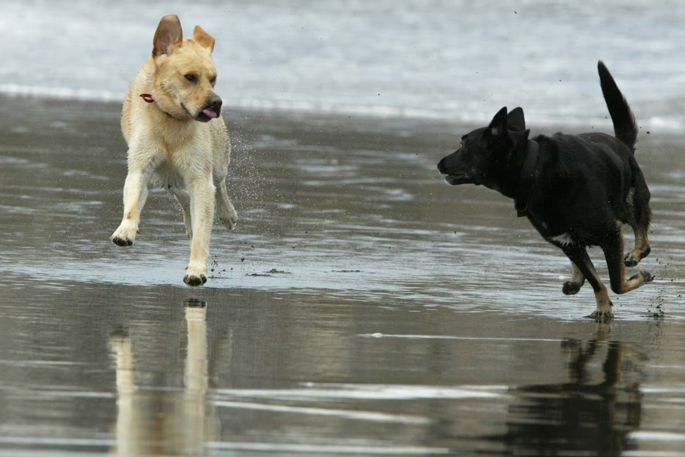
Tauranga dog owners could soon face tighter rules for accessing beaches, paths and public spaces under a refreshed set of council bylaws.
The proposed changes also include new licence requirements for anyone wanting to keep more than two dogs or six chickens on a property.
Cats, however, remain untouched by the new rules.
The proposed new rules in the Dog Management Bylaw and Policy, and Keeping of Animals Bylaw, were approved for public consultation in a Tauranga City Council meeting on Tuesday.
Most of the changes apply to dog rules, with the council saying the purpose of the bylaw was to balance opportunities for dogs and their owners to exercise, socialise and enjoy the city, with the need to minimise danger, distress or nuisance, and to protect public safety and enjoyment, as well as vulnerable wildlife.
Shark Alley
The council has proposed extending seasonal dog restrictions in Mount Maunganui’s Shark Alley to be year-round.
Dogs are already banned year-round from Pilot Bay, Mauao, Mount Maunganui Main Beach and Moturiki (Leisure Island), but the ban on the next beach along, Shark Alley, is currently only August to January.
The council also wants to prohibit dogs in the adjacent coastal dunes, grassed area, boardwalk and greenspace up to the Marine Parade kerb, unless they are passing through leashed via an accessway.
These changes aimed to reduce harm to native wildlife such as the NZ dotterel, native skinks, diving petrels and kororā.
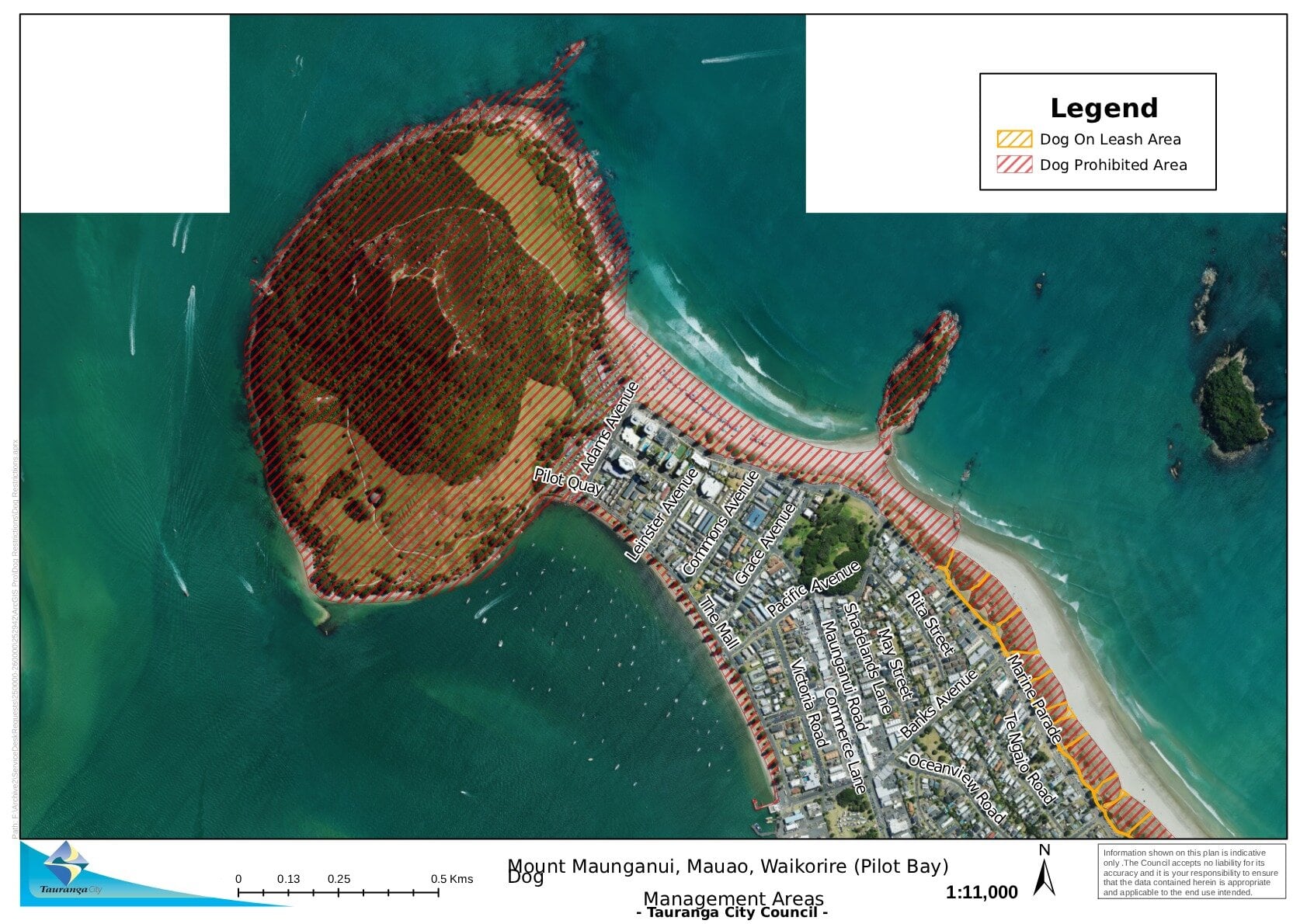
Leashed and prohibited dog areas in Mount Maunganui around Mauao and Pilot Bay. Map / Tauranga City Council
They came after lobbying from community wildlife groups and the Department of Conservation asking the council to take steps to better protect threatened species.
The rules include exemptions, such as for disability assist dogs and transiting.
New leash rule, ban area
Dogs are currently required to be on leash on footpaths, but not on paths in parks and reserves, or in urban space.
The revised bylaw adds leash rules to several paths and areas that tend to be busier, or where it could help protect heritage values.
Dogs would need to be leashed on the Marine Parade Coastal Path, Pāpāmoa Shared Path, Beach Rd Pathway, heritage reserves, Masonic Park, Red Square, and the CBD waterfront from the Cargo Shed to the base of the Matapihi bridge.
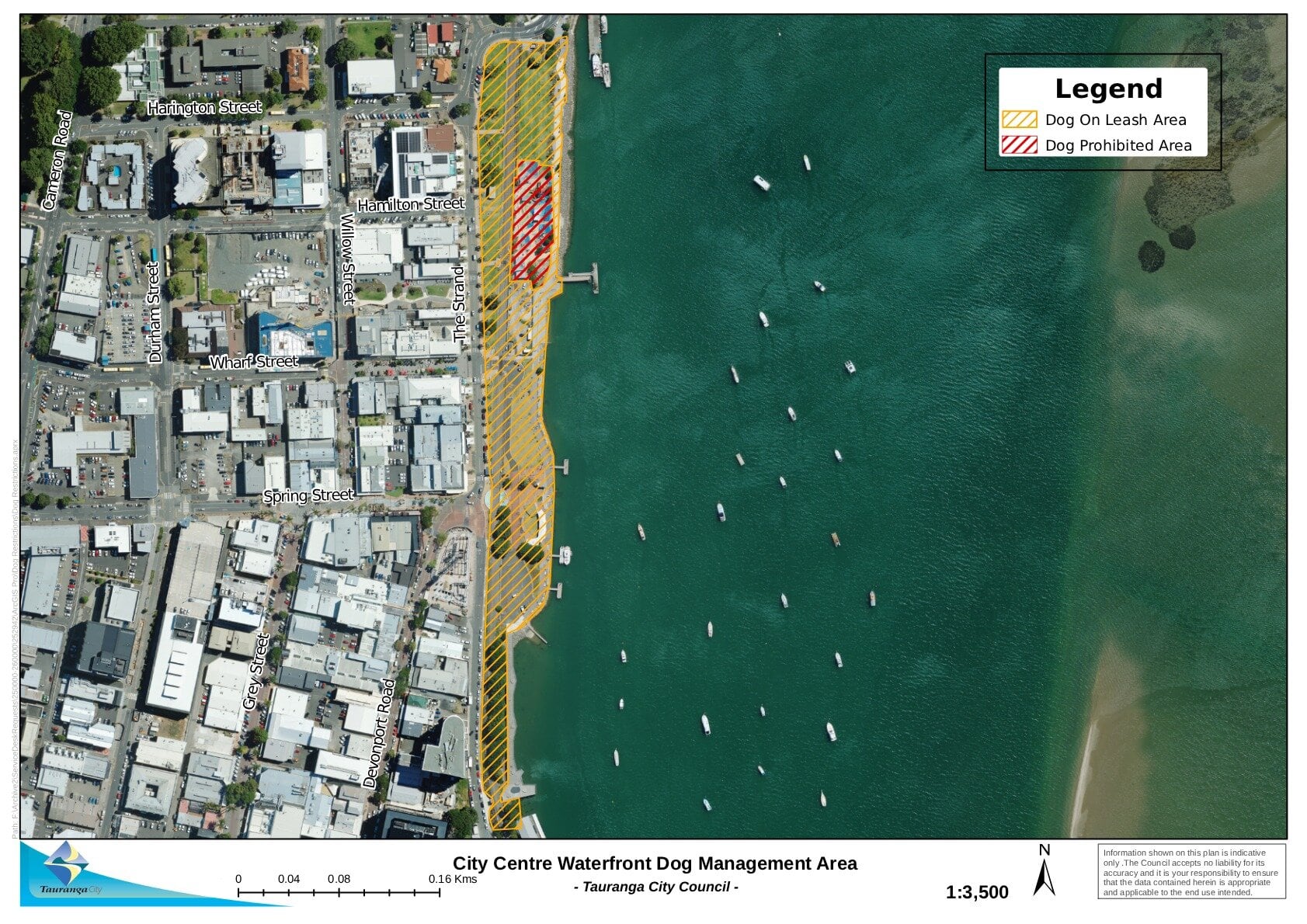
Leashed and prohibited areas on the city centre waterfront. Map / Tauranga City Council
Dogs would also be banned from cemeteries and burial grounds, on active recreation equipment and in fenced play spaces designed for young children or disabled people.
The council said dogs in cemeteries and burial grounds could be offensive to some people and there had been issues with dogs fouling, while the equipment and play space bans would help protect children.
Dogs could still visit cemeteries with approval from the facility’s manager.
Two-dog limit, chooks capped
The bylaw would require a licence for people to have more than two dogs on a property. That was in addition to the existing rule that limited dogs to two per owner.
The council also intended to create a licence process for people wanting to walk more than four dogs at once – a limit introduced the last time the council reviewed the dog bylaw, despite opposition from some dog walkers.
Licences would also be needed to keep more than six chickens in a residential zone or any poultry other than chickens in a residential zone.
The 2018 bylaw said people had to have a licence to own more than 12 poultry.
The licence process would include conditions such as a property check.
No new rules for cats
The draft animal bylaw does not include any new provisions for cats.
The council said while managing cats would help reduce their impact on wildlife, current legislation made enforcement difficult.
The Dog Control Act allowed for the controlling and impounding of uncontrolled dogs but no such legislation existed for controlling cats.
The council said the welfare of cats was controlled by the Animal Welfare Act administered by the SPCA.
Bee provisions
The council wants a more flexible, common‑sense way to handle complaints about urban beehives, especially complaints about bee droppings.
Currently, staff have to prove a specific hive is causing a problem before they can require its removal, which is often impossible because wild bees look and behave the same.
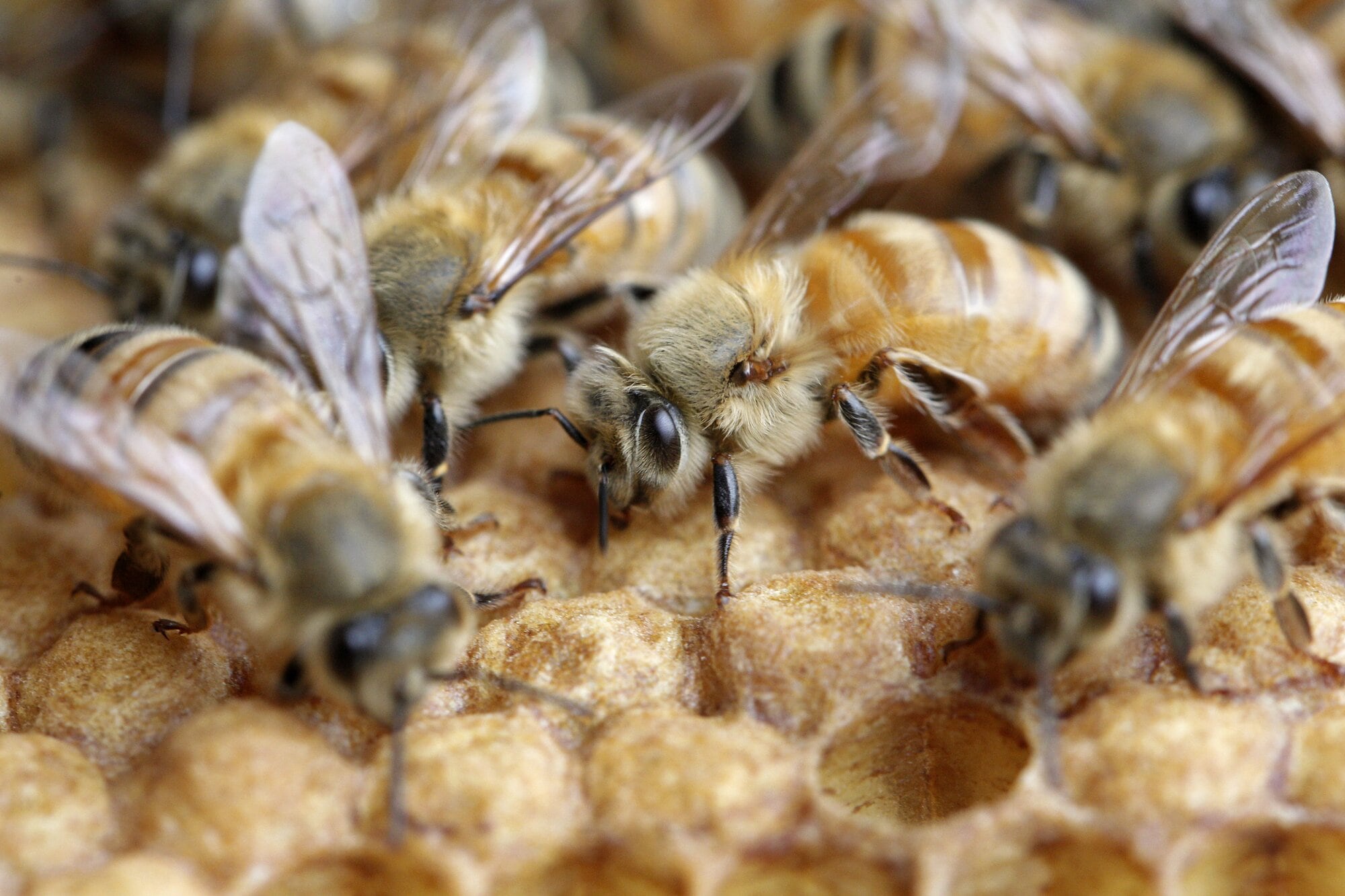
Tauranga City Council is proposing a change in the ways bees are managed. Photo / Duncan Brown
This leads to long investigations and disputes that rarely result in action.
Under the proposed amendment, the council could respond in more proportionate ways, such as giving advice or education, rather than jumping straight to removing hives.
It would reduce time spent on neighbour conflicts while still allowing intervention when there is a genuine nuisance.
Consultation
The council’s public consultation process for the revised bylaws will begin on June 1, ending on July 1.
Ayla Yeoman is a Local Democracy Reporting journalist based in Tauranga. She holds a Bachelor of Arts majoring in communications, politics and international relations from the University of Auckland, and has been a journalist since 2022.
LDR is local body journalism co-funded by RNZ and NZ On Air.


7 comments
Consultation?
Posted on 06-03-2026 07:58 | By The Sage
The Council’s so called consultation process is a joke. They absolutely take no notice of any input via the consultation process and it is business as usual. At the risk of seeming complacent I do not see any point in it. Also, who is going to enforce these changes? They can’t even enforce the current ones. I see dogs all over the children’s playground, in Fergusson Park, all the time. They are usually attached to families with their children using it. There is a sign up stating dogs are not allowed within 15 metres of the children’s playground. People do not respect this nor does anyone enforce it.
Tweak It
Posted on 06-03-2026 08:07 | By Yadick
As most proposals do, this will need a few little tweaks but generally doesn't seem too bad. What about roaming dogs and nuisance barking dogs, unregistered dogs.
I'd like to know the fines for non-compliance or will it be 30 reminder letters first reminding you of what you already know. Fines need to be a LOT harsher and more common-place.
A tweak to cat bylaws in my opinion should be the number of cats allowed. My Wife and I used to back onto K Valley and between the 4 neighbour's they had 12 cats (5+5+1+1). Nobody needs 5+ cats. That's ridiculous. A bylaw should state 2 cats per house maximum.
Dogs should also be on leash in places such as K Valley, the salt marsh walkway etc as they run ahead around blind corners and cannot be seen by owners and are therefore no longer under control.
Control Cats
Posted on 06-03-2026 13:48 | By Makkas1313
I am sick of standing in cat sh!t on my back lawn. I am sick of being woken at all hours with cats fighting. I am sick of cleaning cat p!ss off my external doors and garage if I have left the door up. And I am sick of seeing the carcasses of native birds lying around the property after cats have had their fun. The bird song was great till the b@stard cats arrived. Come on council you restrict dogs take some responsibility and sort out the cat problem . . . Before it goes further Ferrell!!!
Government @ Mayor's need to start using their brains.
Posted on 06-03-2026 17:01 | By kumera
All this Dogs aren't allowed here or their, they need to be on a leash here and their, notice the places they are mainly talking about are all the rich areas, what about all over the Tauranga where all these loose dogs are roaming around and some of them are attacking people and other dogs? What about that issue. The people that have registered dogs that make the effort to put their dogs in their cars and take them to all these different places, or lives in beautiful areas that walk their dogs once or twice a day because they love their dogs and treat them like a member of their families. They are the dogs you are talking about that are walking their dogs but the need is in all the other areas...
part two of Government @ mayors need to wake up
Posted on 06-03-2026 17:18 | By kumera
What needs to happen is it needs to become law that every single dog and cat, unless purebreds for breeding, that have to get a special exemption, must get their dogs and cats fixed. Between the government help along with every vet in nz, if you cannot afford to pay and can prove it, it gets done free with the government and vets going halves in the cost. 2ndly, the government pays for at least triple the amount of staff to be trained to be dog handles out there catching all these wondering, unsexed animals. 3rdly, it should be law that if you own a dog your property must be fully fenced. This is the root of all dog and cat issues, this is where we need to start, not worrying about dogs not allowed in the richest areas.
@ Makkas
Posted on 06-03-2026 17:32 | By Yadick
Absolutely totally agree with you.
DESEXING PEOPLE< DESEXING
Posted on 06-03-2026 17:42 | By kumera
The majority of these cats that are fighting is unfixed males only interested in unfixed females and that is the main reason they are going to the toilet on peoples decks etc and spraying everywhere because they are not fixed. That is why they are out during the night wondering around so much and going so far away from their home. It's not rocket science people, GET YOUR DAM CATS FIXED PEOPLE or don't have 1! Now the dogs. Dogs roam when they are not fixed looking for females and will fight any dog that threatens that happens. Fixed dogs do not wonder anywhere near as often as unfixed dogs, that is a fact. Fixed dogs are way less aggressive and the numbers much less compared to Dogs that are not fixed. GET YOUR DAM DOGS FIXED PEOPLE or don't have1!
Leave a Comment
You must be logged in to make a comment.