


Five years after three tsunamis struck New Zealand’s coastline in a single day, the National Emergency Management Agency is urging people to refresh their evacuation plans and understand their risk.
In the early hours of March 5, 2021, three powerful offshore earthquakes – a magnitude 7.3 near East Cape, followed by magnitude 7.4 and 8.1 quakes in the Kermadecs – triggered three overlapping tsunamis, recorded around New Zealand.
Civil Defence Emergency Management director for the National Emergency Management Agency (NEMA), John Price, said the anniversary is a reminder that every part of New Zealand’s coastline is vulnerable.
“Today is a reminder that all of New Zealand’s coastline is at risk of tsunamis, and they can strike at any time,” he said.
He urged households and coastal communities to put plans in place now — and to act immediately if they feel a long or strong earthquake.
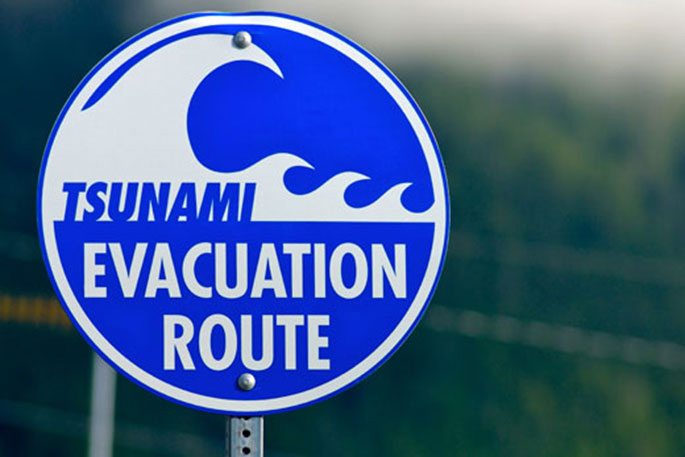
“In a local-source tsunami, like one triggered by the Hikurangi fault off the North Island’s East Coast, immediate self‑evacuation is key to survival,” Price said. “Take action today – make a plan, practise your tsunami evacuation route, and remember: if an earthquake near the coast is long or strong, get gone.”
NEMA’s chief science adviser, Professor Tom Wilson, said intensified coastal development means a major tsunami today would likely be devastating and could cause widespread loss of life.
He said the gravest danger comes from fast‑arriving tsunamis that can reach land within one to two hours.
“A large tsunami is not like a normal ocean wave; instead, it is more like a large mass of water that surges inland past the shoreline,” Wilson said.
“In the open ocean they can travel as fast as a jet plane, at 800km/h. Large tsunamis are highly destructive for coastal communities.”
Wilson said research into the 2021 tsunami sequence shows many people waited for official warnings before evacuating — a delay that could be fatal in a local-source event.
“Awareness of tsunami threat is high, but the science tells us that people aren’t always doing the right thing in the heat of the moment,” he said.
“The more we plan and practise now, the easier it will be when we have a real tsunami event.”

0 comments
Leave a Comment
You must be logged in to make a comment.