


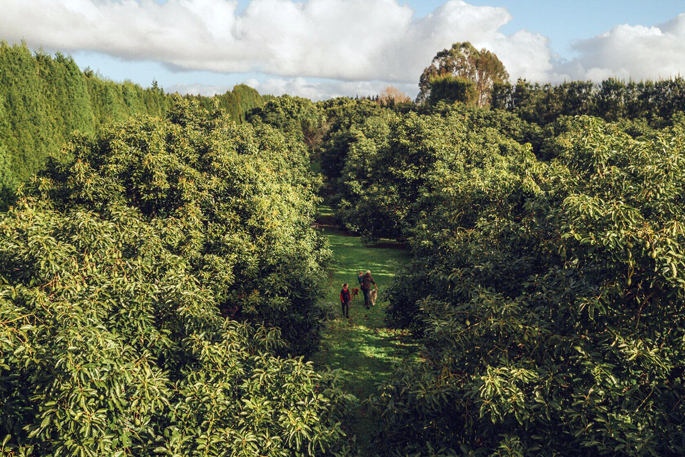
Like other rural sectors, the avocado industry is facing huge changes in land ownership.
A recently released white paper from Rabobank reveals that over the next decade, more than half of all New Zealand farm and orchard owners – about 17,320 farmers and growers – will reach the age of 65.
At current land values, the transition of these farmers’ operations represents a conservative estimate of more than $150 billion in farming assets that will depend on a successful succession process.
NZ Avocado chief executive Brad Siebert said this shift would bring both opportunities and challenges for growers and the wider industry.
He said this would reshape how farming and horticultural businesses were owned, financed and managed, including within the avocado industry.
For existing growers, Siebert said this change was already being felt.
“Some are planning succession, others are considering scaling, selling or partnering to stay competitive,” he said.
“Where family succession is possible, new generations often bring a fresh focus on technology, sustainability and diversified income.
“Where it’s not, the likely outcome is consolidation through larger managed businesses or through alternative land use.”
Industry dynamics
Siebert said that while this could bring investment and efficiencies, it also shaped the dynamics of industry decision-making to meet different needs.
“These shifts bring both opportunity and pressure,” he said.
“Land use intensity, productivity and regulatory compliance will continue to influence what is viable.
“Access to finance, enabling trade and regional policy settings and how confident new and existing growers feel about future returns will all affect the pace and scale of change.
“What matters most for our industry is that grower needs, whether you own 2 hectares or 50, are clearly heard and represented.
“As ownership patterns evolve, the industry’s role in advocating for growers’ political and economic interests will be to support its members through the transition, not simply react to it.
“Ultimately, it’s not just who owns the orchards that will define our future, but how growers choose to shape their businesses and the land they depend on.”

NZ Avocado CEO Brad Siebert. Photo / Supplied
Siebert said collaboration across industry stakeholders would be key to keeping the industry resilient, informed, market-driven and proud of its roots.
“The next chapter of our industry will be defined by how well we adapt.”
Rabobank New Zealand chief executive Todd Charteris said findings from the white paper highlighted the extent of the succession challenge ahead for the agricultural sector.
“Succession is not a moment in time – it’s a process that takes years of planning, conversation and adaptation,” he said.
New models
“The traditional model of passing the farm to the next generation is under pressure, but there are new and innovative models emerging that can help families stay connected to their land,” Charteris said.
He said data collected for the white paper found that only one in three farmers had a formal succession plan in place.
“A further 17% have discussed succession with the relevant parties, but nothing is documented, leaving exactly 50% who had neither discussed succession nor commenced a succession plan.”
He said the research also found that one-third of farmers intend to pass their farm to their children, yet 39% reported having no children seriously interested in farming.
“For many Kiwi farmers, the dream is that one of the kids will take over the farm.
“The flipside is that it can also be experienced as a feeling of pressure or a sense of responsibility by the next generation.
“Taking over the family farm involves committing to decades of indebtedness in a sector that is subject to volatility and uncertain returns.
“It remains a big call for a 20-something and their bank.”
While this is the case, Charteris said, data collected for the paper suggested the financial obstacles to farm ownership had plateaued in recent years.
“With total package values for farm employees keeping pace with the increase in land valuations over the period 2011–2024, the succession cliff appears less steep recently.
“However, the challenges to get on the ladder remain high, particularly with the increased scale of farming and need to increase margins to support borrowing.”
The paper also highlighted several increasingly prominent succession models, including hybrid ownership models and corporate structures, which are being adopted to help farming families stay connected to the land.
“A number of New Zealand’s largest-scale, most productive and environmentally responsible farming businesses are either fully corporate or run under Māori-owned incorporation models,” Charteris said.
“If we get this right, we can unlock new pathways for young Kiwis who are passionate about farming – whether they’re farming mad, farming curious or farming adjacent – to own a share of a greater pie.”
He said most of the farmers spoken to in the process of compiling the white paper had been looking at succession for years, and all of them wished they’d started the process earlier.

1 comment
Keep it Kiwi
Posted on 06-01-2026 14:07 | By morepork
A good article that outlines some of the decisions and problems facing this industry.
My own interest is purely as a consumer, but it worries me that, as growers get to retirement, it must be very tempting when an overseas buyer comes along with large handfuls of cash, to simply take it. You worked hard all your life, aren't you entitled to reap the benefits in your later life?
Of course you are, and nobody would begrudge you, but we are talking about food here; it is kind of critical.
NZ is a food-producing nation in a world that is largely hungry. You can bet there are overseas eyes who look at our pastures and orchards with envy, and in the increasing insecurity of the world, we should be taking nothing for granted.
Governments should be prepared to support Kiwi ownership, and even nationalize agricultural industry if necessary.
Leave a Comment
You must be logged in to make a comment.