


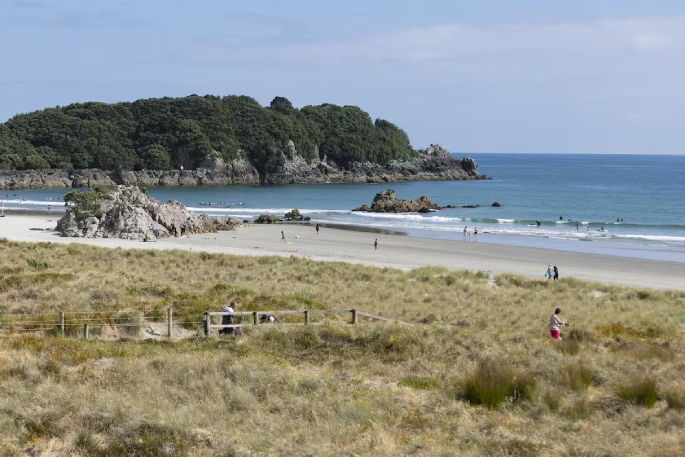
It was a busy first day of the new year for surf lifeguards who rescued 25 people across the eastern region’s beaches, including six caught in a rip in Mount Maunganui.
The eastern region, which includes the Bay of Plenty, the Coromandel and the Tairāwhiti Gisborne region, was attracting “large holiday crowds” amid hot weather, creating a significant amount of work for surf lifeguards, Surf Lifesaving New Zealand northern region general manager Zac Franich said.
“What we’re seeing again and again is people getting into trouble outside the flagged area,” Franich said in a statement.
“Even if the water looks safe on the surface, rips and strong currents can develop very quickly.”
Franich said the flagged area was positioned by lifeguards based on continuous assessment of the conditions and remained the safest place to swim.
“When you swim between the flags, you’re choosing the area with the lowest risk, and you’re under the watch of trained surf lifeguards, who can respond immediately if something goes wrong,” he said.
“Once you move outside that zone, the risk increases significantly.”
The statement said Mount Maunganui surf lifeguards did a “mass rescue” of six people who were caught in a rip on the east side of Mussel Rock on New Year’s Day.
Five were transported to the surf club for further medical assessment. Hato Hone St John attended to treat one patient who had a suspected head injury.
Surf lifeguards at Pāpāmoa also rescued four people who were “in distress and yelling for help from the water”.
“The condition of two people deteriorated and surf lifeguards administered first aid and oxygen before handing them over to ambulance staff.”
The other two patients did not require any further medical attention, it said.
Mount Maunganui lifeguards also responded to a 17-year-old boy who had an anaphylactic reaction to a bee sting.
The teen was transported to the surf club where ambulance staff took over his care.
In the Coromandel, surf lifeguards at Whangamatā rescued six people from a rip.
All patients were brought back to shore and two were administered first aid before being released from the care of surf lifeguards.
Another three people in Whangamatā were rescued after they became stranded on a rock near Donut island. Surf lifeguards returned two patients to the beach in an inflatable rescue boat (IRB) with the third making their own way to shore.
A 50-year-old woman was pulled from the water in Whangamatā by a member of the public, north of the patrolled area.
Surf lifeguards responded and administered first aid to the woman, who had an “altered level of consciousness”.
A rescue helicopter and St John responded, with the latter taking over care of the patient and transporting the woman to hospital.
In Maketū, surf lifeguards responded to two people who were caught in a rip to the east side of the surf club. They launched an IRB and conducted a search but were stood down a short while later after the pair were located safe and well.
Also in the Coromandel, a police spokesman said police received a report at 1.40pm today of a person suffering a medical event in Opoutere.
The person was found in the water, brought to shore, and taken to hospital, he said.
A Hato Hone St John spokesman said one patient was flown to Thames Hospital in a moderate condition.
A Surf Lifesaving New Zealand spokesperson said it dispatched two surf and rescue squads to the scene, one from Whangamatā and one from Tairua.
By the time they arrived, emergency services had responded and were managing the scene.
During the New Year period, surf lifeguards also dealt with a high volume of assists, first aid cases and search responses, reflecting the pressure peak holiday crowds placed on patrol teams.
Beaches with large visitor numbers, particularly during the afternoon, required repeated lifeguard interventions as conditions evolved.
Franich said the trend reinforced a message surf lifeguards delivered every summer, but one that was especially critical during the holiday period.
“We get that people want their own space and freedom at the beach, but the reality is that most serious incidents happen where lifeguards can’t actively manage the risk to people.”
Franich said surf lifeguards would continue to adapt patrol areas as conditions change throughout the summer.
“The message remains the same: the safest place to swim was always between the red and yellow flags.”
Surf Life Saving New Zealand encouraged beachgoers to check conditions before heading to the beach using the Safe Swim website, which showed whether a beach is patrolled, and highlights conditions and any hazards present on the day.
Discover more
- Eastern region rescues soar as beach swimmers ignore flags, patrol hours
- Warning after off-duty guards rescue five
- Swim between the flags: Lifeguards warn as New Year’s crowds surge to beaches
- Spike in Eastern beaches rescues as swimmers ignore flags and rips

0 comments
Leave a Comment
You must be logged in to make a comment.