


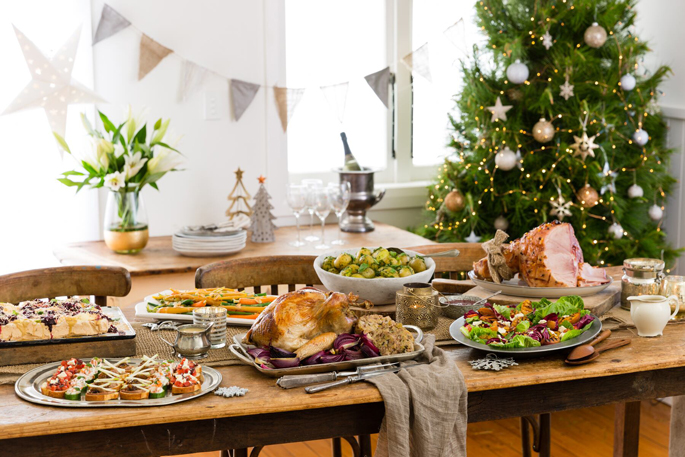
As children tear into presents and families gather around festive food, it’s also the time of year when harmful bugs can gatecrash the party.
To help keep celebrations safe, New Zealand Food Safety has busted 12 of the most common children food safety myths.
Myth 1: ‘Leftovers are fine to eat if they look and smell okay’
Not true. Many of the bugs that cause food poisoning don’t change the look, smell, taste or texture of food. To stay safe, refrigerate or freeze leftovers within two hours of serving – sooner on hot summer days. Store everything in clean, sealed containers.
How long leftovers last in the fridge:
- Whole ham: Up to seven days in a ham bag if eaten cold. If reheated to piping hot (above 75°C), it can be kept for an extra two days. You can also freeze ham slices for later.
- Cooked meals eaten cold (eg pasta salad, roast vege salad, potato salad): two days.
- Meals eaten hot: Four days if refrigerated promptly. Always reheat until piping hot.
- Green salads: Eat as soon as possible. If not, use in cooked dishes or throw them out.
Myth 2: ‘Defrosting food on the bench is best’
Wrong. Thawing food on the bench lets bacteria multiply as the outer layers warm up while the centre remains frozen. Keep frozen food out of the 5°C–60°C danger zone by thawing in the fridge or microwave.
Myth 3: ‘If I collect and cook seafood myself, it can’t make me sick.’
Cooking kills bacteria – but not shellfish biotoxins that can accumulate during naturally occurring algal blooms. New Zealand Food Safety monitors 96 shellfish-harvesting areas nationwide and issues warnings when toxin levels rise above safe limits.
Current alerts appear on the Shellfish Biotoxin Alert page, through the Ministry for Primary Industries’ NZ Fishing Rules app, and on signage at affected beaches.
Myth 4: ‘Food safety risks stay the same throughout life’
Sadly, no. Our immune systems weaken with age. For people 65+, foods previously eaten safely – such as deli meats, pâtés, soft cheeses, cold-smoked seafood, and leafy greens – may pose a higher risk of listeria.
To reduce risk:
- Eat freshly prepared foods
- Wash fruit and veges well
- Cook or reheat foods to piping hot (over 75°C)
- Store and handle food safely
Symptoms of listeriosis can take 2–3 weeks to appear.
Myth 5: ‘Health Star ratings show how healthy a food is overall’
Not quite. Health Star ratings help you compare similar foods – not all foods. Use them to choose between two cereals or two yoghurts. More stars mean a healthier option within that category.
Myth 6: ‘You need to wash raw chicken before cooking’
Definitely not. Washing raw chicken spreads bacteria around your kitchen. Instead:
- Pat chicken dry with a paper towel
- Wash hands thoroughly
- Keep raw and cooked foods completely separate
- Wash boards, knives and utensils in hot, soapy water
Prepare ready-to-eat foods before handling raw chicken.
Myth 7: ‘Packaged food is safe after the use-by date’
False. If a product is past its use-by date, it is not safe – and illegal to sell. Foods past a best-before date may lose quality but are usually still safe if they look and smell okay.
Check, sniff, taste – don’t waste.
Myth 8: ‘Hand sanitiser is as good as washing your hands’
Nope. Soap and water do a better job of removing germs and chemicals. Sanitiser is only a fallback – and must contain at least 60% alcohol.
Myth 9: ‘Raw milk is healthier than pasteurised milk’
Raw milk skips pasteurisation – meaning harmful bacteria like STEC (shiga toxin producing E. coli), campylobacter and salmonella may be present. It’s especially risky for pēpi, kaumātua, pregnant people and anyone with weakened immunity.
If you choose raw milk:
- Buy from a registered supplier
- Keep it chilled at 4°C or below
- Throw it out if left unrefrigerated for more than two hours
- Heat to 70°C for one minute to make it safe
Myth 10: ‘Bagged salads don’t need washing’
Even when they are pre-washed, it’s safest to rinse bagged greens – especially if vulnerable people are in the home. Washing removes dirt, bacteria and residues.
Always wash veges before peeling so contaminants don’t spread.
Myth 11: ‘The 5-second rule makes dropped food safe’
Afraid not. Bacteria transfer to food almost instantly. Moist or sticky foods pick up more bugs, but any contact can be enough to cause illness.
If the food can be rinsed and cooked thoroughly, salvage it – otherwise, bin it and wash your hands.
Myth 12: ‘Mouldy food is fine if you cut the mould off’
Mould’s visible spots are just the start – its filaments often spread deep into food, sometimes producing harmful mycotoxins. Throw out mouldy food unless it’s a product where safe mould is intentionally used (eg blue cheese).
– Content supplied by New Zealand Food Safety

0 comments
Leave a Comment
You must be logged in to make a comment.