



The SPCA has raised concerns about people it says are abusing and emotionally blackmailing staff for not being able to rehome pets.
According to the society, its centres across the country, including Hamilton and Rotorua, have been affected, with some people threatening to kill the animals if the centre does not take them.
The society, which cares for sick, injured and vulnerable stray animals, said the abuse mainly came from people who wanted the centres to take in their healthy animals because they no longer wanted them.
Dr Corey Regnerus-Kell, SPCA general manager for animal services, said the abuse had increased in the past two years and occurred almost daily.
Conversations also escalated to abuse more often and more quickly.
“The hardest conversations staff are facing regularly are the threats to harm the animals that they are contacting us to take.
“Hearing callers say, ‘If you don’t take them, I will just drown them’ for an organisation designed to prevent animal cruelty, the blackmail and emotional manipulation of the staff is what they really can’t cope with.”
Hamilton centre manager Kyla Robb said she wasn’t easily scared, but recently had to call police because someone had shown “deranged and intimidating behaviour” towards her.
“They’ll yell at us, threaten to dump [the animals], suggest we’re useless, and just get really angry and slam doors. They can be quite aggressive.”
At least two pet owners came into the centre every week wanting to rehome their animals.
Some days, “almost every second phone call” was from someone wanting to get rid of their pet.
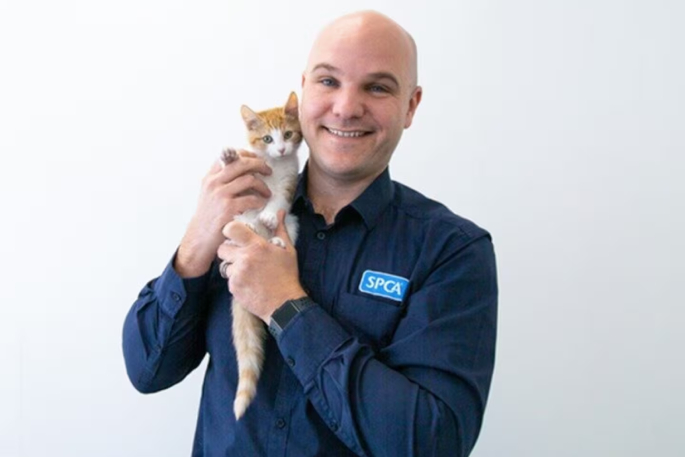 Dr Corey Regnerus-Kell, the SPCA's general manager for animal services.
There had also been situations in which people didn’t take no for an answer, leaving the animals at reception or outside the building and driving off.
“We’ve found cats around the back in cages, stressed out and not covered ... just dumped in a cage,” Robb said.
“It’s horrible ... this person who has been that animal’s safety net and all they’ve known has just left them in this foreign environment and driven off.”
Sometimes, staff were not aware of animals being left outside, so the pets could be there unattended for up to an hour.
“We’ve turned up to work quite often, and it always seems to be on the coldest mornings of the year, there are a number of cats in a box.”
Since the team noticed an increase in such incidents, staff kept an eye on cars coming in and out of the centre.
One of the “worst threats” Robb dealt with was someone threatening to drown their cats.
“Drowning is terrifying and painful for anyone and, as humans, we know it’s one of the worst ways to go.
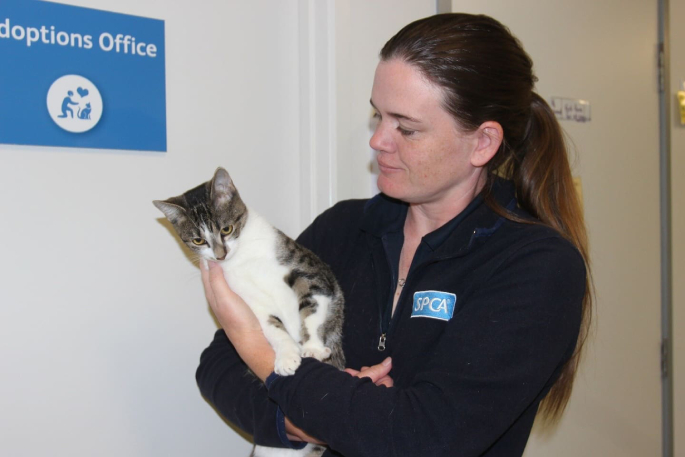 SPCA Hamilton Centre's manager Kyla Robb with cat Slug. Photo / Malisha Kumar
“Cats are innately scared of water, that’s just not humane. It’s the most terrible thing ever.”
She said when people “threaten to kill an animal just to jerk us”, it was a “horrible” feeling.
SPCA Hamilton had about 200 animals in its care and, like most centres, was at full capacity.
“We don’t have any physical space [for] your animal, we don’t have any more humans to take care of your animal.
“We don’t have a choice, our resources are pushed to the max.”
Because of this, “threatening a terrible death and abusing staff” would not change the outcome.
“We already want to take the animal, we can see you’re struggling. We want to help you, but we’re slammed.
“You took on the responsibility of another life when you took the animal on.
“If you can no longer have your pet, you are responsible for finding it a new home.
“SPCA is not a rehoming organisation ... Your pet, your responsibility.”
Regnerus-Kell said supporting staff through the regular abuse was hard. While the SPCA was there to help, its priorities were caring for vulnerable stray animals.
Staff should be shown “more empathy” for the hard work they did for the over 30,000 animals they cared for every year.
Finding new homes for healthy animals fell on the pet owner.
“Owning a pet is a privilege, not a right, and we all have to make tough calls when it comes to our family pets.”
Reaching out to family, friends and community groups was always the “best first bet”.
“Please don’t abandon your animals, drop them off at parks, or call and threaten to harm them to our staff.
“We owe it to them.”
Malisha Kumar is a multimedia journalist based in Hamilton. She joined the Waikato Herald in 2023 after working for Radio 1XX in Whakatāne.

0 comments
Leave a Comment
You must be logged in to make a comment.