


A University of Waikato researcher has posed a simple question: are robots creepy or cute?
As robots become common in hospitals, restaurants, workplaces and homes, senior lecturer Dr Jessica Turner is raising questions about trust, privacy and human connection.
On Monday, she will host a public lecture at the University of Waikato’s Tauranga campus.
It will explore people’s reactions to social robots and what those responses reveal about society’s expectations of technology.
Turner said she had a passion for “technology for good” focused on helping people.
“Robots were always something that interested me growing up, and when I realised I could bring social robots into my workplace, do research on them and answer the questions I’ve always wanted to answer about how they can help people, that’s how this came to be.”
Her lecture draws on research into social robotics, including robots developed at the university, to examine why people place human-like qualities on machines and how design influences whether a robot is viewed as friendly, helpful or creepy.
“We all know what a robot is in the sense that it’s a machine doing tasks for us,” Turner said.
“A social robot is a machine that interacts with a human when it’s doing some kind of task; it’s going beyond just function and moving into that friendship/companionship space.”
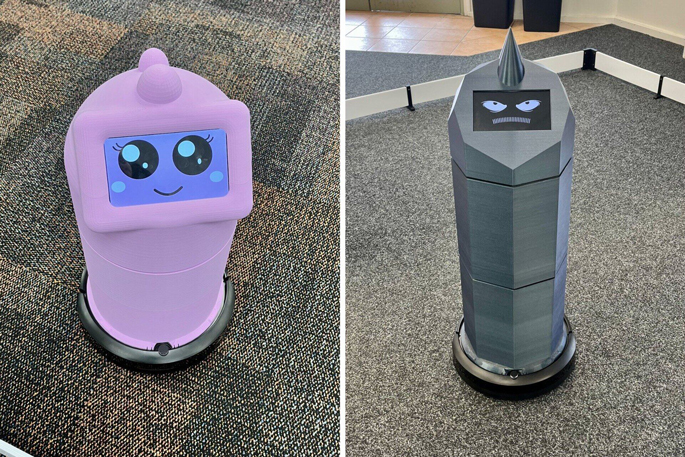
Turner ran a project last year with students building a “cute” robot and a “creepy” robot, before comparing people’s responses.
“They were aptly named Bubbles and Spike,” she said.

University of Waikato senior lecturer Dr Jessica Turner is raising further questions about robots, trust, privacy and human connection.
“Bubbles was the cute robot, and students had to look into academic research and literature, find out what research told us was cute, and what research told us was creepy.”
Turner said Bubbles and Spike were not designed with a practical function, as the research focused on how their appearance and behaviour influenced people’s perceptions.
She said the team “nailed” the cute robot, while the “creepy” robot prompted more mixed reactions.
“People found it creepy, some found it scary, but lots of people found it angry rather than creepy, and at the same time some people thought he had a punk rocker vibe.
“It showed us that even though we understand cuteness really well, we don’t understand creepiness well, which is why we end up with creepy robots unintentionally.”
Turner said it was difficult to pinpoint factors that led people to perceive a robot as cute or creepy.
“I think what we saw was a lot of people who had interacted with robots before felt quite familiar around them.”
Bubbles the "cute" robot with Spike the "creepy" robot.
She said after spending about 45 minutes to an hour around the robots, participants got used to their behaviour.
“And that was the thing we found, particularly about creepiness, is that it’s highly subjective, depending on your background and whether you’ve interacted with robots before.”
Turner said her upcoming lecture would be tailored around the “big question” of robots’ role in society.
“I think one of the big things that I really care about is we want technology to help us, but we don’t want technology to replace us.”
Turner said robots should “help us”.
“We want technology that’s for good, for helping us, not technology that gets in the way and hinders us.”
The lecture is at the University of Waikato’s Tauranga campus on Monday from 5.30pm to 6.30pm.
Kaitlyn Morrell is a journalist for the Bay of Plenty Times and Rotorua Daily Post. She has lived in the region for several years and studied journalism at Massey University.

0 comments
Leave a Comment
You must be logged in to make a comment.