


The discovery of the kiwifruit vine killing disease Psa in Poverty Bay this week is disappointing but not unexpected says the head of Kiwifruit Vine Health.
Barry O'Neil says Poverty Bay had been identified as a high-risk region for infection due to its proximity to Opotiki and association with orchards in both regions.
Psa has now been identified in an orchard in Poverty Bay.
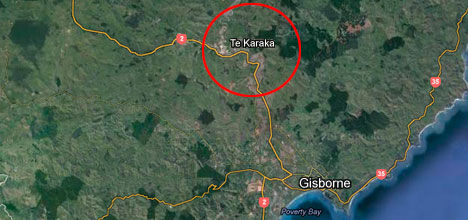
KVH has received a provisional Psa-V positive test result on an orchard near Te Karaka in the north of the Poverty Bay region and if the result is confirmed positive, this will be the first case of Psa-V in the region.
The affected orchard in Te Karaka is approximately 70 kilometres from the closest infected orchard in the Opotiki area.
Barry says KVH has been monitoring orchards in the region for early signs of the disease, but the orchard in question is not one of those.
The continued spread of the disease to regions outside of Te Puke, where it was first identified two years ago, is concerning and Barry says had the National Psa-V Pest Management Plan been operational the spread might have been reduced.
Earlier this year growers voted in favour of the plan to give the industry increased powers to deal with abandoned or poorly managed orchards and the proposal was presented to the Minister for Primary Industries by the KVH Board on October 10.
'The proposal is with the Minister who has to consider it and the earliest we could expect it to come into force would be February or March next year.”
Under the plan Barry says everyone involved in the industry will work more collectively to reduce the spread of Psa and he encourages growers to continue to support the plan.
Meanwhile a report is due out soon into how the disease spread to the Waikato and Coromandel regions.
'We have been looking into the possibility that heavy orchard equipment could have been involved with the introduction into the Waikato and in the Coromandel we have been looking at the movement of plant material as a possible source.”
On some Bay of Plenty orchards green male pollinators have been hard hit by the disease and growers are using artificial pollination methods to supplement their own pollen production.
'The impacts are patchy and some males appear to have grown through the disease. There also appears to be variation among the male types with the Chieftain males appearing to stand up better to Psa than the M-Series and Matua males.”
Barry says two years on from the first discovery of Psa much has been learnt about how to manage the disease.
'We have come a long way and know a lot more about what we need to do. We can now give growers sound advice on how to manage Psa.
'We know that in terms of the impacts of Psa - what we do on our orchards now may not show up for six months.”
Barry says some of the damage on orchards this spring has been caused by frosts and strong winds, not the disease.
'We are looking forward now to warmer weather and less spread of Psa but we know it will become worse again in autumn. Now is not the time for growers to relax using best practice.”
Growers in the provisional Te Karaka controlled area are being advised the following:
- Monitor orchards extensively and report any suspicious Psa-V symptoms to KVH on 0800 665 825.
- Implement and maintain a protective spray programme.
- Maintain strict orchard hygiene procedures.
- No kiwifruit plant material, including budwood and nursery stock, along with any potentially contaminated orchard equipment, can be moved out of this area.
KVH representatives are working with growers to ensure extensive monitoring of orchards is carried out.

0 comments
Leave a Comment
You must be logged in to make a comment.