


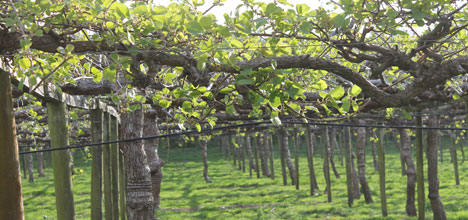
The kiwifruit vine disease Psa-V has hit some new variety orchards so hard that vines have been cut out and will be re-grafted, says Kiwifruit Vine Health chief executive Barry O'Neil.
'What we are seeing in some orchards is at the worst end of our predictions, made worse by the cold, wet winter. We are hopeful that warmer weather will improve the situation.”
Spring is the time when signs of Psa-V are most evident as vines come out of winter dormancy.
Psa-V thrives in wet, cold conditions but doesn't like the heat.
'We are seeing significant impacts on G3 (the new gold variety) and Hayward. The situation in Te Puke is that inoculum levels are still high and significant pressure is placed on vines. We are finding it is worse when there is a combination of frost damage, cold, wet areas and shelter which is not adequate.”
KVH and Zespri held a meeting at Bay Park on Wednesday attended by 600 growers and industry representatives. The latest results from the new variety monitoring rounds and increasing concerns around the current situation with Gold3 and Hayward Green varieties were discussed.
Barry says the level of infection in mature Hayward male vines on some orchards is so bad there are doubts they will produce enough pollen to pollinate female vines this season.
'We saw something similar in Hayward last year and have contacted the growers with the worst affected vines and most are saying those vines have good floral growth this season.”
However, Barry says to be sure growers can pollinate their crops, moves are underway to try to secure pollen to be applied artificially.
A study of pollen from Te Puke and Opotiki has shown unopened flowers from each area had the same level of Psa and the Ministry for Primary Industries is to be asked to give permission for pollen from these areas to be used by owners of infected orchards, if they want to do so.
Another option is for growers to harvest their own early male flowers and mill and store them for use when the female flowers open.
The orchards which were coping best with the disease were those in which 20 or more protectant sprays had been applied over the year compared with orchards in which five sprays were used.
'This is an issue of affordability for some growers of course.”
Barry says the mood of growers at the meeting was realistic and they were keen to hear the latest information about monitoring of new varieties, the susceptibility of Hayward males and advice on technical orchard management and orchard best practice in a Psa environment.
'There was also an update on the Zespri breeding programme and what is coming through was well received.”
As well as taking care of orchards, Barry says the meeting also focused on grower and industry welfare and support, in recognition of the emotional toll the disease is taking on those within the industry.
The meeting included presentations from growers who are living and working with the very real challenges of trying to maintain a healthy and profitable orchard in a Psa-V environment.
Interactive sessions after each presentation generated questions from gold and green growers including product availability and efficacy, orchard techniques, protecting vines from wire rub and potential pollen shortages this coming season.

0 comments
Leave a Comment
You must be logged in to make a comment.