


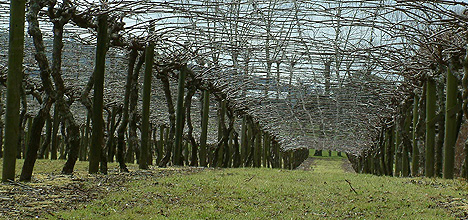
The profitability of Psa affected kiwifruit orchards is predicted to fall by at least a third and growers who have removed infected vines face losses and no income for at least two years.
According to the Ministry for Primary Industries findings on the analysis of kiwifruit production and profitability this season's per-hectare production fell for both gold and green fruit due to a combination of Psa and climatic conditions.
Per-tray returns to growers are expected to be higher for the 2012 crop, for green fruit due to reduced post-harvest fees and for gold due to higher in-market prices.
But the profitability of the model, based on a Bay of Plenty orchard, will still fall by a third to around $44,000 (pre-tax) for the 2012/13 year.
With Psa impacts on individual Bay of Plenty orchards ranging from none to severe, MPI has modelled three additional scenarios for 2012/13.
Under a scenario of no gold kiwifruit production, it is predicted that there would be a cash operating deficit, a pre-tax loss and a negative cash position, and an injection of additional cash would be required to cover operating costs and living expenses.
MPI also extended the kiwifruit model budget out to 2015/16, and the analysis shows the model would be in deficit for the next two years.
The kiwifruit industry's recovery strategy is to replace gold Hort 16A with varieties less susceptible to Psa, such as Gold3 and Green14.
The MPI model has been adjusted to reflect the transition in Bay of Plenty orchards, with half of the area of Hort 16A and 10 per cent of the planted area changed to Gold3 over the 2012 winter.
This is the first MPI Farm Monitoring Report that shows a significant impact from the vine disease Psa, due to the lags between infection and the growth, harvest and marketing of the crop.
Psa was first identified in November 2010, but for most Bay of Plenty orchards it did not affect the yield of the 2011 crop, harvested between March and June that year. In fact the 2011/12 season was one of record production.
The orchard-gate return received by growers for the 2011 crop dropped due to less favourable exchange rates and larger volumes being exported from New Zealand, but the larger volume meant the per-hectare revenue was higher than the previous year. This helped to lift the before-tax profit of the model orchard by 21 per cent to $66,100.
This report is one of a series of Farm Monitoring reports which are being released currently.
To view the full report, go to the Publications section of the MPI website, www.mpi.govt.nz

0 comments
Leave a Comment
You must be logged in to make a comment.