


More aquaculture ventures could operate in the Hauraki Gulf without compromising its environmental attributes believes Hauraki District Council Mayor John Tregidga.
'There is a lot of public concern about aquaculture and fin fish farming in particular but I think much of it is based on bad practices overseas,” says John who admits to wearing two hats when it comes to the gulf.
Under one hat, he chaired the Hauraki Coromandel Development Group which focused on initiatives to improve social, cultural, economic and environmental aspects of everyday life in the region.
Development
This included investigating the further development of aquaculture, in addition to the existing mussel farms in the gulf.
John's other hat is as chair of the Hauraki Gulf Forum which has as its mission promoting and facilitating integrated management around the Hauraki Gulf.
'These two are not necessarily in conflict,” he says.
John believes the international demand for fish and shellfish will continue to grow as people move away from eating so much red meat, but New Zealand can't keep taking from the wild in the numbers it has.
'I believe the gulf is already over-fished even though Ministry of Fisheries quotas are set at approximately 80 per cent of the snapper population and the theory is that the remaining 20 per cent represent enough to sustain the population.
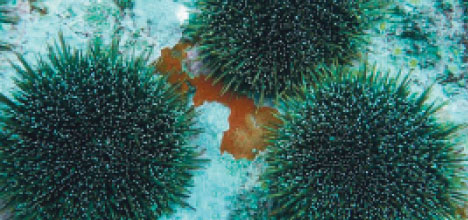
'However, we know there are not enough big snapper and have recently discovered that it is only the large snapper which feed on kina. Kina in turn feed on kelp beds and the kina numbers have increased to a point where some kelp beds, which are the nursery for many fish, are now gone.
'The option is to farm fish and reduce pressure on wild stocks. New Zealand, because of its distance from markets, will never be able to compete against the scale of farms in China for example so its future lies in producing top end, high quality fish much as it does now with green-lipped mussels.”
$20 billion
The development of aquaculture is going to be important if this country is to achieve the government's goal of seeing the industry grow to $20 billion by 2020.
However, John acknowledges the health of the gulf is under considerable pressure without any new uses such as fin fish farming.
'Every week the equivalent of 32 truck-loads of nutrients enter the gulf from the Piako and Waihou Rivers and if things don't change there will be dead zones in the gulf within 20 to 25 years and that's something no one wants.”
Most of the nutrient run off is coming from farming but John believes the majority of farmers want to see that reverse. 'Once they understand the impacts, they want to make changes.
'Education is the key. There is no point in changing rules until you have the majority of people on side.”
Establishing marine reserves within the gulf is another measure which could help ensure its environmentally sustainable future but John acknowledges that could also attract opposition.
Funding
'I have high expectations that the recent funding committed by Auckland Council and Waikato Regional Council to fund a spatial plan of the Hauraki Gulf which will be a collaborative process involving all stakeholders will ensure the long term sustainability for the future needs of all who work or play in the Gulf.”
The gulf, he says, is a wonderful asset which many take for granted but it's an asset which offers many economic, recreational and social opportunities now and into the future, if managed correctly.

0 comments
Leave a Comment
You must be logged in to make a comment.