


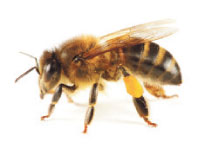
Bees may be under attack from pests and diseases but a new initiative called Trees for Bees should improve their chances of survival and that of everything they pollinate.
'Just like with all livestock, the health of bees reflects the protein and energy sources available to them,” says John Hartnell, Federated Farmers Bees spokesperson and an exporter of bee products.
'After several years' work, Federated Farmers Trees for Bees now has 10 regional planting guides available for anyone to create a bee friendly space.
'Even in deepest suburbia, the planting guides can suggest appropriate trees and shrubs for homes and schools to plant. Farmers can even plant bee friendly plants on unproductive land, like fenced off waterways, tight corners and even steep hillsides,” says John.
'Good protein and nectar produces fat bees and in nature, fat bees are healthy bees. Federated Farmers I guess is standing up for the right of bees to become fat.
Federated Farmers is now working with the Sustainable Farming Fund (SFF) and other industry groups to understand the true pollen value of every plant available to the New Zealand
bee industry.
Under the leadership of Dr Linda Newstrom-Lloyd from Landcare Research, this project is called ‘Trees for healthy bees'.
'We now have farms in the process of being planted with ‘bee friendly' trees and shrubs.
This will allow scientists to monitor the health of honeybees from an unfriendly environment, to one which has a good balance of pollen bearing trees and shrubs.
'The knowledge we will gain will feed into future planting guidelines for both the North and South Island's. These guides will be suitable for town as well as country,” says John.
To find the guides type 'trees for bees” into Google.

0 comments
Leave a Comment
You must be logged in to make a comment.