

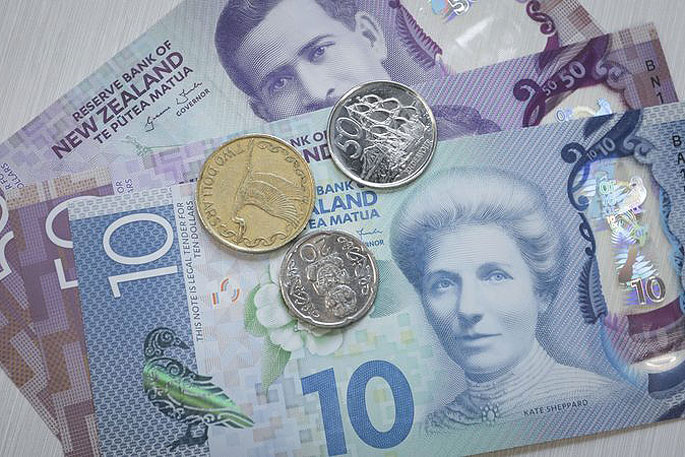
The minimum wage increasing to $22.70 an hour in April will be hard for some businesses to cope with, BusinessNZ says.
Prime Minister Chris Hipkins announced on Wednesday that the Government was stepping back from initiatives such as the RNZ-TVNZ merger and the income insurance scheme, but was committed to increasing the minimum wage again by seven per cent on April 1.
It is currently $21.20. In 2020, it was $18.90.
He says the increase would only have a minimal impact on inflation.
"I am concerned for those in our communities who are feeling the greatest financial pain at these times , and that includes those on the minimum wage.”
BusinessNZ spokesperson Catherine Beard says it will be challenging, particularly for small to medium businesses.
'Since 2020, the minimum wage has gone up about 20 per cent. Over quite a short period that's not insignificant. What tends to happen is that it gets extrapolated through the business because you have to keep the wage relativity.
'With all the additional costs that businesses have had, with the supply chain, I think it does put the pressure on.”
Alan McDonald, head of advocacy and strategy at the Employers and Manufacturers Association, says he's surprised at the scale of the increase and annoyed at how long it had taken for the Government to announce it.
”We have been asking for clarity and certainty so businesses can plan, particularly those who run a March-to-March year.”
He says businesses had had a lot of added costs in recent years and some were reassessing their futures.
'It's not just the minimum wage, it ripples through the workplace.”
Economist Gareth Kiernan, chief forecaster at Infometrics, says the impact on inflation would be limited because it was in line with the rate of wage inflation more generally.
He says the labour market was so tight that many of the sectors that had a larger proportion of minimum wage workers were already having to pay more to attract staff.
There could be some impact because it was an additional increase that businesses might need to factor into their prices in future, rather than increases that had already been priced in, he says, but the effect was not likely to be large.
He says retail businesses were already under pressure and this could be 'one more straw on the camel”.
Hospitality needed to innovate to be able to provide service to customers at an affordable price, he says.
Beard says her concern was whether it turned into wage-price spiral, with businesses paying more for staff then hiking their prices further. 'I know they say it doesn't have an impact on inflation but it's gone up year-on-year. Small to medium businesses are the ones that struggle.”
Brad Olsen, incoming chief executive of Infometrics, says it will have been 'unconscionable” not to increase the minimum wage by the rate of inflation.
'We know that over the last year, 36 per cent of jobs have seen a pay increase of five per cent or more, but 34 per cent of roles got no increase in the last year. With average wages growing 7.2 per cent a year in 2022, the increase to the minimum wage ensure those earning the lowest move ahead too.”
Eric Crampton, chief economist at NZ Inititiave, says the increase could affect inflation expectations, 'but so long as the Reserve Bank is serious about doing its job, it should not wind up affecting inflation outcomes”.
'The difficulty that employers have had in finding workers, even at a margin above the minimum wage, suggests that the minimum wage increase will not cause substantial overall harm right now. But it may impose a lot of difficulty in places where labour markets are less tight, and it would impose harm on vulnerable workers who employers may find to be too risky.
'Remember that the number of people on Jobseeker benefits is far higher than one might expect given current unemployment rates.
'There were 98,766 people on the Jobseeker – Work Ready benefit at last count, or about 3.2 per cent of the working age population. From 2014 through 2019, when unemployment rates were higher than they are now, that proportion never exceeded three per cent and more typically sat at just over two per cent.”
He says his bigger concern was that the increase would lock in recent wage rises.
'That could be a problem if the Reserve Bank's moves to fight inflation lead to an economic downturn. Entry-level wages that are sustainable when the labour market is overheated will not be sustainable if we go into a recession, which will mean more jobs will be lost.
'When the Government increased the minimum wage to $20 in 2021, the minimum wage represented 60.9 per cent of the average ordinary-time private sector wage. Last year saw an increase, but one that was outstripped by private sector wage increases – the minimum wage increased to $21.20, but was then only 60.3 per cent of the average wage.
"We do not have wage data yet for April. But if private sector wage increases otherwise keep the pace that they had had in the last quarter of last year, a minimum wage of $22.70 would be 61.2 per cent of the average. Increasing the minimum wage relative to prevailing wages would be risky if we are going into a downturn.”

4 comments
Cheap govt to look good
Posted on 09-02-2023 08:31 | By an_alias
So we will just push the cost onto business and DO NOTHING ourselves. This is cheap govt at its best. Why NOT REDUCE YOUR TAX TAKE !
Shambles
Posted on 09-02-2023 08:36 | By Johnney
Can’t understand why they couldn’t of given people on the lower tax brackets a $350 credit on their next tax return. At least only tax payers would have received this instead of dead people, people who had left the country and foreign students.
Low income
Posted on 09-02-2023 13:40 | By Kancho
So the government is reaping huge increased taxes as everything costs more their GST take goes even higher. The petrol 25 cents deal is not real as fuel costs more so does the GST take to offset it. If the government was serious rather than increase costs for business and workplace demarcation roll on that feeds inflation for everything or leads to employee layoffs they would not tax lower incomes, benefits, superannuation etc . A tax free income to a certain level or some GST exemptions would be more useful. Superannuation against rising costs means dropping insurance and minimising health and diet etc to cope , yet the government giveth and take away by taxing super too. Increases in wages flow through so no one struggling now will be any better off with inflation, especially always on catch up until April.
Overit
Posted on 10-02-2023 09:59 | By overit
Its all part of the Marxist plan. Kill small businesses. Covid saw 130,000 small businesses go under.
Leave a Comment
You must be logged in to make a comment.