


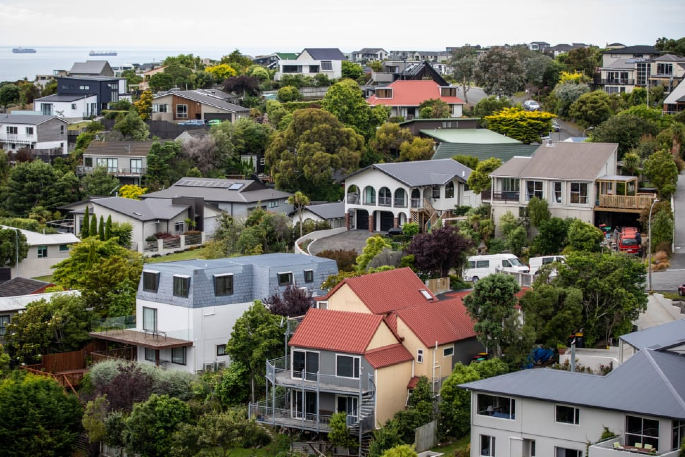
The housing market has not seen the end of its volatility, according to QV chief operating officer David Nagel.
He says there are "a few bumps in the road ahead" this year, which come as the latest QV House Price Index shows home values fell nationally by an average of 10.3 per cent last year – now confirmed to be the largest drop in more than 15 years and a stark contrast to the previous couple of years.
In prior years, the average home value increased nationally by 13.3 per cent and 28.4 per cent in 2020 and 2021 respectively, from $724,185 three years ago to $1,053,315 at the peak of the market. It now sits at $944,767 at the start of 2023.
Tauranga's rate of home value decline hit a speed bump in December.
Home values increased by an average of 1.1 per cent in the last month of last year, following eight consecutive months of negative home value growth. The city's three-month rolling average also finished the year just about even, showing only a 0.2 per cent decline since the start of October.
But Tauranga still finished 2022 with home values down 8.3 per cent on average from 1 January until 31 December 2022 – marginally better than after the Global Financial Crisis in 2008, when values dropped by an average of 9.8 per cent over the same period.
QV property consultant Derek Turnwald says open home attendance has improved in recent months, "which is always typical in summer".
"When properties look better and the weather is more conducive to looking over properties. First home buyers continue to show strong interest in a market that's receiving very little interest from investors.
'Many investors will be waiting to see if a National government will be voted in this year, as they have promised to reinstate interest as a deductible expense for investment property owners and also re-examine the bright line eligibility and time frames.
"At present, many investors are finding the returns on their rental investments have been seriously eroded by big increases in interest rates, particularly as many fixed loans come up for renewal.”
Across the country, QV chief operating officer David Nagel says the market "hadn't bottomed out yet".
'The latest figures show the average home value slipped a further 1.2% on average this quarter, which is a slight improvement on the 2.9% negative growth reported for the November quarter, but not really the usual ‘summer surge' that we'd expect to see in the run-up to Christmas and certainly a stark contrast to the last couple of years," says David.
'It's been a relatively quiet start to the summer, which hasn't been helped by some of the atrocious weather we've had to endure. More significantly, people seem to be taking note of widespread forecasts of further interest rate rises and a likely recession to come in 2023 and they're now being much more cautious than they have been these past few years. That's understandable given the outlook.”
'Looking to the year ahead, I think people should be cautious. It looks highly likely that we will experience a good deal more economic pain to help curb inflation this year, particularly if a recession does come to pass and unemployment figures start to climb as a result.
"Increasing interest rates will continue to impact the residential property market, with those who purchased around the peak of the market in 2021 most likely to bear the brunt of that."
'Covid-19 isn't going anywhere anytime soon, the situation in Ukraine is ongoing, wild weather events only appear to be increasing, and this is an election year to cap it all off.
"So it's fair to say that we could well be in for a fair bit more volatility, a few more bumps in the road before things maybe start to level out somewhat in the residential property market during the latter part of 2023.”

0 comments
Leave a Comment
You must be logged in to make a comment.