


When Sergeant Wayne Taylor fell while boarding a ship, landing unconscious in the water, the safety ship wasn't carrying a defibrillator.
And the lifejacket he wore during the October 2017 maritime counter-terrorism exercise had to be manually inflated, so couldn't help him, a Coroner's report says.
The report has recommended the Defence Force include defibrillators in medical kits and review the types of life jackets its personnel use.
According to a Court of Inquiry in 2019, Taylor, 42, died after he fell climbing a ladder to a container ship and hit his head on a rigid-hulled inflatable boat.
The unconscious soldier ended up in the ocean to the east of the Coromandel Peninsula, near Port Jackson, and drowned.
The Court of Inquiry found the difficult-to-climb ladder and the manually-activated lifejacket, which he could not inflate as he was unconscious, ultimately led to his death.
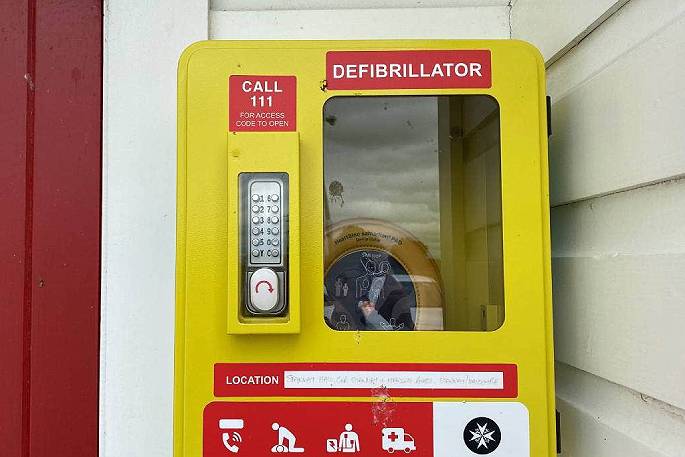
Taylor was quickly located in the water and CPR and other first aid administered, a report by Coroner Robin Kay noted, but 'resuscitation attempts at this time did not include defibrillation, because there was no portable defibrillator on board the Safety Ship”.
'I cannot say whether the outcome would have been different for Mr Taylor if an AED [defibrillator] had been available, but such devices can be used in wet environments, and can greatly increase the likelihood of survival in a cardiac arrest situation.”
The Coroner also noted the lifejacket inflation issue.
It might not be safe for defence personnel in marine situations to have lifejackets inflate 'when merely splashed with water”, Kay noted, but they could look at lifejackets that 'inflate when fully immersed in water and subject to water pressure”.
'I recommend that the NZDF reviews the types of lifejacket used by its personnel with a view to identifying a lifejacket that would satisfy NZDF operational requirements, and could self-inflate to assist an unconscious wearer.”
Kay noted, however, that 'there was no evidence to suggest that there was a failure of equipment”.
'All personnel involved were appropriately trained,” Kay said.
'It was highly likely that Mr Taylor was unconscious when he fell into the sea and was, therefore, unable to avoid drowning.
Kay also noted Taylor was described by colleagues as diligent and highly competent, particularly in a maritime environment.

0 comments
Leave a Comment
You must be logged in to make a comment.