


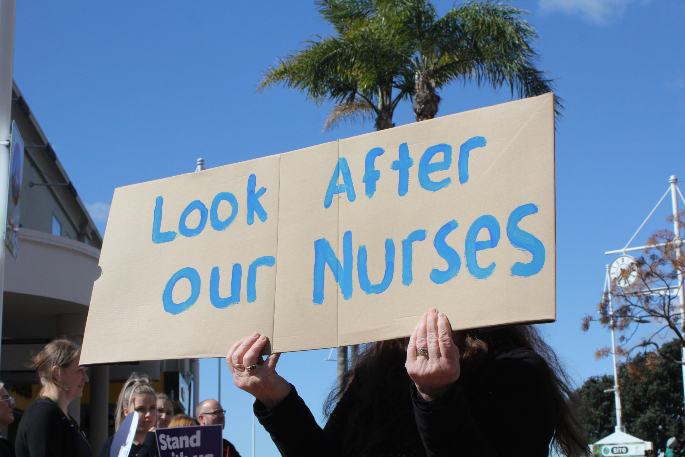
Allow free training for nurses and pay them more to help relieve the pressure to meet surgical targets, a top surgeon says.
A government task force has delivered 101 recommendations to cut surgical wait times, but the plan has attracted its share of critics already.
The recommendations included giving GPs more ability to diagnose without the need for a specialist, moving patients between regions for care, and greater use of the private sector.
However, various sectors within the health industry spoken to by RNZ say the Te Whatu Ora proposals are too vague and do not address the core reasons behind 10s of thousands of people waiting for non-urgent surgery.
New Zealand Association of General Surgeons president Vanessa Blair says people need to understand the report is not about emergency surgery or departments.
It's about planned care, and is an honest comprehensive document that showed the country's healthcare system was "in a difficult place", she told Morning Report.
"It's signalling a direction of travel and it highlights some very key changes that are needed."
Dr Blair says one of its most important recommendations is that elective surgical work should be uncoupled from emergency work, "ringfencing it away from acute care".
"So often what happens in our big hospitals is that they're overburdened, they're overwhelmed with all the emergency work and Covid has just made it worse. "
Surgical centres, similar to those already set up at at Middlemore Hospital and on the North Shore, should be set up across the country, Dr Blair says.
"This will allow efficiencies. It might sometimes have the potential to make inequities a little worse if it's not managed properly but I think that's a very important part of the report that needs to be acknowledged."
She agrees inequities within the health system needed to be addressed and that was one reason most members supported the setting up of the Māori Health Authority.
Regarding the non-urgent surgery list, Blair says she wants the nursing crisis addressed by allowing nurses to come in more easily from overseas, providing free training and a four-year plan to train more nurses.
"At its core we just need to pay these people more. Nurses and other allied professions do not earn enough...
"We need to pay our allied professions more and value them more as a society. They've had a very tough time dealing with Covid, some of them have put their lives at risk and I think the way society looks at that needs to change."
Another priority should be obtaining accurate health data.
"This needs a complete shake-up. We should be able to do this properly and once we've got really accurate data we can then set very effective targets."
The four-month targets to see patients and to get elective surgery done are not being met at present but having better analytic data and getting away from a DHB mentality will help to provide uniform access to care across the country.
She says setting poorly considered targets while the sector is in crisis will make all the health professionals feel like failures.
Plea for more recognition for GPs
The College of GPs chair Samantha Murton says it will be great to be able to help patients more directly but warns family doctors are already under the pump.
"When you look at something like this, and it says GPs can do all these things, totally we are capable but whether we've got the capacity is the biggest issue, and there' ll be a lot of people in the workforce going 'Oh another job to do'."
Those thoughts sre echoed by Mt Eden GP, Dr Jodie O'Sullivan, who says the taskforce is looking at how patients can get better more equitable access to healthcare while providing value for money.
GPs are concerned that if they are loaded down with extra work, such as ordering an MRI, that means they are responsible for seeing that through to its end with the patient but without any compensation.
"Is it going to be another thing put back on general practitioners?"
When there are complications, such as cancer being detected, seeing the patient again and working out a care plan is often done in the GP's own time.
If there's to be a change in the way secondary health care is going to be delivered GPs' contribution needs to be recognised, says Dr O'Sullivan.

4 comments
Why
Posted on 26-10-2022 20:15 | By Clio
Can fully understand the situation, however chosen job not forced into it,we all have the same bills to pay.all good employee's show the same commitment.please don't give me we save life's story.if the job is not what you want move on.we the tax payer have to fund your claims,whilst we have to put up with anything we are given by the employer.we all have choices.deal with it.
Crazy
Posted on 27-10-2022 06:54 | By Angels
Just stop the jab mandate for nurses. We lost 1100 nurses due to no jab. Time to face reality. Reinstate all these fully trained nurses.
No it mandates
Posted on 27-10-2022 12:21 | By an_alias
How about you employ the 3k odd workers you fired for not meeting your mandates. Lets face it this is a problem politically created.
@ an_alias and Angels
Posted on 28-10-2022 06:58 | By Thats Nice
A lot of the health sector that was put off/sacked don't actually want to come back. They have decided on a new career and then there are those that have obtained a 1 way ticket out of here and who could blame them.
Leave a Comment
You must be logged in to make a comment.