


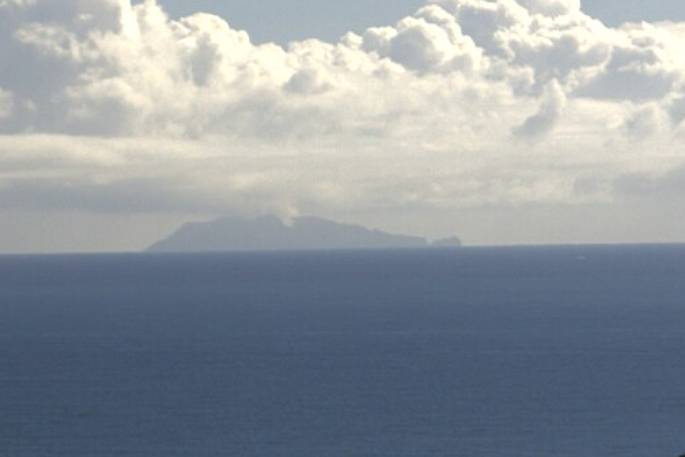
Whakaari/White Island's alert level remains at one following minor volcanic activity being observed at the island recently.
Two short-lived episodes of low-energy volcanic tremor occurred on March 11 and 12, following similar episodes in mid-February and early March, reports GeoNet.
Since then activity has returned to typical low-levels.
The Volcanic Alert Level remains at 1.
"The activity on March 11 started around 8.30pm and lasted 30 minutes, while the activity on March 12 started at 3.30pm and lasted around three hours," reports GNS duty volcanologist Craig Miller.
"The March 12 activity was accompanied by minor steam-gas bursts/explosions from the active vent area.
"The steam and gas driven activity was recorded by our seismic and air pressure sensors and is interpreted as a series of small explosions, originating within the vent or at shallow depth.
"Any erupted material from this type of activity is typically limited to a few meters from the vent. No observations were available from the island's webcams.
"Both the recent episodes were smaller in size than those recorded on December 29, 2020, and February 18, 2021."
No response has been noted at Whakaari/White Island specific to the M7.3 earthquake on March 5 off East Cape.
Gas and observation flights are scheduled this week to measure vent temperatures and gas emissions.
The level of seismic tremor remains at background levels, says Craig.
The Volcanic Alert Level remains at 1 and the Aviation Colour Code remains at Green.
The Volcanic Alert Level reflects the current level of volcanic unrest or activity and is not a forecast of future activity, reports GeoNet.
Volcanic Alert Level 1 indicates the primary hazards are those expected during volcanic unrest; including discharge of steam and hot volcanic gases, earthquakes, landslides and hydrothermal activity.
While Volcanic Alert Level 1 is mostly associated with environmental hazards, eruptions can still occur with little or no warning.
The main plausible triggers for a sudden eruption remain the collapse of unstable material in an active vent and the possible ingress of water underground onto the shallow magma body.
Further information about the volcanic alert levels and what they mean can be found here.
GNS Science and the National Geohazards Monitoring Centre continue to closely monitor Whakaari for further changes in unrest.
GeoNet monitors Whakaari via a network of seismic and acoustic sensors, GNSS (GPS) receivers, cameras, and gas and visual observations.

0 comments
Leave a Comment
You must be logged in to make a comment.