


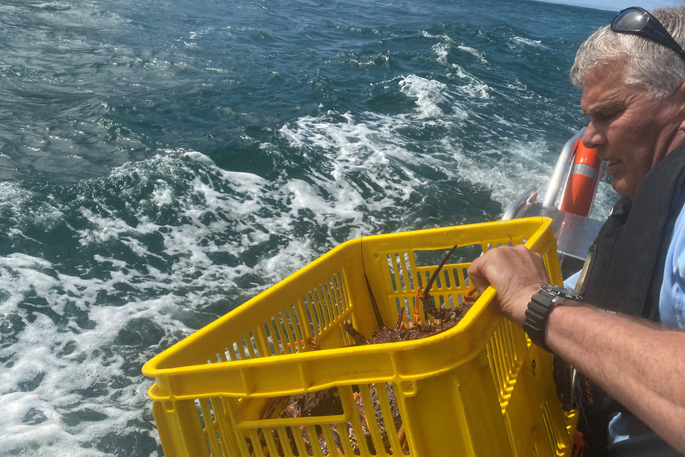
Dozens of shellfish and pāua sprawled out on tarpaulin. Hundreds of crayfish lined up neatly alongside fish. It sounds like a rustic fish market, but it's not. Instead, it's illegally gathered seafood seized by the Ministry for Primary Industries.
People may have seen images like that on the MPI Facebook page or read reports of fishery officers seizing goods from people caught breaking fisheries laws and regulations.
Following four recent interventions, officers were able to put almost 3,000 cockles and 156 undersized pāua back into the sea after several groups of people were caught with the hauls, claiming to be unaware of a beach closure and regional and quantity limits on shellfish gathering.
While smaller-scale offences are often dealt with through education, bigger offences often lead to infringements and prosecutions. As a consequence the illegally harvested seafood becomes evidence for any subsequent proceedings such as court cases.
'Of course the court does not appreciate us showing up with a bag of wet, smelly, mouldy two-month-old paua, so the next best thing for our officers to do is to lay out any kaimoana as quickly as possible, take photos to show the court, then put everything back in the ocean if it has a high chance of surviving. Usually shellfish and rock lobster will recover if the time out of the water is kept to a minimum,” says MPI Fisheries Compliance national manager Steve Ham.
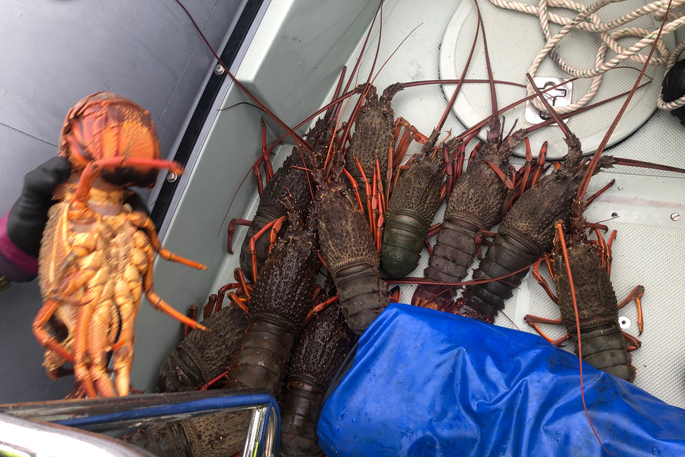 Illegal crayfish that will go back into the sea.
'If the kaimoana is dead or damaged, we can't just throw it back in, as it could wash up on the shoreline, so we will take it back to our offices where it is measured, weighed, tagged and photographed.
'It's then frozen and kept till the court case is over.”
So, what happens then to the seafood that is confiscated, where does it all go?
A question that inevitably comes up is why doesn't MPI donate the seized kaimoana to charity or people in need.
'Sadly, it is just too dangerous to redistribute it or give it away - no matter how nice of an idea it seems.
'We have no idea how it's been caught, how long it's been in the sun and whether it's been collected or stored in a clean and hygienic way. Seafood that has not been handled correctly could pose a significant health risk.
'We could make people really sick, so that's why we can't donate it,” says Steve.
We have freezers at our fisheries offices around the country so every so often we take the confiscated fish and seafood and return it back into the marine ecosystem. This enables this illegally harvested seafood to enter the food chain in a controlled manner.
This means it is well documented where the illegally harvested seafood has been released, how much was put back into the sea and as a result we don't overwhelm the ecosystem.
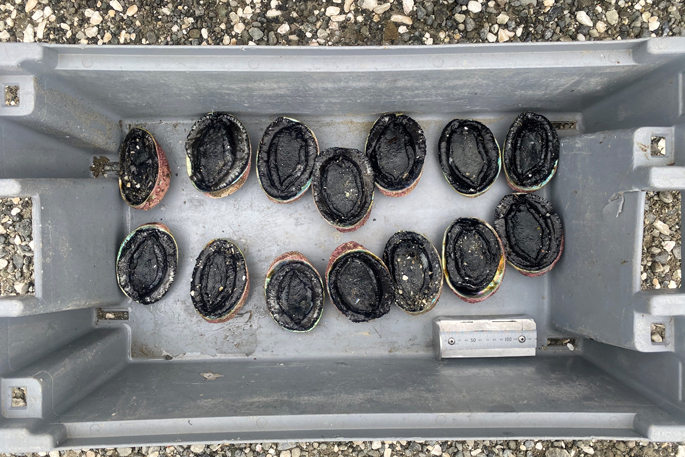 Paua of which, 14 were undersized. The individual was infringed for excess Paua and undersized Paua.
There are minimum size and daily catch limits for all fish and shellfish, including cockles, kina, pāua, green-lipped mussels, oysters, pipi, scallops, toheroa, and tuatua.
There are also regionally specific limits, closures and area restrictions in New Zealand, which are outlined on the MPI website. There is also the NZ Fishing Rules app.
'It's not just up to our officers to protect our shores, it's up to everyone to get familiar with the rules and follow them.
'The alternative is a dire situation where our rocks and seas are left barren and future generations do not get to experience [the] gratification of hunting and gathering a delicious meal for friends and whānau or experience the beauty of New Zealand's marine life,” says Steve.
How to help protect NZ fishing stocks
If people are aware of any suspicious fishing activity, call MPI on 0800 4 POACHER or email [email protected]
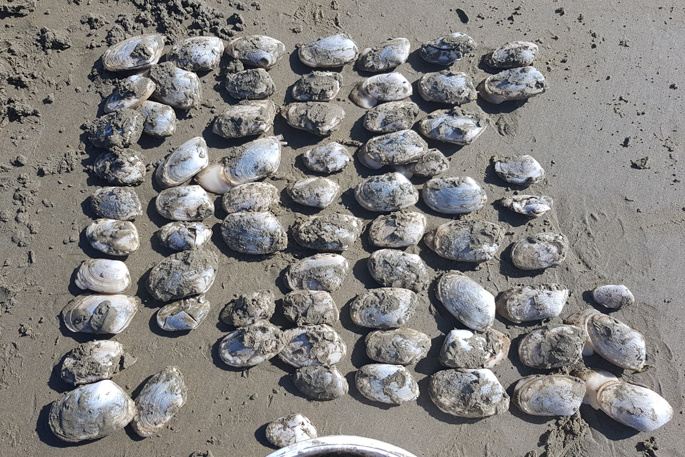 Shellfish that were illegally gathered found by a fishery officer.

1 comment
Greed.
Posted on 25-01-2021 13:40 | By morepork
It is simple and plain greed that is at the root of these violations. The message has to be made clear through education and proper fines when caught, that it isn't just breaking the Law, it is also anti-social. Nobody should buy illegally taken kaimoana. Report it instead. You may miss a feed but it could mean that your children won't...
Leave a Comment
You must be logged in to make a comment.