


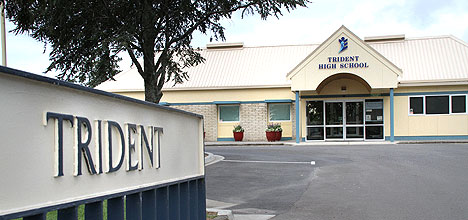
Minister of Education Anne Tolley is in the Bay of Plenty today to open a new trades academy that is aiming to reduce youth unemployment.
The Eastern Bay of Plenty Trades Academy based at Trident High School in Whakatane is one of eight academies being launched this year, but is the only way based at a school.
It forms a link between seven secondary schools and the Waiariki Institute of Technology and its intention is to help address high rates of youth unemployment in the Eastern Bay.
'It is special for me because the Eastern Bay has a serious issue with high youth unemployment and that is what we are trying to tackle,” says Anne.
'The aim is to keep kids engaged and keep them in education.
'If they are doing something they are interested in and excited about, they are more likely to stay in the system.
'And because we insist the trades academies offer a minimum qualification of NCEA level 2, the students' job prospects are greatly enhanced.”
Trident High School Principal Peter Tootell says the academy will help many of his school's students.
'When kids leave our school we hate to see them walk out of the gates and on to the streets,” says Peter.
The academy, led by Trident, is a consortium of seven high schools – Trident and Whakatane High Schools in Whakatane, Opotiki College, Kawerau College, Edgecumbe College, Te Whanau a Apanui Area School in Te Kaha and Te Wharekura o Ruatoki.
A total of 105 places are available in the first year and Waiariki's Whakatane campus will provide two-year tertiary trades programmes in agriculture, automotive skills, business administration, construction, electrical trades, forestry and professional cookery.
'We have consulted with the other schools and surveyed the students and a huge amount of work has gone into these courses so that they dovetail into what students want.
'This is a brilliant concept.”
Senior students will be enrolled at secondary school and part-time at Waiariki, with Year 12s spending four days at school and one in tertiary training during their first Trades Academy year. In Year 13, they will spend three days at school and two in tertiary training. Students will study for NCEA qualifications as well as gain a valuable understanding of one of the seven trades offered and complete a national certificate – all without paying tertiary fees.
'This gives them a head start on training for a career and gaining all-important qualifications, which will result in priority access to employment,” says Waiariki's Rosemary Johnson.
'The academy is dedicated to equipping our young people for careers in essential trades that are critical not only to New Zealand's economy and employment, but also to our environment and national identity.
'It is a milestone opportunity not only for the individuals undertaking the programme, but also for primary industries and the business community, as the demand for well trained, qualified employees has never been greater.
'Graduates will do well. They'll be a step ahead when they leave school, with work experience and practical skills already under their belts, as well as a pre-employment qualification in their hands.
'It will put them on a fast-track to success in the workforce or in further study. For example, agriculture students could go on to degree programmes at Lincoln or Massey.”
Anne says the Eastern Bay model, led by a high school, is unique and she believes it could be expanded and rolled out in other areas of the country.
'Other schools have approached me about setting up a trades academy and the success of the Eastern Bay academy will give them confidence.
'The idea is that the academy can grow from 105 places to fill the needs of young people. If it goes well, there is the chance to increase the number of places and expand the courses on offer.
'The challenge next year might well be keeping these kids on the course and making sure they don't get snaffled by employers before they've finished their study.”

0 comments
Leave a Comment
You must be logged in to make a comment.