


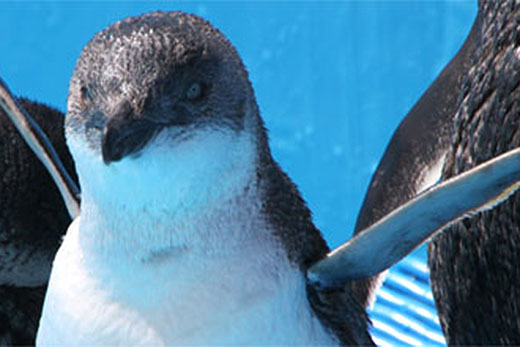
A 28 million year old giant penguin fossil found at Kawhia in 2006 will be shown for the first time alongside its 3D scanned profile in a new exhibition opening at Waikato Museum on Saturday.
Waikato Museum collaborated with Massey University to develop the exhibition, Giant in the North, and put into context the fossil's relevance and significance in the scientific world.
File photo.
Massey University palaeontologist, Dr Daniel Thomas scanned the 3D profile of the fossil and hopes the resulting image can help researchers in the future formally identify the Kawhia penguin.
'This is the largest and most complete fossil bird from a very important time in the history of the North Island. It's my hope that we have the opportunity to formally describe the specimen and discover the species it belongs to.
'There are so few fossil penguins known from the North Island, and it would be great to know how this specimen compares to the giants from the South Island, and from elsewhere,” says Daniel.
Giant in the North celebrates the discovery of the Kawhia giant penguin fossil in January 2006 by members of the Hamilton Junior Naturalist Club (JUNATs).
Other fossils from the same geological time of the Kawhia giant penguin (24 - 28 million years ago) will also be on display, including a specimen of an ancient shark, found by JUNATs patron and archaeology enthusiast Chris Templer.
Scanning technology is now more accessible and proving to be integral in museum collection work.
In the field of palaeontology, detailed bone features can be examined from the other side of the world.
'The collaboration with Massey University has been a fantastic opportunity to apply current technology in collection research,” says Waikato Museum director Cherie Meecham.
'We can now share more detail with our visitors and involve them in the journey to uncover the mystery surrounding this extraordinary fossil.”

0 comments
Leave a Comment
You must be logged in to make a comment.