


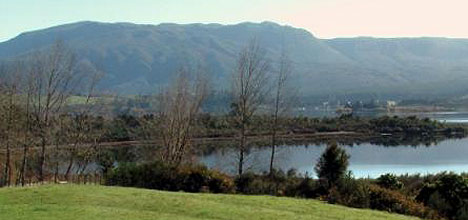
Farmers in the Lake Rerewhakaaitu catchment are working together to reduce nutrient flows from their farms flowing into their lake.
Lake Rerewhakaaitu. Photo by Alison Marshall.
Last week they celebrated the release of a booklet detailing the work they are doing on their own farms to improve the lake's water quality. Their stories are available at www.envbop.govt.nz on the Lake Rerewhakaaitu pages.
The council has invited the farmers to prepare the lake's catchment plan, and the group has participated in two Sustainable Farming Fund projects to address issues with nitrogen and phosphate management. These projects looked at ways of mitigating leaching into the lake.
Monitoring had shown that nutrient levels in streams flowing into the lake from farming were increasing. The projects the farmers undertook helped identify ways that pastoral management in the catchment could be changed to minimise environmental impacts and allow sustainable farming to continue.
The first project concentrated on using technology to reduce nitrogen flows to the waterways, and the second looked at phosphate management, using low-cost but effective ways of reducing phosphorous loss.
The farmers are now onto the next project, and are adopting their own environmental management systems to improve their nutrient management. They hope that their collective improved nutrient management will reduce nutrient leaching to Lake Rerewhakaaitu to a sustainable level. The catchment management plan will include wetland enhancement and lake edge restoration by the Department of Conservation, and involvement from Dairy NZ, Fonterra and Fert Research.
The council's group manager land management Warwick Murray says involving the farmers directly in protecting their lake has provided a catalyst for far-reaching change which has become a useful model for sustainable farming.
'The farming community has taken the lead by working together for a common goal of maintaining their farming businesses while doing everything possible to reduce nutrient flows into Lake Rerewhakaaitu through minimising effluent and nitrate contamination.”

0 comments
Leave a Comment
You must be logged in to make a comment.