


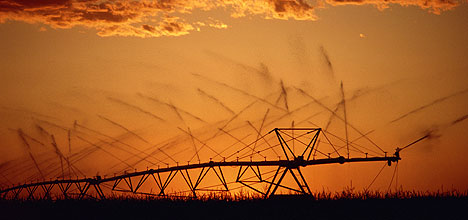
The National Institute of Water and Atmospheric Research is forecasting the Bay of Plenty to get less rain than normal this summer.
It says the La Nina weather pattern, which brings warmer weather, is the strongest in several decades and will probably continue until autumn.
Head of Research and Environment at Ballance Agri-Nutrients Warwick Catto says NIWA is singling out the east of both main islands and the southwest of the South Island as areas that could get even less rain than normal this summer.
'It is predicting a hotter summer across New Zealand, with at best normal rainfall in many areas.”
NIWA also says that soil moisture levels and stream flows are likely to be only near normal or below normal in most regions, other than in the southwest of the North Island and north of the South Island, where they are likely to be near normal.
The risk of summer drought may be unavoidable for farmers, but there are steps they can take to improve their chances of getting through.
'There are things farmers can do in the spring to make their pastures more resilient through the drier months.
'A timely boost before year-end can set pastures up in the best of condition for what might lie ahead,” he says.
'When you get rain anytime before Christmas, make the most of that moisture by considering applying nitrogen at about 40-50kg per hectare to promote good covers and to give your ryegrass the best chance to persist.”
Warwick says with greater pressure on budgets, farmers need to work out what fertiliser they must put on, and what they can cut back on or do without.
'Focus on the fertiliser products that will give you the greatest financial return. Work out where to apply it, with emphasis on protecting your newer pastures and areas of high productivity. Higher soil fertility always helps in water-stressed situations.”
He says it could be okay to cut back on phosphate, for example, but in most cases farmers should meet their soil's needs for sulphur, potassium and nitrogen. Sulphur has to be applied each year to reset the soil clock after winter leaching.

0 comments
Leave a Comment
You must be logged in to make a comment.