


An informal Tauranga City Council environmental think-tank is challenging the new council to take them and their advice on agri-chemical usage in the city seriously.
Since 2009, the Toxic Agrichemical Advisory Forum has been advising council on spray issues, but the group is frustrated council is ignoring advice, particularly on glyphosate, says forum co-chair Ian McLean.
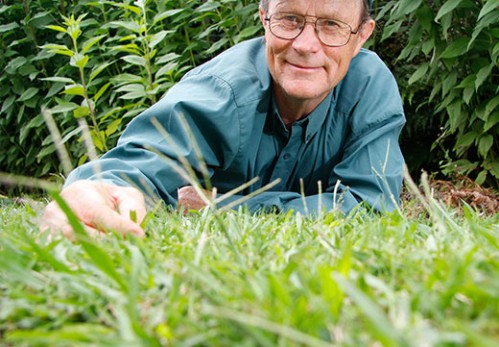
Toxic Agrichemical Advisory Forum co-chair Ian McLean wants councillors to listen to advice on spray usage. Photo: Bruce Barnard
They have had one member quit and others are questioning their relevance, says Ian. They want a better way of working with TCC.
TAAF was formed after the public reaction and opposition to a proposal to spray Blake Park to remove worm casts by killing the earthworms.
There were six on the panel with a range of experience and knowledge of agri-chemicals and their use. The intention is for TAAF to be a source of independent advice, responding to issues raised by the community.
In 2012, TAAF delivered a report to council on glyphosate, or Roundup as it is commonly known, warning the adjuvants or additives added to different glyphosate brands have been scientifically proven to be more toxic to humans than the weed killer itself.
'We believe the glyphosate report had no impact on council operations,” says Ian.
TAAF was consulted twice in 2013, once over spraying the 4-wicket at Blake Park and again later in the year over spay mixtures in use in the dune restoration programme.
'We feel our advice is having little impact, and we believe more action is needed,” says Ian.
TAAF has good relations with city council staff, but is unable to connect with council officers and councillors. They need a closer connection with the committee that has the overview, says Ian.
The council has received two recent warnings on Roundup use. In 2011, TAAF advised the city council to research the additives used in glyphosate weed killers.
After the patents on Monsanto's Roundup, and its active ingredient glyphosate, expired in 2000, about 90 competing weed killers appeared, all containing gylphosate as the active ingredient, but with different chemicals in the mix.
Research finds some of the additional chemicals are more toxic than the weed killer itself. Council policy approves glyphosate for use on city reserves, but doesn't differentiate between brands.
The law doesn't require the additives to be disclosed.
TAAF asked council staff in 2011 to independently research the additives, so the council will only buy the ‘safest' brands for use on the city's parks reserves and playing fields.
In May 2013, naturopath and spray sensitive Robin Grierson warned TCC that published research now makes the council liable to being sued by people affected by Roundup in council weed spraying programmes.
A research paper head-lined, Ethoxylated adjuvants of glyphosate-based herbicides are active principles of human cell toxicity, authored by Robin Mesnage, Benoit Bernay and Professor Gilles-Eric Seralini, from the University of Caen, finds a Roundup ajuvant polyethoxylated tallowamine POE-15 is the most poisonous part of Roundup, toxic on human cells at 1-3 parts per million.
The danger is overlooked because the active ingredient glyphosate, and Roundup style herbicides with additives, are treated as the same by industry and regulators on long-term studies.
The French research challenges existing guidance values, such as the acceptable daily intake of glyphosate, when these are mostly based on a long term in-vivo test of glyphosate alone.
Chairman Kelvin Clout says Ian's concerns are in the minutes and he will make sure they are answered.

7 comments
Overit
Posted on 19-02-2014 13:04 | By overit
Thank you Kelvin up until reading the end I was getting pretty annoyed. There is too much spraying going on-poisoning the planet. As for the idea of killing off earthworms-that defies logic.
weed spraying
Posted on 19-02-2014 13:12 | By sangrae
I often wonder if the operaters working for the council contractors have actually got a spraysafe certificate. From what we have seen lately i think not especially when they spray kerbsides on windy days .Perhaps we should take photos and forward them to the Deputy Mayor.
chemical necessity
Posted on 19-02-2014 13:48 | By yikes61
The use of some chemicals is a cost effective means of control. Look at the invasive grasses multiplying on the dunes along marine parade and Papamoa Beach Road, taking over the native spinifex, and muehlenbeckia, Pingao. Council are obviously not spraying these areas and the longer it is left uncontrolled, the problem will become more expensive to protect native plants. Given the success of Coastcare and the volunteers time and effort into restoring native plantings and coastal protection, Policy needs to be readdressed. To see volunteers hours and hours of work dissappear, will result in a reduction of those willing to give up their time on such projects.
ratepayers have deep pockets
Posted on 19-02-2014 14:00 | By s83cruiser
So are we to take if from this that the council is paying this advisory forum for their and vice and then ignoring it just the same. Smacks of wasting ratepayers money IMHO. Never mind plenty more where that came from.
Maybe!!!
Posted on 19-02-2014 18:36 | By Sambo Returns
Bob "the builder" can get the spray contractors to help him with his Pohutukawa problem.
Cost-effective? NO!
Posted on 20-02-2014 08:04 | By ronillian
@yikes61: You are right but very wrong! Toxic chemicals appear to be a very efficient and cheap way of killing weeds and vegetation. But only if you ignore the "externalized costs" like public health costs, costs to environment (aquatic life, terrestrial life, birds, bees, insects). Other councils manage weeds and vegetation without using health- and environment-endangering toxic chemicals. Why can't Tauranga?
@ cruiser
Posted on 23-02-2014 16:11 | By Croaky
TAAF are volunteers - they work very, very hard for absolutely no pay so don't get your undies in a twist over ratepayers' money!
Leave a Comment
You must be logged in to make a comment.