


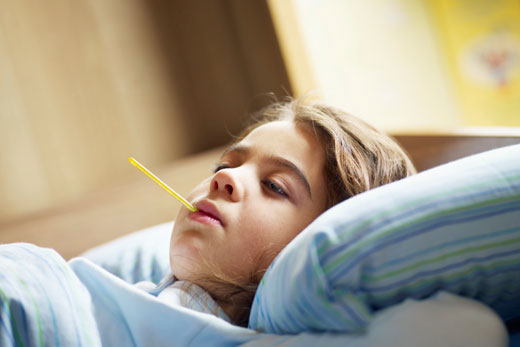
Bay of Plenty families with children at risk of rheumatic fever will be fast-tracked to the top of a North Island-based waiting list for state housing, says Housing Minister Nick Smith.
Photo: File.
In an announcement today, the Minister says from March 1 the rheumatic fever housing prioritisation will be extended to include the Bay of Plenty, Capital and Coast, Hawke's Bay, Hutt Valley, Lakes, Northland, Tairawhiti and Waikato district health board areas.
Families with children at risk have been prioritised in Auckland since last year.
Children and young people are most likely to get rheumatic fever from ‘strep throat' – a throat infection caused by a Group A Streptococcus bacteria.
Most strep throat gets better and does not lead to rheumatic fever, but in a small number of people an untreated strep throat develops into rheumatic fever, where the person's heart, joints, brain and skin become inflamed and swollen.
While the symptoms of rheumatic fever may disappear on their own, the inflammation can cause rheumatic heart disease - the scarring of the heart valves.
People with rheumatic heart disease may need heart valve replacement surgery, and it can cause premature death. In 2012, 171 people were admitted to hospital for the first time with rheumatic fever.
Nick says with a strong link between housing conditions, particularly overcrowding, and rheumatic fever cabinet agreed to extend the Social Allocation System beyond Auckland to the additional eight areas.
'New Zealand's rate of acute rheumatic fever is 14 times the OECD average and the rate is 25 to 44 times greater for Maori and Pacific children,” says Nick.
'The Government announced an additional $21.3 million to fight rheumatic fever in Budget 2013, bringing our total commitment to over $45 million. This is part of the Government's agreement with the Maori Party to reduce the incidence of the disease from 4.2 to 1.4 cases per 100,000 people by 2017.”
Families with urgent or serious housing needs will be prioritised if they have one or more children who have been hospitalised for lower respiratory tract infections in their current housing during the last two years.
And with the Minister's announcement the criteria is now extended to include families where people are still receiving treatment for rheumatic fever.
'It was intended to extend this prioritisation of state housing beyond Auckland after a full year. We are proceeding more quickly because it is working well and we want to move faster on tackling rheumatic fever,” says Nick.
'This change in criteria for state housing is just part of what Housing New Zealand is doing to support healthier families.
"We are adding 3000 bedrooms onto 2000 state houses. We are introducing reviewable tenancies to ensure state houses are prioritised for those with the greatest need. We have also insulated all houses that can be and are developing a housing Warrant of Fitness for state homes.
'Improving the quality of our state housing and ensuring they are housing those in the most need is an important part of the Government's social policy agenda.”

0 comments
Leave a Comment
You must be logged in to make a comment.