


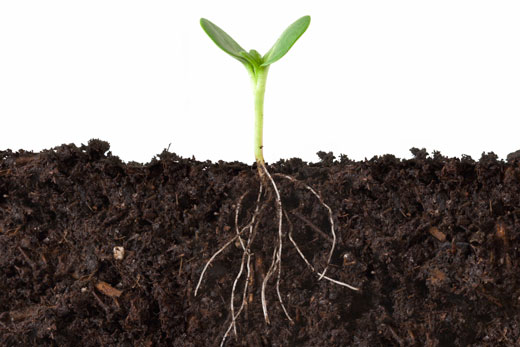
Western Bay of Plenty District Council has a new community gardens policy aiming to formalise agreements with voluntary groups wanting to grow produce on council-owned or administered land.
The council's new Community Gardens Policy provides options for people lacking private open space to have vegetable gardens or fruit and nut trees by assisting communities to become more sustainable via growing produce in public spaces.
Individuals or people wanting to initiate community gardens or grow fruit and nut trees on public land in the Western Bay now need to use the policy to work with council to achieve their goals, with each proposal addressed on its merits.
WBOPDC reserves and facilities manager Peter Watson says the policy, which sees council act as an enabler and supporter of initiatives, rather than provider or funder, was triggered by work on a community development plan at Maketu and council liaising with Kati KaiWay – an edible fruit walkway created in Katikati's Gilfillan Reserve.
'What it [the policy] does is create the opportunity for people to grow produce on public land – and the spin-off is the socialisation people receive from getting together for these projects.”
Other opportunities include teaching and learning about gardening, waste management approaches, planting of fruit and nut trees and developing local pride in public open spaces.
'They get engaged in their community from this process – gardening gives stress relief, getting active and socialising – and in some cases, projects arise as a need from the recession hitting.”
Peter says community development plans being formed during the years pointed to a policy void when it came to community garden creation on public land.
'It seems to be a trend happening, for people to create community gardens, and council has responded by putting a policy in place, which the Bay of Plenty District Health Board is supportive of.
'It's an opportunity for people to get involved for themselves, by growing produces; and others to be part of it, from the produce surpluses.”
Peter says while the policy aims to formalise community garden arrangements on public land, it can also help groups utilising private land.
'When someone is privately using land it can cover how produce is split among people and what happens if a group disappears.”
Three separate groups in Te Puke, Maketu and Paengaroa are now looking to create community gardens via the WBOPDC policy.
'Myself and Ben Wilson [Western Bay's community development officer] have gone over the plan with them [at Te Puke]; they're looking at their options. We've suggested parcels of vacant public land, which could be utilised, and they're getting themselves a bit more organised,” says Peter, who says it's usually one to three people initially interested in a community garden project 'who sow the seed”.
Peter says the policy helps protect the land occupiers' investment and time in their project and protects council from encroachment on public land and outcomes of activities stalling.
However, Peter points out council already has fruit trees on offer on public land in the Western Bay, with an old orchard in Te Puna, the council purchased, offering avocadoes and citrus, while lemon trees offer fruit near Katikati's Moore Park.
'I think these projects also strengthen communities by seeing people getting together at that level – and I think people like to be a part of that.”
A trend to 'grow your own” worldwide is evident, with similarities to the traditional UK plot (allotment gardening) system, says Peter.
'I am an avid gardener myself and I grow vegetables through the year and enjoy teaching my kids that corn doesn't come from the supermarket.
'Its great stress relief, you get a lot of satisfaction out of it – and the produce tastes better.”
To learn more about the Community Gardens Policy, visit: www.westernbay.govt.nz

0 comments
Leave a Comment
You must be logged in to make a comment.