


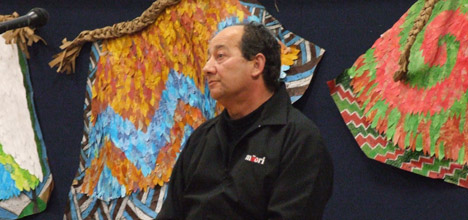
Tauranga author and spray campaigner Tommy ‘Kapai' Wilson says his email has been flooded with messages of support following the meeting about hydrogen cyanamide in Te Puna last week. Hydrogen cyanamide is sold under brand names like HiCane, Breaker and Cyan.
Tommy has arranged a meeting between the Environment Bay of Plenty and the Pirirakau Incorporated.
Tommy Wilson wants to know where all the hydrogen cyanamide goes after it is sprayed.
'They are meeting with the Pirirakau environmental group to discuss a path forward, and ways to make the compliance system work better.”
Tommy says he has had lots of emails from long time residents who say they have never been informed when spraying has taken place on orchards near to them.
'Some of them have lived here for 20 years and never been told. But I think the meeting was a real success because people now know what their rights are.”
The meeting last Wednesday in the Te Puna School Hall was told that last year Environment Bay of Plenty received only six complaints about spray drift, or chemical trespass, as it is called in Australia, and New Zealand Kiwifruit Growers Inc (NZKGI) received nine.
Tommy feels the low number is more to do with people not being aware of who to call, rather than indicative of perfect conduct by those applying the sprays.
'I'm not trying to fight the kiwifruit industry, though,” says Tommy. 'I have a great deal of respect for the kiwifruit industry. But I just want to know what happens to the 18 million litres of hydrogen cyanamide they use each season. Where does it end up? If it kills the bacteria in the soil then how can it be broken down? I'm worried it's ending up in the water.”
NZKGI president Peter Ombler says the industry is spending a lot on trying to find alternatives to hydrogen cyanamide.
'It's a highly effective product, but we fully understand the risks associated with it and the need for us to mitigate them for staff, applicators and the public. We have been trying to find a product or a method that would give us a similar response, but without success so far.”
Peter says he is aware the product has been banned in Europe but says that ban was about applicator practices rather than the safety of the chemical itself.
'We don't think we are likely to face a ban from them on our exports as there is no residue left on the fruit. If we ever had any problems they would more likely arise if we had an issue over negligent use of it.”

0 comments
Leave a Comment
You must be logged in to make a comment.