Farmers are struggling to afford the fertiliser they need to optimise production but not as gravely as when subsidies were removed in 1984, says Warwick Catto, Head of Agro-Sciences at Ballance Agri-Nutrients.
Farmers are struggling with current fertiliser prices.
Fertiliser usage is down noticeably nationwide compared to last year but few farmers are choosing to forego fertiliser applications entirely.
'The key difference between the1980s and today is farmers can still afford to budget for fertiliser expenditure, even if it is down. This is a far cry from the situation in the mid-1980s when the money was simply not there and farmers had to reduce personal drawings from the farm significantly,” says Warwick.
Most farmers are financially better off today because of the good historic fertiliser use New Zealand has applied for the past decade, says Warwick.
'For example, almost 99 per cent of Fonterra farmers now have a nutrient budget in place. However, the new pricing plateau means farm systems and rates of use will change, with dairy farmers reducing Olsen P to lower levels and adjusting fertiliser maintenance rates accordingly.”
Warwick says farmers have learned the lesson from the 1980s, when production suffered for several years due to insufficient fertiliser being applied. Most farmers are still strongly focused on maintaining productivity and minimising production loss risk.
'We saw a significant drop in fertiliser sales for application this autumn, which may be repeated this spring. Farmers struggling with funding a spring application might well focus on sulphur and potassium, as these nutrients will impact on production first, relative to phosphate,” Warwick says.
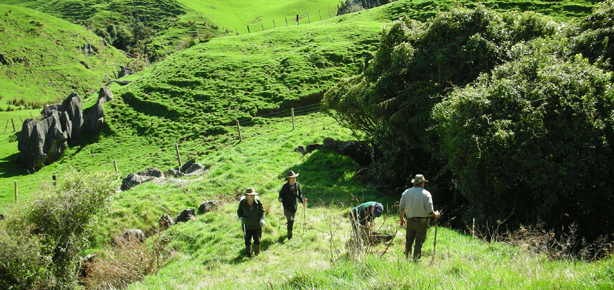
Hill country will be hard particularly hit. In some cases the profitability of fertiliser going forward will be questionable but most sheep and beef farmers will purchase fertiliser, albeit at lower levels.
'Again, there is likely to be increased emphasis on sulphur in particular and potassium to a lesser extent as farmers maintain this input and reduce cost by lowering phosphate inputs,” Warwick says.
In terms of nitrogen, Warwick says n-rich urea is the least cost-supplementary feed and its use will remain strong but the focus will be on efficiency, in terms of optimal timing and specific needs for pastures and crops.
Warwick says farmers need to take a scientific approach to farm fertiliser use and to eke out maximum performance for their dollar.



05-Nov 15:00
BoP set for summer-like heat as temperatures soar
05-Nov 11:55
Man charged with arson after car fire
05-Nov 11:41
Bay of Plenty Lotto player wins nearly $34k
05-Nov 10:49
Voter access concerns after ramp door locked
05-Nov 08:48
Car ends up off road in Ōhauiti, house undamaged
05-Nov 08:30
Heavy traffic snarls Hewletts Rd commuters
05-Nov 08:00
Bay homes offer a retirement alternative
05-Nov 07:00
Resident says shelterbelt is reducing visibility
05-Nov 06:00
SPCA renews fireworks ban call as Guy Fawkes nears
04-Nov 18:00
BOP fisherman receives international recognition
04-Nov 16:25
Tauranga hit-and-run accused removed from court
04-Nov 16:00
Little girl's wish tops Katikati tree with star
COMPETITIONS

0 comments
Leave a Comment
You must be logged in to make a comment.